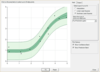
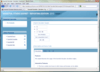
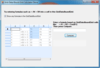
Screenshot Preview

WebCab Functions for .NET

by WebCab - Product Type: Component / .NET WinForms / .NET Class / .NET Web Service / 100% Managed Code / ActiveX DLL

Add refined numerical procedures to either construct a function of one or two variables from a set of points (i.e. interpolate), or solve an equation of one variable; to your .NET, COM, and XML Web service Applications. WebCab Functions for .NET includes interpolation procedures covering Newton polynomials, Lagrange's formula, Burlisch-Stoer algorithm, Cubic splines (natural and free), Bicubic interpolation and procedures for find the interpolation functions coefficients. In order to solve an equation we provide the Van Wijngaarden-Dekker-Brent algorithm, interval bisection method, secant and false position, Newton-Raphson method and Ridders' method.

From
$104.86
Price in

Our regular prices are shown below. Please logon to see your discounted prices.

WebCab Functions for .NET V2.0  

Add to Cart $ 104.86 1 Developer License Download (3.3 MB)
Add to Cart $ 178.36 4 Developer Team License Download (3.3 MB)
Add to Cart $ 357.70 1 Site Wide License (Allows Unlimited Developers at a Single Physical Address) Download (3.3 MB)

Our prices include ComponentSource technical support and, for most downloadable products, an online backup and a FREE upgrade to the new version if it is released within 30 days of your purchase.  All sales are made on our standard Terms and Conditions and subject to our Return Policy. Please contact us if you require any licensing option not listed above including volume licensing and previous versions.

Our regular prices are shown above. Please logon to see your discounted prices.

This suite includes the following features:

Interpolation Module

  • Polynomial Interpolation and extrapolation
    • Lagrange's formula - for interpolating a function known at N points with a polynomial of degree N-1
    • Burlisch-Stoer algorithm - interpolates functions using rational functions, this method gives error estimates
    • Cubic Splines - algorithms for natural and clamped cubic splines
    • Sorting - efficient techniques are used for finding tabulated values

  • Coefficients of an Interpolating Polynomial
    • Matrix method - this method relies upon diagonalizing a matrix (or solving a system of equations), and is of the order N squared
    • Zero method - by evaluating the interpolating polynomial at particular values the coefficients are deduced, this method is of the order N cubed

  • Interpolation and extrapolation in two or more dimensions
    • Grid - functions can be interpolated on an n-dimensional grid
    • Bilinear interpolation - consider a multidimensional interpolation by breaking the problem into successive one dimensional interpolations
    • Accuracy - the use of higher order polynomials to obtain increased accuracy
    • Smoothness - the use of higher order polynomials to enforce smoothness on some of the derivatives
    • Bicubic interpolation - finds an interpolating function with a specified derivatives and cross derivatives which vary smoothly at the grid points
    • Bicubic spline - a special case of Bicubic interpolation involving the use of successive one-dimensional splines

Equation Solver Module
  • Interval Bisection Method - A robust method that always finds a solution or a singularity inside a bracketed interval.
  • Secant Method - Generally this procedure converges and is much faster than the interval bisection method.
  • Brent's Algorithm - The method of choice to find a bracketed root of a one dimensional equation when you cannot easily compute the function's derivative.
  • Ridders' Method - Concise and almost as reliable as Brent's Algorithm for finding a bracketed root of an equation.
  • Method of Regula Falsi - This procedure uses a slight alteration on the secant method to ensure convergence. The procedure is generally faster than the interval bisection method and slightly slower than the secant method.
  • Newton-Raphson Method - Given a first approximation to a root and the differential of the function this procedure will always produce a solution. This procedure is implemented for polynomial functions of one variable.
  • Fail-Safe Newton-Raphson Method - This method combines the Newton-Raphson method and the Interval Bisection Method in order to produce very stable and fast convergence. Given a first approximation to a root and the differential of the function this procedure will always produce a solution.

This product also has the following technology aspects:
  • 3-in-1: .NET, COM, and XML Web services - Three DLLs, Three API Docs, Three Sets of Client Examples all in 1 product. Offering a 1st class .NET, COM, and XML Web service product implementation.
  • Extensive Client Examples - Multiple client examples including .NET (C#, VB.NET, C++.NET), COM and XML Web services (C#, VB.NET)
  • ADO Mediator - The ADO Mediator assists the .NET developer in writing DBMS enabled applications by transparently combining the financial and mathematical functionality of our .NET components with the ADO.NET Database Connectivity model.
  • Compatible Containers - Visual Studio 6 (incl. Visual Basic 6, Visual C++ 6), Visual Studio .NET (incl. Visual Basic .NET, Visual C#.NET, and Visual C++.NET), Borland's C++ Builder (incl. C++Builder, C++BuilderX, C++ 2005), Borland Delphi 3 - 2005, Office 97/2000/XP/2003.
  • ASP.NET Web Application Examples - We provide an ASP.NET Web Application example which enables you to quickly test the functionality within this .NET Service.
  • ASP.NET Examples with Synthetic ADO.NET - we use a ASP.NET service to perform component calculations on SQL database columns from a remote DBMS. We apply a component's function to certain rows from the database and list the output in HTML format. This is a powerful feature since it allows you to perform calculations in a DBMS manner without having to code the C# to SQL database transaction yourself as it is all done by the ASP within the .NET Framework managed server side environment.

Product Search

Enter search words:

Why buy from ComponentSource?

ComponentSource offers a unique global service, used by over 1,000,000 software developers worldwide.

More Info | About Us