.NET에서 비밀번호로 연결 인증하기
.NET 앱에서 메시징, 파일 전송 및 기타 통신 서비스에 연결할 때 사용자 자격 증명을 확인하기 위해 비밀번호 인증을 사용하세요.
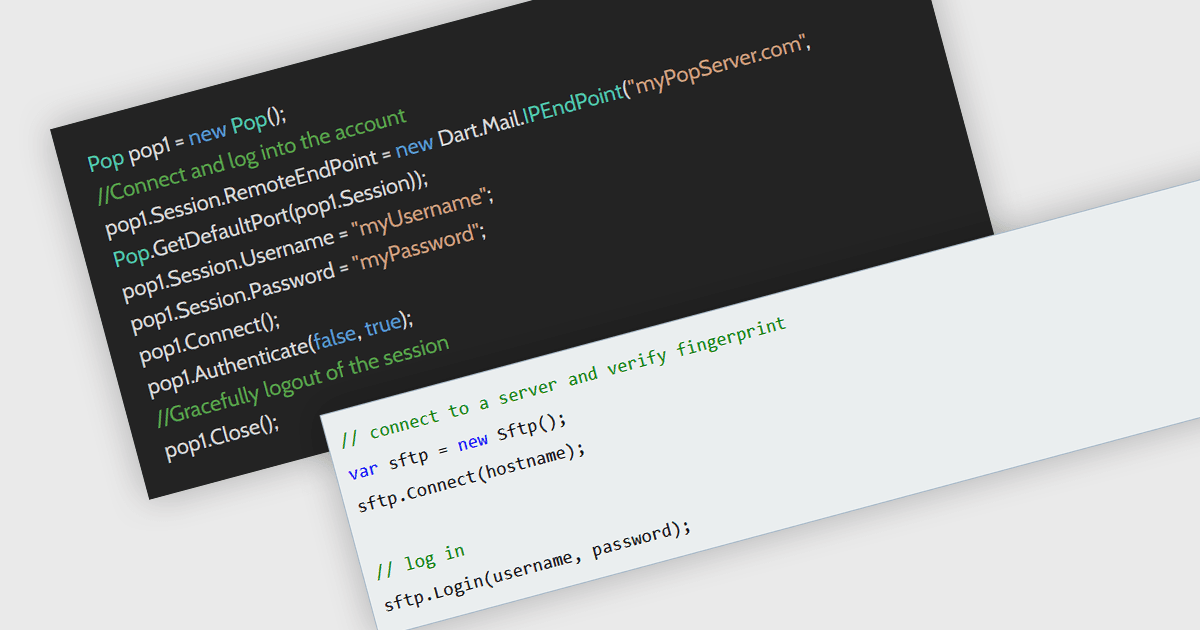
비밀번호 인증은 서비스나 시스템에 접근하기 전에 유효한 사용자 이름과 비밀번호를 요구하여 사용자의 신원을 확인하는 방법입니다. 구현이 간단하고 프로토콜 전반에 걸쳐 널리 지원되며 사용자와 개발자 모두에게 익숙하기 때문에 널리 사용됩니다. Simple Mail Transfer Protocol(SMTP), Internet Message Access Protocol(IMAP), Post Office Protocol 버전 3(POP3) 등을 사용하는 이메일 서버와 Secure File Transfer Protocol(SFTP)을 사용하는 파일 전송 시스템과 상호작용하는 애플리케이션에서 비밀번호 인증은 인증된 연결을 구축하는 신뢰할 수 있는 방법을 제공합니다. 기존 인프라 및 표준과의 호환성으로 인해 메시징 및 통신 시나리오에서 인증된 접근을 가능하게 하는 실용적인 선택입니다.
여러 .NET 통신 및 메시징 컴포넌트가 다음과 같은 비밀번호 인증 방식을 지원합니다:
- Aspose.Email for .NET은 SMTP, IMAP, POP3 및 Exchange Web Services(EWS) 연결에 대해 비밀번호 인증을 제공하여 애플리케이션이 메일 서버에 액세스할 수 있게 합니다.
- SecureBlackbox .NET Edition(/n software 제공)은 많은 보안 통신 프로토콜에 대해 비밀번호 기반 인증을 제공하여 암호화되고 인증된 연결을 가능하게 합니다.
- Rebex SFTP는 Secure File Transfer Protocol(SFTP) 연결에 대해 비밀번호 인증을 지원하여 애플리케이션이 파일 전송 시 사용자를 인증할 수 있게 합니다.
- PowerTCP Mail for .NET (Dart Communications 제공)는 SMTP, POP3, IMAP 서버에 대해 비밀번호 인증을 포함하여 앱이 메일 서버에 연결하고 상호작용할 수 있게 합니다.
기능 및 가격에 대한 심층 분석은 .NET 통신 및 메시징 컴포넌트 비교 페이지를 방문하세요.