par Altova - Type de produit : Application
Altova MissionKit Enterprise 2013 Installed Users by Altova
URLs: altova-missionkit, altova missionkit, altovamissionkit, altova
Tools for XML, data integration and Web services. Altova MissionKit Enterprise is the ideal product suite for the software architect who needs UML modeling and database management tools in addition to advanced XML, Web services, and data integration capabilities. The Altova MissionKit Enterprise includes the following XML, database, and UML tools: XMLSpy – an XML editor, MapForce – an any-to-any graphical data mapping, conversion, and integration tool with support for XML, databases, flat files, EDI, Excel, XBRL, and/or Web services, StyleVision – a graphical stylesheet designer for XML, XBRL, and databases, UModel – the UML tool for software modeling and application development, DatabaseSpy – a multi - database query, design, and database comparison tool, DiffDog – an XML aware diff/merge tool for file, folder, and directory differencing, SchemaAgent – a graphical XML Schema, XSLT, and WSDL file management and modeling tool, and SemanticWorks – a visual RDF/OWL editor.
Altova MissionKit Enterprise includes the following products:
XMLSpy Enterprise Edition
MapForce Enterprise Edition
StyleVision Enterprise Edition
UModel Enterprise Edition
DatabaseSpy
DiffDog
SchemaAgent
SemanticWorks
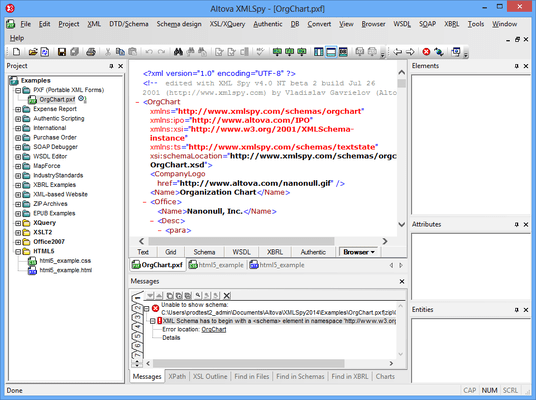
Altova XMLSpy Enterprise delivers all the power you need to create advanced XML applications, yet at the same time it’s flexible enough to allow you to work with XML using the views and options that best suit your business needs and working preferences. XMLSpy increases productivity by allowing you to develop higher-quality, standards-conformant XML-based applications more quickly than ever before. Designed to increase your XML development productivity from start to finish.
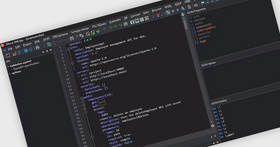
XMLSpy abstracts away the complexity of working with XML-based technologies through its intuitive user interface and rich variety of editing views and options. Five synchronized editing views allow you to work with any XML technology in a way that best suits the complexity of the document and your preferences, for instance, if you prefer to develop in a text view, graphical view, or switch back and forth between the two.
The intelligent editing features of XMLSpy support auto completion, context sensitive syntax help, entry helpers, syntax coloring, and more to aid you in creating valid XML documents. The XMLSpy views and intelligent editing functions are designed to make working with documents as easy as possible. When working with XML is easy, productivity increases, saving money and decreasing time-to-market for your applications.
Altova MapForce Enterprise uniquely lets you map data in an intuitive, visual manner. Then it auto-generates the program code or stylesheets required to implement your Web services and custom data integration applications server-side.
MapForce supports the following functionality:
Graphical data mapping
Executing and saving mapping output
Bi-directional XML, database, flat file and EDI data mapping
Advanced data processing functions
Mapping data to WSDL operations
Visual function builder for creating custom functions
Building Web services
Project view for organizing mappings
Mapping multiple sources to multiple targets
Seamless integration with Eclipse and Visual Studio
Parsing flat files using FlexText utility OLE and ActiveX controls
XSLT 1.0, XSLT 2.0, XQuery generation
Java, C#, C++ program code generation
Altova StyleVision Enterprise features a unique graphical design interface for creating stylesheets to transform XML and database data into multiple output formats. Because StyleVision produces standards-conformant XSLT 1.0, XSLT 2.0, and XSL:FO stylesheets, plus HTML, Word/RTF, PDF, and Authentic form output simultaneously, based on one design, developers and designers no longer need to spend countless hours hand-coding and testing intricate stylesheets to implement single source publishing and database reporting solutions. StyleVision features and functionality include:
Enhanced, highly intuitive graphical design interface
Support for built-in and imported CSS styles
Visual, drag & drop stylesheet design
Support for JavaScript functions and a JavaScript editor
Support for DTD, XML Schema, and relational database sources
Support for multiple sources in one design
Web page design
Combining XML and database data in one design
Database report design HTML to XML converter
PDF design
Industry template support (DITA , DocBook, NewsML, etc.)
Microsoft Word / RTF design
Generation of standards-based stylesheets
Converting XML to HTML, PDF, Word/RTF
Style repository for managing and applying styles
Authentic electronic forms design
Batch execution from command line
Standards-conformance: XSLT 1.0/2.0, XPath 1.0/2.0, XSL:FO
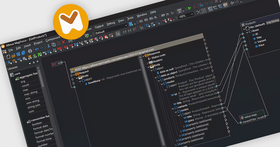
Altova UModel is the starting point for successful software development. Visually design application models in UML and generate Java, C#, or Visual Basic .NET code and project documentation. Or, reverse engineer existing programs into UML 2 diagrams, then fine tune your designs and complete the round trip by regenerating code. UModel makes visual software design practical for any project. It is a simple, cost-effective way to draw on UML.
UModel combines a rich visual interface with superior usability features to help level the UML learning curve, yet it also includes high-end functionality to empower users with the most compelling advantages of UML software development.
UModel Enterprise Edition can integrate and operate inside either of these integrated development environments (IDEs), adding exciting new functionality. When using UModel 2009 within these multi-purpose IDEs, a developer can open a UModel project in one window and the associated application code in a source code editor in another. Automatic synchronization can be set in either or both directions to instantly update the UML model or source code whenever changes are made to the other. This allows developers to instantly see the impact of application revisions, whether implemented in the model or directly in source code.
Altova SchemaAgent Enterprise is a graphical schema administration tool that allows you to view a collection of schemas as a pool of resources. SchemaAgent also allows you to view schemas used as data sources and/or targets in Altova MapForce data mapping designs.
Altova SchemaAgent includes the SchemaAgent client and a SchemaAgent Server. The SchemaAgent Server is installed on one computer in your workgroup and can be configured to connect to any standard file repository on your network or on the Internet. Once the SchemaAgent Server is configured with your desired file paths, it builds an internal map of the relationships between all schemas (.XSD) and MapForce mapping design files (.MFD) in the defined server paths. Any number of SchemaAgent clients may connect to the SchemaAgent Server to have access to all these schemas.
Altova SemanticWorks allows you to graphically create and edit RDF instance documents, RDFS vocabularies, and OWL ontologies with full syntax checking. Context-sensitive entry helpers present you with a list of permitted choices based on the RDF or OWL dialect you’re using, so you can create valid documents quickly and easily.
SemanticWorks provides, easy-to-use functionality for:
Visual creation and editing of RDF, RDF Schema (RDFS), OWL Lite, OWL DL, and OWL Full documents using an intuitive, visual interface and drag-and-drop functionality
Syntax checking to ensure conformance with the RDF/XML specifications
Auto-generation and editing of RDF/XML or N-triples formats based on visual RDF/OWL design
Printing the graphical RDF and OWL representations to create documentation for Semantic Web implementations
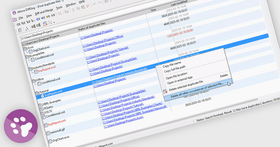
DiffDog indicates differences visually, allowing you to quickly identify changes. For optimal efficiency, you can edit documents directly within the differencing interface, merge changes, and instantly re-compare the edited files.
DiffDog provides the same capabilities for directory comparisons, allowing you to compare and merge directories, and open and edit the file pairs directly from the directory comparison display.
Intelligent XML Differencing
In addition to text file and directory comparisons, DiffDog Professional Edition supports intelligent XML differencing features and options, such as DTD/schema-based validation, well-formedness checking, intelligent entry helpers, and much more to help you compare and merge XML files in an intelligent manner. The DiffDog XML differencing capabilities are completely customizable. For example, you can specify if entities should be resolved, if namespace prefixes, whitespace, CDATA, processing instructions, comments, or the ordering of attributes/child elements should be ignored or not, how to visualize differences, and so on. DiffDog Professional Edition also allows you to compare XML files in advanced text view or the indispensable grid view popularized by Altova XMLSpy.
File Comparison
Comparing any text files
Differences indicated with colored highlights and connecting lines
Adjustable colors for indication of differences
Comparing files in advanced text view
Word wrap
White space indicators
Line feed indicators
Configurable differencing settings for different file extensions
Synchronized vertical scrolling
Synchronized horizontal scrolling
Support for multiple open file/directory comparisons
Command line operations
Provides list of recently compared file pairs
Source code conformant syntax coloring
Expand/collapse all folding nodes
Bookmarks & bookmark margin
Visual indentation guides
Text-folding margin
Option to show differences within lines
Comparing XML files in grid / table view (Professional Only)
Two comparison modes: textual or XML-aware (Professional Only)
Multiple options for XML-aware comparisons: entity resolution, ignore attribute order, ignore comments, etc. (Professional Only)
Directory Comparison
Compared directories displayed in expandable/collapseable trees
Compare directory components by file size and date or by file content
Differences indicated with color-coding and icons
Expand/collapse all folders in directory
Support for multiple open file/directory comparisons
Ability to start file comparisons from within directory comparison
Command line operations
Provides list of recently compared directory pairs
Automatic re-load of directory changed externally
Synchronization capabilities (copy/insert/delete)
Support of filters (ignore, compare only)
Source-Code & Text File Editing & Merging
Bi-directional merging of individual differences
Text View with syntax-coloring
Line Number Margin
Text-folding Margin
Bookmarks & Bookmark Margin
Visual indentation guides
Find & Replace based on Regular Expressions
Direct editing of files in File Comparision window
Files compared dynamically during editing
Unlimited undo for editing and merging
Find & replace based on regular expressions
Reload original file from disk
Automatic back-up of original file
Automatic re-load of file changed externally
Altova DatabaseSpy includes these robust and highly-flexible components and capabilities:
Connectivity to all major databases
Quick connect wizard
Database project manager
Online database browser
SQL editor
Database design editor
Export and import functions
Altova DatabaseSpy is designed to be the database professional’s multi-purpose tool, since it connects to all of the following database types:
Microsoft SQL Server 2000 and 2005
Microsoft Access 2003
Oracle 9i and 10g
IBM DB2 8.x and 9
MySQL 4.x and 5.x
Sybase 11
What’s new in MissionKit 2013 Release 2?
XMLSpy 2013
FOP 1.1 support - New processor for PDF generation.
MapForce 2013
Deploy to FlowForce Server functionality - Makes it easy to deploy mapping projects to FlowForce Server for automation.
MapForce Server Development Edition - Allows users to automate execution of MapForce mappings on a local system, with faster performance and reduced memory footprint.
Support for new Databases and Database Versions - Informix 11.70, PostgreSQL versions 9.0.10/9.1.6/9.2.1, MySQL 5.5.28, IBM DB2 versions 9.5/9.7/10.1, SQL Server 2012, Sybase ASE (Adaptive Server Enterprise) 15/15.7 and Access 2010/2013.
StyleVision 2013
Support for FOP 1.1 - New processor for generating PDF output .
Support for deploying StyleVision designs to FlowForce Server - Automate multi-channel document and report generation.
DatabaseSpy 2013
Support for Creating and Editing Oracle PL/SQL Packages - PL/SQL packages are a core Oracle feature and can be found in existing databases when connecting with DatabaseSpy.
Support for Logical Files in IBM iSeries Databases - Implements functionality with a wider range of IBM DB2 databases.
Authentic 2013
Support for FOP 1.1 - New processor for generating PDF output .
What's new in MissionKit 2013 SP1?
Support for Windows 8 and Windows Server 2012.
Visual Studio integration now includes Visual Studio 2012.
Support for Internet Explorer 10 (in desktop mode).
Chinese language version of XMLSpy 2013.
What's new in Altova MissionKit 2013?
Support for SQL stored procedures in data mapping projects
Seamless integration of MissionKit functionality in Java applications
Updated standards support
Smart Fix validation
What’s new in XMLSpy 2012 Release 2?
EPUB 2.x support
Zip and OOXML support extended to Professional Edition
Support for logical files in IBM iSeries databases
Ability to escape/unescape XML characters
Faster start-up
What’s new in MapForce 2012 Release 2?
Sort data by various criteria
Support for logical files in IBM iSeries databases – Enterprise and Professional Edition only
What’s new in StyleVision 2012 Release 2?
RichEdit functionality for Authentic forms
Support for logical files in IBM iSeries databases
What’s new in UModel 2012 Release 2?
Code generation from UML sequence diagrams
Support for logical files in IBM iSeries databases
What’s new in DatabaseSpy 2012 Release 2?
Support for creation and editing of Oracle PL/SQL packages
Support for logical files in IBM iSeries databases
What’s new in DiffDog 2012 Release 2?
Save and reload parameters for file and folder comparisons
Selection to hide or display empty folders in directory comparisons
Support for logical files in IBM iSeries databases
What’s new in Altova MissionKit Enterprise 2012?
What’s new in Altova XMLSpy 2012?
HTML5 support
CSS3 support
JDBC database driver support
Java API
New samples for API use
Find in Project
What’s new in Altova MapForce 2012?
Streaming read for large XML, CSV, and FLF files and databases
New functions parse-date and parse-time
Visual alignment guides on mapping screen
JDBC database driver support
New Java API
Search in project window
What’s new in Altova StyleVision 2012?
Composite styles
Dynamic class assignment for HTML, Word, RTF, PDF, and Authentic
Dynamic CSS selection via XPath
HTML5 and CSS3 support
JDBC Support
Java API
New samples for API use
Search in project window
What’s new in Altova UModel 2012?
Model Driven Architecture
Java database driver support
Visual alignment guides
New Java API
What’s new in Altova DatabaseSpy 2012?
JDBC database driver support
Search in project window
What’s new in Altova DiffDog 2012?
Compare files and folders on FTP and HTTP servers
JDBC database driver support
What's new in Altova MissionKit Enterprise 2011r3?
New features in XMLSpy v2011r3 include:
Digital XML signatures for XML documents
Support for PXF (Portable XML Form) file format
Support for .NET 4.0 scripting
Ability to add additional .NET assemblies for scripting
New spell checker with improved dictionary support
Support for Internet Explorer 9 in Browser View
Shortcut for selecting entire XML element
New features in MapForce 2011r3 include:
Define multiple ranges in a single Excel worksheet
Native Support for HIPAA 5010
Auto-generation of 999 messages for X12 version 5010
Command line extensions
Support for .NET 4 in built-in execution
Save individual values or entire sub-trees in intermediate variables
Support for XML signatures on output
New features in StyleVision 2011r3 include:
Digital signatures for XML documents
Support for new PXF (Portable XML Forms) file format
New spell checker with improved dictionary support
Support for Internet Explorer 9
Support for .TIFF, .JPEG XR, and .SVG image formats
Scripting editor supports .NET 4.0
Ability to add additional .NET assemblies for scripting
UModel 2011 Release 3 adds several new productivity-enhancing features:
Enhanced class diagrams for projects that generate .NET (C# and Visual Basic) application code
Scripting and scripting editor support for .NET 4.0 and .NET assemblies
Enhanced support for code generated from state machine diagrams
Enhanced code generation options for XML Schemas
What's new in Altova MissionKit Enterprise 2011r2?
Multiple important enhancements to the chart and reporting functionality announced in Version 2011 have been added to multiple MissionKit tools: XMLSpy, StyleVision, and DatabaseSpy. The chart design options and user interface are identical in all three applications, so MissionKit users can work intuitively and productively as they move from processing XML data in XMLSpy, to preparing charts for a business intelligence report with StyleVision, and even when they create graphical displays directly from SQL query results in DatabaseSpy. The wide range of new customizable charting features introduced in version 2011 release 2 includes:
Stacked Bar charts
Area charts
Stacked Area charts
Candlestick charts
Chart overlays
Background images & color gradients
Ability to change position of axis labels
What’s new in XMLSpy v2011?
Chart creation - Enterprise only
Chart creation in XMLSpy 2011 brings a whole new dimension to working with XML data. XMLSpy 2011 makes it easy to create eye-catching, compelling charts for displaying XML data. Now you can visualize and analyze numerical XML data – and XBRL data – directly inside XMLSpy with just a few clicks. No more exporting to Excel. The following types of charts are available:
2D & 3D pie charts
2D & 3D bar charts
Category line graphs
Value line graphs
Gauge charts
You can create up to nine different charts on the available tabs in the Output Window, and you can save each as a custom-sized image file with just a click or print it directly from XMLSpy. You can also copy it to your clipboard to paste it in another application, such as Microsoft Word or PowerPoint. What’s more, you can copy the XSLT or XQuery code to create the chart to the clipboard for use in your own stylesheet or application.
Validation of SOAP against WSDL - Enterprise only
This new feature will be very useful for Web services developers, as it allows them to ensure their SOAP messages are valid against the SOAP specification as well as any XML Schemas referenced in the corresponding WSDL definition.
Schema flattener -Enterprise and Professional
The new Schema Flattener in XMLSpy 2011 allows schema designers to write all the dependent files that are included in a schema into one file. This way, you can use the flattened schema without having to rely on a network connection to access the required files. This could be especially important when shipping a schema within an application.
Creation of schema from subset - Enterprise and Professional
In addition to flattening schemas, XMLSpy 2011 allows you to create a schema from a subset of a larger schema. Many schemas are quite large and contain more types and elements than are required for a particular application or information exchange. Furthermore, the larger a schema is, the longer loading and validation may take. The ability to create a new schema from a subset means a developer can select some global elements or types from a large schema to create a smaller one, using just the elements required. This feature is especially useful for working with NIEM information exchanges, but has also been requested by other users for a variety of applications.
What’s new in MapForce 2011?
Chained transformations – Enterprise, Professional and Standard
Chained transformations enable users to create complex mappings in which the output of one mapping becomes the input of another. This is a feature that adds to MapForce's ability to execute fully automated transformations. Each chained component becomes a modular entity in an interdependent transformation sequence, allowing for conversions to be made on-the-fly. MapForce users can create chained transformations using any number of mapping components connected to a final target component. Preview and code generation features can be displayed/generated for intermediate components, as well as for the final mapping result. Intermediate mapping components will also now have a "pass-through" button in the title bar. This button will enable users to define the set of data that gets passed on to the following component.
Integration with StyleVision for output components – Enterprise, Professional and Standard
Integration with StyleVision lets MapForce users automatically render results of their XML and XBRL mappings using an associated StyleVision template design. This means that these components can be previewed as HTML, RTF, PDF, or Word 2007+ documents. This feature for MapForce essentially combines its capabilities with those of StyleVision, meaning that users can now automate report generation from virtually any data format - as long as it can be mapped to an XML Schema or XBRL taxonomy.
Formatting of numbers, dates, and times – Enterprise, Professional and Standard
One of the most frequently requested features, this enables MapForce users to easily convert numbers, dates, and times to their string representations using a variety of different formatting functions. For example, the simple format-number function below converts a numerical input (e.g., 12345) to a monetary one in with a USD prefix, comma separating the thousands digits, and two decimal places (e.g., $12,345.00).
Two new parameters in auto-number function – Enterprise, Professional and Standard
The auto-number generator function in MapForce has been updated to include two additional parameters, global-id and restart-on-change, adding to the ways in which you can manipulate data between source and target format(s). Global-id assigns a global identifier to an auto-number sequence, making it accessible throughout the data mapping project, including in user-defined functions. Restart-on-change allows users to restart auto-numbering every time the value supplied this parameter changes, enabling them to create intelligent numbering sequences.
Functions for working with timezones – Enterprise and Professional
Two new functions have been added to the MapForce function library to handle mappings that involve timezones. "convert-to-utc" will change time or datetime to a UTC (Coordinated Universal Time) or GMT value, while "remove-timezone" will simply strip the timezone information from a time or datetime conversion.
Extended support for UN/EDIFACT – Enterprise only
Support for the EDIFACT international EDI standard has been extended to include 08B, 09A, and 09B messages.
Extended support for ANSI/X12 – Enterprise only
Support for the X12, the official national EDI standard of the United States of America, has been extended to include the 6010 and 6020 transaction sets.
What’s new in StyleVision 2011?
Charts as a new design element – Enterprise only
The addition of charting to StyleVision's general purpose reporting capabilities - including support for modular designs, conditional templates, dynamic publishing, creating electronic forms, multiple output formats, and more - makes for an advanced and highly scalable decision support tool for XML, database, and XBRL content. As with all StyleVision designs, charts can be rendered for multi-channel output in HTML, RTF, PDF, Word 2007+, and as electronic forms. Users can now insert different configurations of the following charts/graphs in their template designs:
2D & 3D pie charts
2D & 3D bar charts
Category line graphs
Value line graphs
Gauge charts
The Chart Configuration dialog enables users to easily select chart type, title, size, and data using string entries and/or XPath expressions. Chart data is selected using XPath statements. Users can input the statements directly into the dialog or they can get some assistance with XPath syntax using StyleVision's built-in XPath Builder to define the chart context node, series name (or z-axis), x-axis, and y-axis. Styles and properties can be defined using the All settings… option in the Chart Configuration dialog, and/or by using the StyleVision entry helper windows. Using advanced features like editable variables in Authentic and XPath predicates lets users create forms that can be manipulated by end-users for the desired result.
Chart wizard for XBRL files – Enterprise only
Adding to its XBRL rendering capabilities, StyleVision now allows users to generate charts in their XBRL reports using a comprehensive wizard. Charts are created by simply dragging a financial statement or other parent node to the design pane and choosing Create XBRL Chart to start the XBRL Chart Wizard. Users can customize the data rendered in their charts by selecting the desired category or series values (Concept and Period are default) in the properties dialogs. The Period Properties dialog gives options on how to handle XBRL periods, which convey the relevant instant or intervals of time for XBRL reporting. As with the charting feature mentioned above, chart styles and properties can be controlled using the All settings button in the Chart Wizards and/or by using the StyleVision entry helper windows, where users can select chart type, background color, fonts, alignment, etc.
Scripting & toolbar editor for Authentic – Enterprise and Professional
StyleVision includes an integrated scripting environment that allows users to interact with XML and database reports using forms, event handlers, and macros created in the Scripting Editor interface. Scripting adds new options for creating Authentic applications and includes:
Script editor with form support
Toolbar editor
Support for JavaScript and VBScript
Ability to define event handlers
Access to Authentic COM interface from script macros
Ability to debug macros
Multi-channel output of HTML/CALS tables – Enterprise, Professional and Standard
HTML and CALS provide standard tags for representing the structure of tables and are often used common documentation projects as well as in XML industry standards such as DocBook, DITA, and more. Support for HTML/CALS tables means that StyleVision will automatically recognize values dictating table structure such as column number, row height, etc., and apply them to rendered output (v2011 adds support for rendering HTML/CALS tables in HTML, RTF, PDF, AND Word 2007+ - previous releases have supported output to Authentic e-Forms).
Assigning styles to HTML/CALS tables – Enterprise, Professional and Standard
StyleVision users can now also use the design interface to assign additional presentation styles to HTML and CALS tables such as column and row attributes like width and alignment, font attributes, background color, and more. This enables customers to add information that may be missing from the source format. For instance, in the example below styles have been applied to the table caption, header, and row margins.
Multiple assignments to HTML/CALS tables in a single schema – Enterprise, Professional and Standard
There are some situations in which different elements can be assigned in the same schema to represent HTML/CALS tables. For example, the DocBook specification uses both the <table> and <informaltable> elements as tags for CALS tables. StyleVision allows users to differentiate between these data structures and define separate styles to each using the Edit HTML/CALS tables dialog.
Ability to import existing XSLT files – Enterprise, Professional and Standard
Instead of having to design templates from scratch to access StyleVision functionality, users will now be able to base their designs on existing XSLT files that were designed for HTML output or XSLT files with XSL:FO commands for output in PDF. Users will simply specify the XSLT file and schema source and the template will be loaded into the design pane where it can be used for multi-channel publishing and/or to add additional styles using StyleVision's graphical user interface. Any changes to the underlying XSLT code can be previewed or saved at any time.
Support for Apache FOP 1.0 – Enterprise only
StyleVision now supports the latest version of the XSL:FO processor Apache FOP 1.0.
What’s new in UModel 2011?
Modeling SQL databases – Enterprise and Professional
As software applications interact with growing amounts of data, database designs and structures become critical to development of successful projects. UModel 2011 extends its software modeling functionality by adding a set of features to model popular relational databases along with programming language-based applications. The following database elements may be modeled in UModel 2011:
Database schemas
Tables
Views
Check Constraint element
Primary / Foreign / Unique keys
Index
Stored procedures
Functions
Triggers
Database Relationship Association
Teamwork support – Enterprise and Professional
Large software projects are often divided among multiple developers to shorten development cycles. This is especially useful for projects that must integrate with complex hardware interfaces or industry-specific standards. The graphical communication benefits of UML software modeling multiply as more developers work on a project, since the design representation of various sub-projects enhances communication across the development team. UModel 2011 supports teams working on large projects by allowing projects to be split up into multiple subprojects. Individual developers may simultaneously edit different parts of a single project. Each individual subproject can be added to a source control system. The top-level project, i.e., the project from which the subprojects are created, is the main project. Subprojects are created on the package level as individual UModel project files and have a *.ump extension. The screen shot below shows the UModel 2011 Model Tree helper window for a project that includes several sub-projects. Each subproject is identified by its individual file name. The UModel Generate Documentation feature allows users to optionally include subprojects in generated documentation, offering flexibility for individual developers to generate documentation for their own subprojects, and for project managers to automatically generate documentation for the full application.
3-way project merge – Enterprise and Professional
Starting with UModel 2011, a single UModel project can be split into multiple subprojects that can be edited by independent developers, with support check-in/check-out in source control systems. If multiple developers work independently on the same project file, a three-way merge allows them to easily combine changes into a single result.
State machine diagram, sequence diagram, and communication diagram enhancements – Enterprise and Professional
UModel 2011 includes new features to support operation call/event editing, and automatic creation of operations in transitions. Transitions in state machine diagrams can be selected from operations of a referenced class. Additionally, a new toolbar button for all three diagram types allows the user to enter a transition/message name and automatically create a corresponding operation in the referenced class.
What’s new in DatabaseSpy 2011?
Charts in DatabaseSpy
A graphical representation of data in a chart is much more vivid and communicates meaning more quickly than tables of numeric data. DatabaseSpy 2011 Enterprise Edition supports an entirely new set of charting features to graphically represent SQL query results. A new link in the Results window toolbar opens the Chart Selection dialog to initiate data charting. The following chart types are available to provide the most appropriate representation of various data sets:
Line charts
2D and 3D bar charts
2D and 3D pie charts
Round gauge and bar gauge charts
Numerous customization options are available for each chart type, including control of foreground and background colors, definition of axis ranges and labels, control of fonts colors and sizes, and more. DatabaseSpy 2011 charts may be exported to image files in .png, .bmp, .gif, or .jpg files in sizes specified by the user Exported charts can be used to create eye-catching visual elements to highlight reports of all types. Customized chart settings can be saved in settings files and loaded later for reuse. Charts can be generated based on relational data, or on calculations performed in SQL statements.
What’s new in DiffDog 2011?
Version 2011 includes a performance enhancement for the newest generations of workstation hardware.
Tools for XML, data integration and Web services.
Pricing: Altova MissionKit Enterprise 2013 Release 2 Installed Users (1), Altova MissionKit Enterprise 2013 Release 2 Installed Users (5), Altova MissionKit Enterprise 2013 Release 2 Installed Users (10), Altova MissionKit Enterprise 2013 Release 2 Installed Users (20), Altova MissionKit Enterprise 2013 Release 2 Installed Users (50), Altova MissionKit Enterprise 2013 Release 2 + SMP (1 year) Installed Users (1) + SMP (1 year), Altova MissionKit Enterprise 2013 Release 2 + SMP (1 year) Installed Users (5) + SMP (1 year), Altova MissionKit Enterprise 2013 Release 2 + SMP (1 year) Installed Users (10) + SMP (1 year), Altova MissionKit Enterprise 2013 Release 2 + SMP (1 year) Installed Users (20) + SMP (1 year), Altova MissionKit Enterprise 2013 Release 2 + SMP (1 year) Installed Users (50) + SMP (1 year), Altova MissionKit Enterprise 2013 Release 2 + SMP (2 years) Installed Users (1) + SMP (2 years), Altova MissionKit Enterprise 2013 Release 2 + SMP (2 years) Installed Users (5) + SMP (2 years), Altova MissionKit Enterprise 2013 Release 2 + SMP (2 years) Installed Users (10) + SMP (2 years), Altova MissionKit Enterprise 2013 Release 2 + SMP (2 years) Installed Users (20) + SMP (2 years), Altova MissionKit Enterprise 2013 Release 2 + SMP (2 years) Installed Users (50) + SMP (2 years), Altova MissionKit Enterprise SMP renewal (1 year) Installed Users (1) SMP Renewal (1 year), Altova MissionKit Enterprise SMP renewal (1 year) Installed Users (5) SMP Renewal (1 year), Altova MissionKit Enterprise SMP renewal (1 year) Installed Users (10) SMP Renewal (1 year), Altova MissionKit Enterprise SMP renewal (1 year) Installed Users (20) SMP Renewal (1 year), Altova MissionKit Enterprise SMP renewal (1 year) Installed Users (50) SMP Renewal (1 year), Altova MissionKit Enterprise SMP renewal (2 year) Installed Users (1) SMP Renewal (2 year), Altova MissionKit Enterprise SMP renewal (2 year) Installed Users (5) SMP Renewal (2 year), Altova MissionKit Enterprise SMP renewal (2 year) Installed Users (10) SMP Renewal (2 year), Altova MissionKit Enterprise SMP renewal (2 year) Installed Users (20) SMP Renewal (2 year), Altova MissionKit Enterprise SMP renewal (2 year) Installed Users (50) SMP Renewal (2 year)
Evals & Downloads: Read the Altova License Agreement - Requires Acrobat Reader, Read the SchemaAgent help file, Read the MapForce help file, Read the StyleVision help file, Read the XMLSpy help file, Read the DatabaseSpy help file, Read the DiffDog help file, Read the UModel help file, Download the Altova MissionKit Enterprise Spanish 2013 Release 2 evaluation on to your computer - Expires After 30 Days, Download the Altova MissionKit Enterprise Japanese 2013 Release 2 evaluation on to your computer - Expires After 30 Days, Download the Altova MissionKit Enterprise German 2013 Release 2 evaluation on to your computer - Expires After 30 Days, Download the Altova MissionKit Enterprise English 2013 Release 2 evaluation on to your computer - Expires After 30 Days
Operating System for Deployment: Windows 8, Windows Server 2012, Windows 7, Windows Server 2008, Windows Vista, Windows XP, Windows Server 2003, Windows 2000
Architecture of Product: 32Bit, 64Bit
Product Type: Application
Built Using: MFC V4.2 / V6.0
Compatible Containers: Microsoft Visual Studio 2012, Microsoft Visual Studio 2010, Microsoft Visual Studio 2008, Microsoft Visual Studio 2005, Microsoft Visual Studio .NET 2003, Microsoft Visual Studio 6.0, Microsoft Visual Basic 2012, Microsoft Visual Basic 2010, Microsoft Visual Basic 2008, Microsoft Visual Basic 2005, Microsoft Visual Basic .NET 2003, Microsoft Visual C++ 2012, Microsoft Visual C++ 2010, Microsoft Visual C++ 2008, Microsoft Visual C++ 2005, Microsoft Visual C++ .NET 2003, Microsoft Visual C++ 6.0, Microsoft Visual C# 2012, Microsoft Visual C# 2010, Microsoft Visual C# 2008, Microsoft Visual C# 2005, Microsoft Visual C# .NET 2003, Microsoft Visual InterDev 6.0, Microsoft Office 2003, Microsoft Office 2000, Microsoft Access 2013, Microsoft Access 2010, Microsoft Access 2003, Microsoft Access 2002, Microsoft Access 2000, Microsoft SQL Server 2012, Microsoft SQL Server 2000, Microsoft SQL Server 7.0, Microsoft Outlook 2002, Microsoft Outlook 2000, Microsoft Exchange Server 5.5, Microsoft Internet Information Server 5.0, Microsoft Internet Information Server 4.0, Microsoft Internet Explorer 10.0, Microsoft Internet Explorer 9.0, Microsoft Internet Explorer 8.0, Microsoft Internet Explorer 7.0, Microsoft Internet Explorer 6.0, Microsoft Internet Explorer 5.5, C++Builder 6, C++Builder 5, Delphi 7.0, JBuilder 9, JBuilder 8, Oracle 9i JDeveloper, .NET Framework 4.0, .NET Framework 3.5, .NET Framework 3.0, .NET Framework 2.0, .NET Framework 1.1, WebLogic Workshop, IBM DB2 8.x, Eclipse V3.3, Eclipse V3.1.2, Eclipse V3.0
Product Class: Component Development Tools, .NET Development Tool, Component Building Tools
Keywords: Altova MissionKit, MissionKit, Altova MissionKit Enterprise mission kit
Altova GmbH - The XML Spy Company
Product Suites Suite bundles bundle
Code Creation Editing
Entry data-entry
Conversion Convert converts converting
Database DB Connectivity
Database DB Management
Development
Flow Diagramming diagram diagrams flowchart
modeling modeled modelled modelling models model UML MDA
Productivity performance efficiency
SQL query language
Debugging debug debugs Testing Test Tests
XML Extensible Markup
HTML Editing Edit editor
Database DB Reporting Report reports
Analysis Design Modeling
Development Design Creating Making Components
webservices web-services
ide, ides, integrated development environments, integrated dev environments, dev environments, development programs, development environment, development environments, software development tool
Part numbers: PC-517584-556021 517584-556021 PC-517584-556026 517584-556026 PC-517584-556031 517584-556031 PC-517584-556036 517584-556036 PC-517584-556041 517584-556041 PC-517584-556046 517584-556046 PC-517584-556051 517584-556051 PC-517584-556056 517584-556056 PC-517584-556061 517584-556061 PC-517584-556066 517584-556066 PC-517584-556071 517584-556071 PC-517584-556076 517584-556076 PC-517584-556081 517584-556081 PC-517584-556086 517584-556086 PC-517584-556091 517584-556091 PC-517584-556096 517584-556096 PC-517584-556101 517584-556101 PC-517584-556106 517584-556106 PC-517584-556111 517584-556111 PC-517584-556116 517584-556116 PC-517584-556121 517584-556121 PC-517584-556126 517584-556126 PC-517584-556131 517584-556131 PC-517584-556136 517584-556136 PC-517584-556141 517584-556141
Mfr. Part No: K13E-I001 K13E-I001+M1 K13E-I001+M2 K13E-I005 K13E-I005+M1 K13E-I005+M2 K13E-I010 K13E-I010+M1 K13E-I010+M2 K13E-I020 K13E-I020+M1 K13E-I020+M2 K13E-I050 K13E-I050+M1 K13E-I050+M2 KE+M1-I001 KE+M1-I005 KE+M1-I010 KE+M1-I020 KE+M1-I050 KE+M2-I001 KE+M2-I005 KE+M2-I010 KE+M2-I020 KE+M2-I050

Éditeur
Catégorie principale
Produits similaires
Catégories similaires
ComponentSource offre un service international unique, reconnu par plus de 1 000 000 développeurs de logiciels partout dans le monde.