
官方供應商
我們作為官方授權經銷商,直接提供超過200家開發廠家所發行超過1000個的產品授權給您。
請參閱我們所有的品牌。

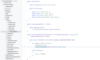
描述: Automate mapping between complex data models and simplified data transfer objects. AutoMapper is a convention-based object-object mapper that enforces naming conventions and optimizes complex object and LINQ mapping to simple DTOs. It removes boilerplate ... 閱讀詳情
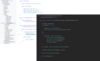
描述: Convention-driven mapping and powerful mediation for clean, scalable.NET architectures. Lucky Penny Software Bundle is a developer based suite offering commercial editions of the widely used.NET libraries AutoMapper and MediatR. Lucky Penny Software ... 閱讀詳情

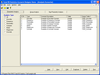
描述: Add advanced statistical analysis to your Visual Basic applications. Total VB Statistics allows VB developers to integrate advanced data analysis directly into any VB project, eliminating the need to import/export data to other programs or write complex ... 閱讀詳情

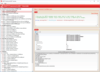
描述: Complex SWIFT messaging solution for your.NET applications. SWIFT Framework.NET is a system for capturing, validating and processing SWIFT messages within an organizations information systems infrastructure. SWIFT Framework.NET allows seamless integration ... 閱讀詳情
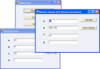
描述: Allows you to easily build extensive calculation support into.NET applications. This library lets you set up forms that have calculation dependencies among various controls. It comes with a functions library of more than 150 commonly used formulas and ... 閱讀詳情
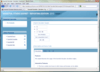
描述: allows you to easily build extensive calculation support into.NET applications. This library lets you set up forms that have calculation dependencies among various controls. It comes with a functions library of more than 150 commonly used formulas and ... 閱讀詳情
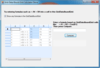
描述: allows you to easily build extensive calculation support into.NET applications. This library lets you set up forms that have calculation dependencies among various controls. It comes with a functions library of more than 150 commonly used formulas and ... 閱讀詳情
聯繫電話: (888) 850 9911
傳真: +1 770 250 6199


