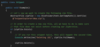
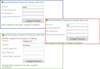
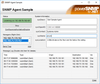
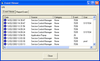
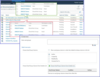
Screenshot Preview

SvCom

by ALDYN Software - 상품타입: Component / Add-In / VCL / Source Code

주의 : 별도의 안내가 없는 경우에는 영어제품 입니다.

*

Set of Delphi classes to develop service applications and make use of the NT Security framework. SvCom is an integrated package of classes and tools for development of service applications and use of NT Security framework. It works under all flavors of Windows. Use SvCom to deploy NT Service applications under Windows 9x/ME and NT/2000/XP/2003/Vista.

$136.22

일반 적인 소비자 가격은 하기에 표시되어 있습니다. 고객님의 할인가격은 표시 하시려면 로그인 해주시기 바랍니다.

통화 선택 표시하고 있습니다. 전체 가격 | 리뉴얼 가격

SvCom V7.7   *

주문 $ 136.22 1 Developer License (Includes 1 Year of Updates and Support)  * 다운로드 (99.5 MB)
주문 $ 587.02 1 Site License (Includes 1 Year of Updates and Support) (Allows Unlimited Developers at a Single Physical Address)  * 다운로드 (99.5 MB)
주문 $ 410.62 1 Site License Upgrade from Single License (Includes 1 Year of Updates and Support) (Allows Unlimited Developers at a Single Physical Address)  * 확인 다운로드 (99.5 MB)

SvCom Updates and Support Renewal   *

주문 $ 48.02 1 Year of Updates and Support Renewal for Single Developer License  * 다운로드 (212 KB)
주문 $ 195.02 1 Year of Updates and Support Renewal for Site License  * 다운로드 (212 KB)

SvCom V7.7 - Educational License   *

주문 $ 87.22 1 Educational License  * 다운로드 (99.5 MB)

가격에는 ComponentSource의 기술지원 요금이 포함되어 있습니다. 또한 다운로드 판매를 하고 있는 상품의 대부분은 온라인 백업요금이 포함되어 있어서 구입날로부터 30일 이내에 새로운 버전이 발매된 경우 무료로 업그레이드해 드리고 있습니다.  모든 주문에 대해서 당사표준 계약조건 반품조건 의 내용이 적용됩니다. 다음의 경우,고객 서비스로로 연락 주시기 바랍니다. (대량의 라이센스나 구 버전 등의 라이센스 옵션이 필요한 경우)

일반 적인 소비자 가격은 상기에 표시되어 있습니다. 고객님의 할인가격은 표시 하시려면 로그인 해주시기 바랍니다.

 *

What's New in SvCom V7.7

  • 64 bit support
  • Delphi XE2 support
  • Logon sensor behaviour in the case of 32bit exe under x64 Operating System is fixed
  • Service application registers correctly even when a subst drive is used

What's New in SvCom V7.6

  • Essential bug fixes

What's New in SvCom V7.5

  • Delphi XE support
  • Improved "build all" support: mk_view.ini and mk_setting.ini are auto-filled

 *

SvCom Features:

  • Deploy NT Service applications under Windows 9x/ME and NT/2000/XP/2003/Vista
  • Develop and debug NT services using either Windows 95/98 or NT - using the same classes and the same function calls
  • Advanced service debugging (Extremely useful, when your service is not just "Hello, World!")
  • Support of Win2k service failure actions
  • DCOM support (DCOM server in Service)
  • Enhanced support for DCOM objects: singleton model, apartment threading model, events support
  • MIDAS server in service support
  • Support of interactive service applications (Now it solves "Interactive Service Instability" problem too)
  • Configurable services support
  • Message processing support
  • Timer for services
  • Security-related non-visual components
  • Security-related visual controls
  • Logon/logoff detector
  • Process enumeration for Win95/98/NT/2000/XP/2003 (All in one function)
  • Tools and utils

Services for Windows NT/2000/XP/2003 and Windows 95/98
Using the SvCom framework applications that run as NT Services can be deployed under all 32 bit versions of Windows i.e. 2000/NT/XP/2003/9x. A Win 9x service emulator that is included with SvCom provides this unique ability. This means that any service you create using SvCom, on being executed will decide which platform it is running on, if it is Win 9x it will simply run as a normal application, otherwise it will run as a service. This service emulator for Win95/98 is based on a dynamic library that is included in SvCom that emulates accurately most NT Service features. Moreover SvCom includes an API that is similar to the native NT services API. This API is designed to allow service management without carrying about the operating system. Under NT this API passes all it's calls to the native NT services API while under Win9x it processes all calls to emulate the behavior of the NT services API.

Development of services under Windows NT/2000/XP/2003 and Windows 95/98
The SvCom components are designed to be used both in Windows NT/2000/XP/2003 and Windows 95/98/ME. So you can use any of these systems to design your application. The only limitation to using Win9x is debugging and testing your service, as there is no NT services API on these systems. But this is unlikely to cause you much of a problem, as SvCom will recognize the operating system and allow you to run and test your NT Service as if it were a normal application. Then when you later deploy it on an NT machine it will run as a NT service without any code changes.

Advanced service debugging
Debugging of SvCom-based services is far easier than debugging services created without SvCom. The standard advice for service debugging using the Delphi VCL is to start your service from the Delphi IDE and then quickly start the service using Control Panel. This is a nice trick but it is not convenient and it often doesn't work (A service with DCOM server inside is a good example). SvCom includes a powerful built-in service debugging tool. The idea of this tool is simple: if an SvCom-based application is started with the "/debug" switch it starts as an ordinary executable. Now the service will run in the debug mode exactly as it would as a service but this time you can trace it as an ordinary application. This can be done on both WinNT and Win9x machines.

Service recovery operations
Windows 2000 introduced a couple of new features for services: a service description and service recovery on failure. Starting from version 5.0 the SvCom includes built-in support for all these features. You can specify any of the allowed recovery operations: service restart, command execution or even computer reboot. Several recovery operations are allowed, Windows will execute the next one in the list after service failure occurs. The counter of failures can be reset to zero if the service works without failures for a given time interval. Use this property to make your service more reliable.

DCOM Server in NT Service
The SvCom includes it's own ActiveX framework. It is partially based on the native Delphi ActiveX framework but has some serious differences. All SvCom class factories know about SvCom services, this makes it possible to implement a DCOM server that will live in a service. SvCom takes care of all the necessary registry keys and COM initialization. SvCom-based DCOM servers automatically support pausing and stopping, it is even possible to have several services in one application with several DCOM servers in each service. What's more SvCom wizards make DCOM server in service creation as easy as possible. Starting from SvCom 5.0 the DCOM support is essentially enhanced: now you can easy create DCOM servers that support events, allow creation of objects in apartment threads or use advances of singleton model. MIDAS support is improved too. Now RemoteDataModules created to work in service correctly register themselves in the registry which greatly simplifies the MIDAS-server-in-service creation.

Interactive NT Services
The Delphi VCL was not designed to create interactive services becasue it uses some system information that changes when an interactive user logs off and logs on again. This will cause any forms that are created after a logoff/logon to appear damaged. SvCom includes a component that protects service forms from being damaged even if logoff/logon occurs several times.

Configurable NT Services
SvCom's internal design allows several instances of one service module to be created and then used as independent services. Of course the names and some other attributes of each instance should be changed to avoid problems with operating system.
Note, that with Delphi's service implementation it is not possible to use several instances of one TService descendant.

NT Service and windows messages
Standard services have no window handles at all, so the only way to send a message to this kind of service is to send it to the service thread. SvCom-base services do not have this limitation and are able to receive and process windows messages. Therefore it is possible to write a message handler for a service which will be called when the service receives the corresponding message.

Timer for NT Service
SvCom includes specialized timer component that will work in a service. This automatically detects a service being started or stopped causing an OnTimer event to occur in the service thread. Just drop it onto an SvCom service module and it is ready for use. If this component is dropped onto the form or an other module then it functions exactly the same as Delphi's timer.

SID, ACL, Security Descriptor...
The Windows NT security model includes a lot of objects and rules concerning the use of these objects. Most of these objects are variable-length records and their manipulation is additionally complicated by memory allocations and deallocation.
This means that even simple tasks can require quite complicated code to accommodate the NT security model. Most of these objects are variable-length records and their manipulation is additionally complicated by memory allocations and deallocation. SvCom includes a set of components to deal with NT security objects such as SID, ACL, SECURITY_DESCRIPTOR and so on. In addition components are provided to control user privileges and access NT secret data storage. These components take care of the correct memory allocation for security objects and conversion of their representation. This greatly simplifies the manipulation of NT security objects.

Visual NT Security Controls
SvCom's non-visual security components provide an easy way to deal with NT security objects. Visual security-related SvCom components provide all levels of functionality that are necessary to design a user`s interface.
For example, SvCom includes the security descriptor editor dialog. This is a configurable component that can be used to adjust security of any NT securable object. It's security-editing capabilities are much powerful then NT 4.0 and comparable with NT 2000.

Is there an interactive user?
SvCom includes non-visual component that detects when the interactive user logs on or off. There are no standard API to solve this task. Microsoft recommendation is to analyze the list of running processes to answer this question. This is the method is employed by SvCom and it works both in WinNT and Win9x.

List of processes
Windows NT/2000/XP/2003 and Windows 95/98/ME supply a different API to obtain the list of running processes. SvCom includes simple functions that work both in WinNT and Win9x and returns the list of processes in the string list.

Utils and tools
SvCom includes several applications that are useful for service development. They include

  • Service Indicator - application that sits in tray and shows the state of one selected service and allows control of it
  • Service Controller - command line service control tool for Windows NT/2000/XP/2003 and Windows 95/98/ME

주의

제품 리뷰의 한국어 번역이 완료되지 않는 제품은 Google통역 서비스와 연동되어 표시되어 있습니다.통역 기계에 의한 자동 번역인 관계로 한국어 표기가 조금 부자연 스러운 점 양해 바랍니다.
에서 제공
FireFox와 Opera에서는 Flash가 필요합니다.

상품검색

검색어를 입력해주세요:

Quick 링크

개발처/발매처

주요 카테고리

ComponentSource에서 구입하는 이유?

ComponentSource는 세계 1,000,000명 이상의 개발자에게 각종 글로벌 서비스를 제공합니다.

상세 | About Us