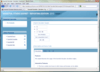
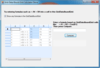
Screenshot Preview

WebCab Optimization for .NET

by WebCab - Product Type: Component / .NET Class / .NET Web Service / 100% Managed Code / ActiveX DLL

Add refined procedures for solving and performing sensitivity analysis on uni and multi dimensional, local or global optimization problems which may or may not have constraints; to your .NET, COM and XML Web service Applications. WebCab Optimization for .NET includes Specialized Simplex Linear programming algorithm, including sensitivity analysis with respect to object functions coefficients or linear boundaries using a duality or direct approach.

From
$175.42

Our regular prices are shown below. Please logon to see your discounted prices.

Price in

WebCab Optimization for .NET V2.6

Add to Cart $ 175.42 1 Developer License Download (4.0 MB)
Add to Cart $ 298.90 4 Developer Team License Download (4.0 MB)
Add to Cart $ 597.80 1 Site Wide License (Allows Unlimited Developers at a Single Physical Address) Download (4.0 MB)

Our prices include ComponentSource technical support and, for most downloadable products, an online backup and a FREE upgrade to the new version if it is released within 30 days of your purchase.  All sales are made on our standard Terms and Conditions and subject to our Return Policy. Please contact us if you require any licensing option not listed, including volume licensing and previous versions.

Our regular prices are shown above. Please logon to see your discounted prices.

This suite includes the following features:

  • Local unidimensional optimization - finds global minima / maxima for continuous functions in one dimension


    • Fast `low level' algorithms - use these algorithms when your primary concern is the speed and not the accuracy of the results. You will have to chose one bracketing algorithm and one locate algorithm (note, they are useful only in pairs). Also you will have to manually provide a lot of parameters (tolerance, maximum cycles etc) which can dramatically change the algorithm performance
      • Bracketing algorithms - these methods find an interval where at least one extrema of a continuous function exists
        • Acceleration bracketing - this method can be used with any continuous functions
        • Parabolic extrapolation bracketing - gives better results than acceleration bracketing for a large class of functions (functions that are locally parabolic about the extrema)
        • Acceleration bracketing for derivable functions - requires derivatives to be known; it's slower than the general acceleration algorithm but also safer
      • Locate algorithms - these methods converge to the extrema if the extrema is bracketed and the function under consideration is continuous
        • Parabolic interpolation locate - very fast algorithm but with moderate accuracy
        • Linear locate - slow algorithm but exhibits stable convergence
        • Brent locate - medium speed with good accuracy. With a good balance of speed and accuracy, this algorithm is very efficient to use
        • Cubic interpolation locate - very fast algorithm with reasonable accuracy; requires the derivatives to be known
        • Brent method for derivable functions - medium speed and good accuracy but requires derivatives to be known

    • Accurate `high level' algorithms - these algorithms are easy to use and offer high accuracy but are also very slow compared with the `low 'level' algorithms above (1,000 to 10,000 times slower). Use these algorithms when you need reliable results. The probability for a `high level' algorithm to make a mistake is much less than that of `low level' algorithms.
      • Method for continuous functions
      • Method for derivable functions

  • Global unidimensional optimization - finds global minima / maxima.


    • Methods for continuous functions
    • Methods for derivable functions

  • Unconstrained local multidimensional optimization


    • Methods for general functions - these algorithms do not require continuous functions
      • Downhill simplex method of Nelder and Mead - minimizes the function over a sequence of equal volume simplexes

    • Methods for continuous functions - these algorithms require the function to be continuous
      • Conjugate direction algorithms - this algorithm searches by iterating along conjugate paths
        • Powell's method - an implementation of the conjugate direction algorithm

    • Methods for derivable functions - these algorithms require the gradient of the function to be known
      • Steepest descent - a classical method with poor results, this method should mainly be used for testing purposes
      • Conjugate gradient algorithms - speed and accuracy highly dependent on the particular function, these methods can be deceived by `valleys' in the N-dimensional space
        • Fletcher-Reeves - an implementation of the conjugate gradient method
        • Polak-Riviere - an implementation of the conjugate gradient method
      • Variable metric algorithms/Quasi-Newton algorithms - slow speed; good results on a large class of continuous functions. The basic idea is to find the sequence of matrices which converges to the inverse Hessian of the function.
        • Fletcher-Powell - an implementation of the variable metric algorithm
        • Broyden-Fletcher-Goldfarb-Shanno - an implementation of the variable metric algorithm

  • Unconstrained global multidimensional optimization


    • Simulated annealing - a technique that has attracted significant attention as suitable for optimizing problems of large scale, especially ones where a desired global extremum is hidden among many poorer, local extrema

  • Constrained optimization for derivable functions with linear constraints


    • Rosen's gradient projection algorithm - uses the Kuhn-Tucker conditions as a termination criteria.

  • Linear programming - here the functions are linear and the constraints are linear


    • Simplex algorithm - Kuenzi, Tszchach and Zehnder implementation of the simplex algorithm for linear programming
    • Duality - Construct and solve the dual problem for a given primal linear programming problem.
    • Sensitivity Analysis - Study how the location and value of the extremum varies under perturbations of the object function and parallel shifts of the linear constraints. Sensitivity analysis of the boundaries can very efficient be carried out with the application a duality techniques.

  • Sensitivity Analysis - Stability of the value and location of the extremum


    • General Framework - Perform sensitivity analysis on any optimization problem/algorithm combination.
    • Flexibility - Perform sensitivity analysis on the object function, constraints and/or algorithm.

This product also has the following technology aspects:

  • 2-in-1: .NET and COM - Two DLLs, Two API Docs, Two sets of Client Examples all in 1 product. Offering a 1st class .NET and COM product implementation.
  • Extensive Client Examples - Multiple client examples including C# , VB.NET and C++.NET examples
  • Compatible Containers - Visual Studio 6 (incl. Visual Basic 6, Visual C++ 6), Visual Studio .NET (incl. Visual Basic .NET, Visual C# .NET, and Visual C++.NET), Borland's C++ Builder (incl. C++Builder, C++BuilderX, C++ 2005), Borland Delphi 3 - 2005, Office 97/2000/XP/2003.

Product Search

Enter search words: