by WebCab - Product Type: Component / Java Class
WebCab Probability and Statistics (J2SE Edition) by WebCab
URLs: webcab-probability-statistics-j2se, webcab probability statistics j2se, webcabprobabilitystatisticsj2se, webcab
Drop a broad range of statistical and probabilistic functionality into your applications. WebCab Probability and Statistics (J2SE Edition) offers functionality from Basic Statistics, Discrete Probability, Standard Probability Distributions, Hypothesis Testing, Correlation and Linear Regression
Main Features Include:
Statistics Module
The Statistics module incorporates topic from data presentation (incl. standard, relative and cumulative frequency tables), Basic Statistics (incl. measure of centrality, dispersion and relative location) and Grouped Data (incl. Sample Mean, Variance and Standard Deviation).
Discrete Probability Module
The Discrete Probability module encapsulates the probabilistic study of finite set of events (i.e. discrete probability) and experiments with a finite number of outcomes (i.e. discrete random variables). Including: probability measures, union/intersection law, conditionals/complementary probability; cumulative distribution functions, mean/variance/expected return of Random Variable.
Correlation and Regression Module
Allows the user to investigate relationships between two variables. These finding can be used to predict one variable from the given values of other variables. We cover linear (Spearman's, t-test, z-transform) and rank (Spearman's, Kendall's) correlation, linear regression and conditional means.
Standard Probability Distributions Module
This module assists in the development of applications that incorporate the Binomial, Poisson, Normal, Lognormal, Pareto, Uniform, Hypergeometric, Weibull and Exponential probability distributions. The probability density function, cumulative distribution function and inverse, mean, variance, Skewness and Kurtosis are implemented where appropriate and/or their approximations for each distribution. We also offer methods which randomly generate numbers from a given distribution.
Confidence Intervals and Hypothesis Testing Module
Within this component we present two aspects of inferential statistics known as confidence intervals and hypothesis testing. Confidence intervals determine the level of confidence in pointwise statistics (e.g. mean, variance) of the sample in relation to the statistics for the entire population. With hypothesis testing the user can judge which of several hypotheses sampled evidence best supports.
This suite offers the following functionality:
Statistics Module
Data Presentation
Frequency Tables - Evaluate the Frequency table with respect to open left or open right boundary convention.
Cumulative Frequency Tables - Evaluate the Cumulate Frequency from above or below with respect to the open left or open right boundary convention.
Relative Frequency Tables - Evaluate the Normalized (or Relative) Frequency Table from above or below with respect to the open left or open right boundary convention.
Measures of Centrality
Arithmetic Mean - a measure of centrality for quantitative data.
Median - the middle value when the observations have be ordered by magnitude
Mode - the most frequently occurring observation.
Weighted Average - the arithmetic average of a weighted set
Geometric Mean - the nth root of the product of all n numerical observations.
Measures of Dispersion
Range - the difference between the largest and smallest observations.
Inter-Quartile Range (IRQ) - a measure of dispersion which is not affected by extreme values.
Mean Deviation - Evaluates the average difference between the mean of the observations.
Sample Variance - The variance from the mean of a Sample of observations.
Sample Standard Deviation - Square root of the Sample Variance which has the same units as the observations.
Coefficient of Variation - Relative value of the Standard deviation with regard to the mean.
Measures of Relative Location
Percentile - The i-th percentile of a data set is the value such that at least i percent of the data set items are less than or equal to this value.
z-Score - Evaluates the number of standard deviations of a given element of the data set is from the mean.
Chebyshev's Theorem - Calculate the percentage of items that must be within a specified number of standard deviations from the mean.
Grouped Data
Sample Mean - Calculate the mean of a sample of grouped data.
Sample Variance - Evaluate the variance of a sample of grouped data.
Samples Standard Deviation - Evaluate the standard deviation of a sample of grouped data.
Discrete Probability Module
Random Variables
Set/Get Random Variable - Set (and get) a Random Variable to an internal tables of random variables.
Associated Probability Distribution - Evaluation of the Probability Distribution associated to the Random Variable considered.
Cumulative distribution function - of a Random Variable set or passed via parameters.
Variance - the variance of a random variable from the internal table or passed via parameters.
Expected value - the expected value of the random variable from the interval table or passed via parameters.
Discrete Probability
Set Probability Measure - Set (and get) the probability measure on a discrete set.
Calculate Probability - Calculates the probability of a number of independent events.
Union - Calculates the probability of one event occurring from two collections of events.
Intersection - Calculates the probability of the intersection of two sets of events occurring.
Conditional Probability - Evaluates the probability of an event assuming that another event takes place.
Complementary Probability - Evaluate the probability of a set of events not taking place.
Correlation and Regression Module
Statistic quantities
Mean - calculates the arithmetic mean.
Sample variance - calculates the sample variance.
Correlation coefficients
Pearson's product moment correlation coefficient - the most widely used linear correlation coefficient for a data set.
t-test, z-transform - provides an analytic framework to establishing a confidence level for Pearson's coefficient.
Spearman's and Kendall's rank correlation coefficients - measure the association between two variables of an ordered data set.
Regression line - using the method of least squares to determine the line of best fit.
Confidence interval for the conditional mean - determines the confidence interval for the true regression line.
Standard Probability Distributions Module
Discrete Random Variables
Binomial distribution - used to model an experiment which has two outcomes `successes' and `failures' of elements from a finite set.
Poisson distribution - used to model instances such as the number of cars arriving at a petrol station over 1 hour.
Poisson Approximation of the Binomial distribution - Approximation of the Binomial distribution used when the number of trial is large and the probability of is small.
Hypergeometic Probability Distribution - closely related to the Binomial probability distribution.
Normal Approximation of the Binomial Distribution - approximation of the Binomial Probability Distribution by the Normal Probability Distribution.
Continuous Random Variables
Normal distribution - Used in a broad range of applications include finance (asset price evolution,...), scientific measurement,...
Log Normal distribution - Used for example when modeling investment returns and the distribution of insurance claim sizes.
Pareto Distribution - Useful for cautiously modeling the distribution of large insurance claims.
Uniform Distribution - Used to model situations where the probability is proportional to the length of the interval.
Exponential Distribution - Can be used to describe situations such as the time between arrivals at a petrol station.
Weibull Distribution - Used within the study of the reliability of precision engineering parts.
Numerical Methods
Extended Trapezoidal Rule - this method is implemented in order to evaluate the non-analytic probability density functions of the Normal and Lognormal distributions.
Hypothesis Testing Module
Normal Confidence Interval - used when large samples with >30 elements are considered.
Two-sided confidence interval for the mean, proportions, difference between means and difference between proportions.
One-sided confidence interval for the mean, proportions and difference between means.
Estimating the sample size for a given confidence of the mean.
Estimating the sample size for a given confidence of the proportions.
Student Confidence Interval - used when small samples with <=30 elements are considered.
Two-sided confidence interval for the mean and the difference between means.
One-sided confidence interval for the mean.
Normal Hypothesis Testing - used when large samples with >30 elements are considered.
Two-sided hypothesis testing for the mean, proportions, difference between means and difference between proportions.
One-sided hypothesis testing for the mean, proportions, difference between means and difference between proportions.
Student Hypothesis Testing - used when small samples with <=30 elements are considered.
Two-sided hypothesis testing for the mean, proportions and the difference between means.
One-sided confidence interval for the mean, proportions and difference between means.
This product also contains the following features:
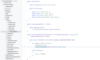
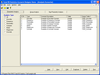
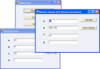
GUI Bundle - we bundle a suite of graphical user interface JavaBean components allowing the developer to plug-in a wide range of GUI functionality (including charts/graphs) into their client applications.
JDBC Mediator - A J2SE Component which mediates between a J2SE component, its J2SE Clients and the Database server. The JDBC Mediator J2SE classes are a convenient way of enhancing all financial and mathematical specific methods with JDBC-based functionality. Check the jdbc subpackage of every J2SE class for JavaDocs documentation.
Web Application Example - A Java WAR file which contains a JSP example that makes use of the functionality provided by our J2SE Component.
Synthetic JDBC - The JDBC functionality provided by the Web Application example included within this package. This Web Application is an example of how to make a JSP client using our J2SE Component while manually implementing the JDBC code. The JSP Application applies J2SE methods to certain rows from the database and lists the output in HTML format.
Drop a broad range of statistical and probabilistic functionality into your applications.
Pricing: WebCab Probability and Statistics (J2SE Edition) V3.3 1 Developer License, WebCab Probability and Statistics (J2SE Edition) V3.3 4 Developer Team License, WebCab Probability and Statistics (J2SE Edition) V3.3 1 Site Wide License (Allows Unlimited Developers at a Single Physical Address)
Evals & Downloads: WebCab Probability and Statistics (J2SE Edition) user guide - Requires Acrobat Reader, Download the WebCab Probability and Statistics (J2SE Edition) evaluation on to your computer - Runtime Limitations
Operating System for Deployment: Windows XP, Windows 2000, Windows 98, Windows NT 4.0, Sun Solaris 8, Linux Kernel V2.4.x, RedHat Linux 7.x, SUSE Linux 8.x
Architecture of Product: 32Bit
Product Type: Component
Component Type: Java Class
Compatible Containers: JBuilder 9, JBuilder 8, JBuilder 7, JBuilder 6, IBM VisualAge for Java 4, Oracle Database 9i, Visual Café 4.0, NetBeans IDE 3.x, Sun ONE Studio 4 (Formerly FORTE for Java), Sun ONE Studio 5 (Formerly FORTE Compiler Collection), WebLogic Workshop
Product Class: Business Components
Keywords: Hypothesis Testing statistics probability stats Distributions
Math Stats Mathematics Mathematical Statistic Statistical
Part numbers: PC-514361-52007 514361-52007 PC-514361-52008 514361-52008 PC-514361-52009 514361-52009