Interpret Graphical Data via Auditory Feedback
Implementing chart components with screen reader support in ASP.NET Core projects makes data visualization accessible to a wider audience.
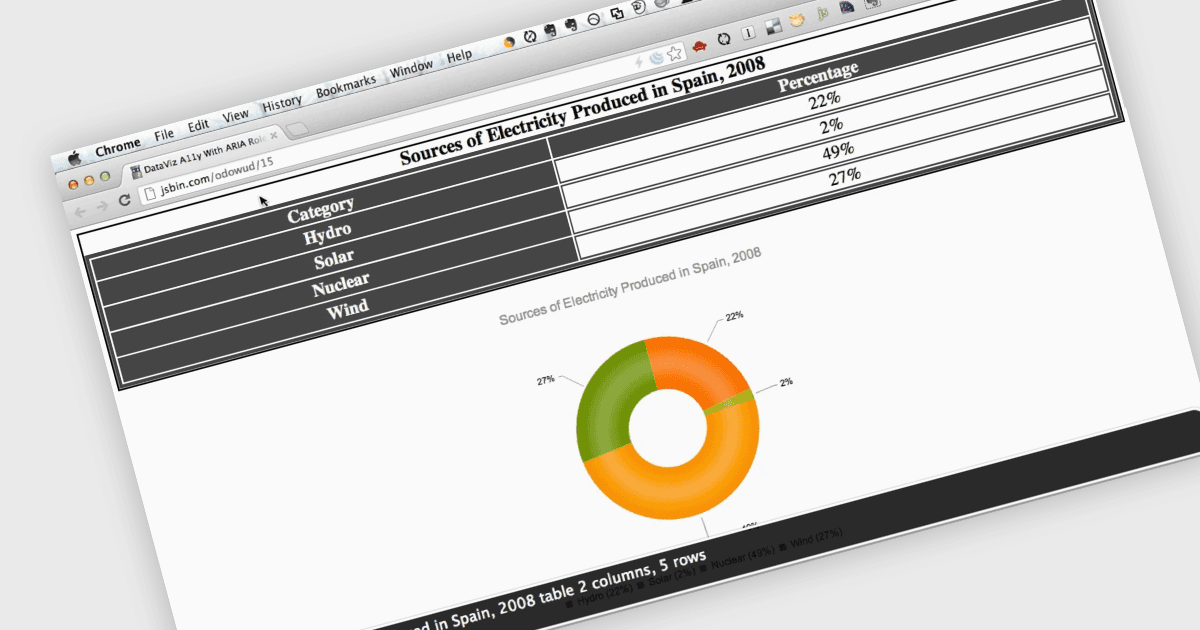
Screen readers, in the context of charts, are assistive technologies that convert digital text and interface elements into speech or braille, allowing users with visual impairments to navigate and understand graphical data on the screen. This involves adding semantic structure, descriptive labels, and metadata so the chart's content can be understood through auditory feedback, enabling users with visual impairments to understand trends, values, and relationships within the chart without needing to see the visual representation. Proper implementation not only improves usability, particularly in data driven environments, but also supports compliance with established accessibility standards such as WCAG (Web Content Accessibility Guidelines).
Several ASP.NET Core charting components support the use of screen readers, such as:
- ComponentOne Charts for ASP.NET MVC (part of ComponentOne Studio ASP.NET MVC by MESCIUS) follows WAI-ARIA accessibility guidelines and provides charts for ASP.NET Core.
- Telerik ASP.NET Core Chart (part of Telerik UI for ASP.NET Core) uses inline SVG elements and supports assistive technologies, making chart data interpretable for screen readers.
- jQWidgets ASP.NET Core MVC (part of jQWidgets) has built-in WAI-ARIA support and offers screen reader friendly charts for ASP.NET Core projects using Tag Helpers.
- Infragistics ASP.NET Core Charts (part of Infragistics Professional) facilitates screen reader compatibility with comprehensive ARIA integration and text-based summaries.
For an in-depth analysis of features and price, visit our comparison of ASP.NET Core chart components.