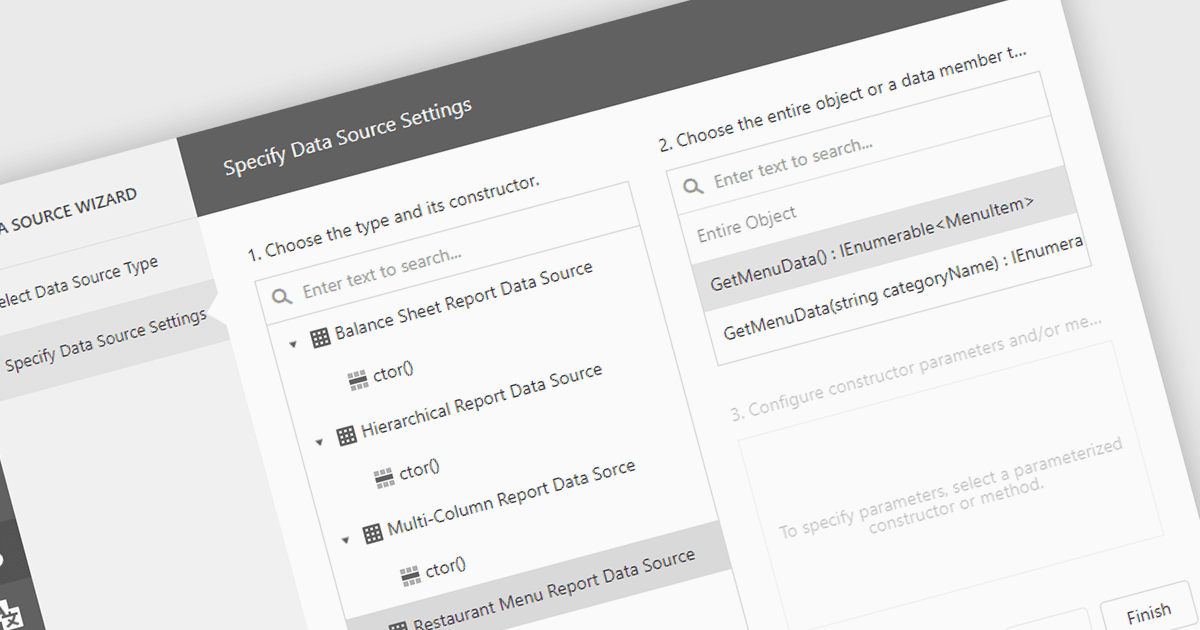
在報表中利用面向對象的資料源

12月 17, 2024
具有 IEnumerable 資料連接的 .NET 報表控制項允許將記憶體中集合或運行時生成的資料動態綁定到報表。

繼續用英語閱讀:

IEnumerable data connectivity allows for easy binding of reports to in-memory collections or objects that implement the IEnumerable interface, such as lists and arrays. This technique makes use of LINQ-compatible data structures, allowing developers to dynamically populate reports with data from a variety of sources, including APIs, business logic, and complicated data transformations, without relying on traditional databases. This provides increased flexibility in data provisioning, easier integration with object-oriented application architectures, and the ability to manage data from runtime-generated collections, all of which improve the adaptability and maintainability of reporting systems.

Several .NET reporting components offer IEnumerable data connectivity including:

  • DevExpress Reports (Multi-Platform) lets you bind IEnumerable data sources seamlessly, offering flexibility for cross-platform reporting with dynamic data handling.
  • ActiveReports.NET by MESCIUS facilitates IEnumerable connectivity for lightweight, in-memory data reporting, supporting complex business logic and non-database scenarios.
  • Telerik Reporting enables direct binding to IEnumerable collections, simplifying integration of runtime data into professional reports for .NET applications.
  • List & Label Enterprise Reporting Edition by combit lets you use IEnumerable sources for custom data-driven reporting, emphasizing scalability and real-time data updates.
  • Stimulsoft Reports.Net supports IEnumerable binding to streamline reporting from dynamic data collections, enhancing adaptability for diverse .NET applications.

For an in-depth analysis of features and price, visit our comparison of .NET reporting controls.

Compare .NET Reporting Controls