使用 XSLT 支援自動化 XML 轉換
支援 XSLT 的結構化文件工具,讓資料格式化與複雜 XML 工作流程間的整合具備可重複的轉換能力。
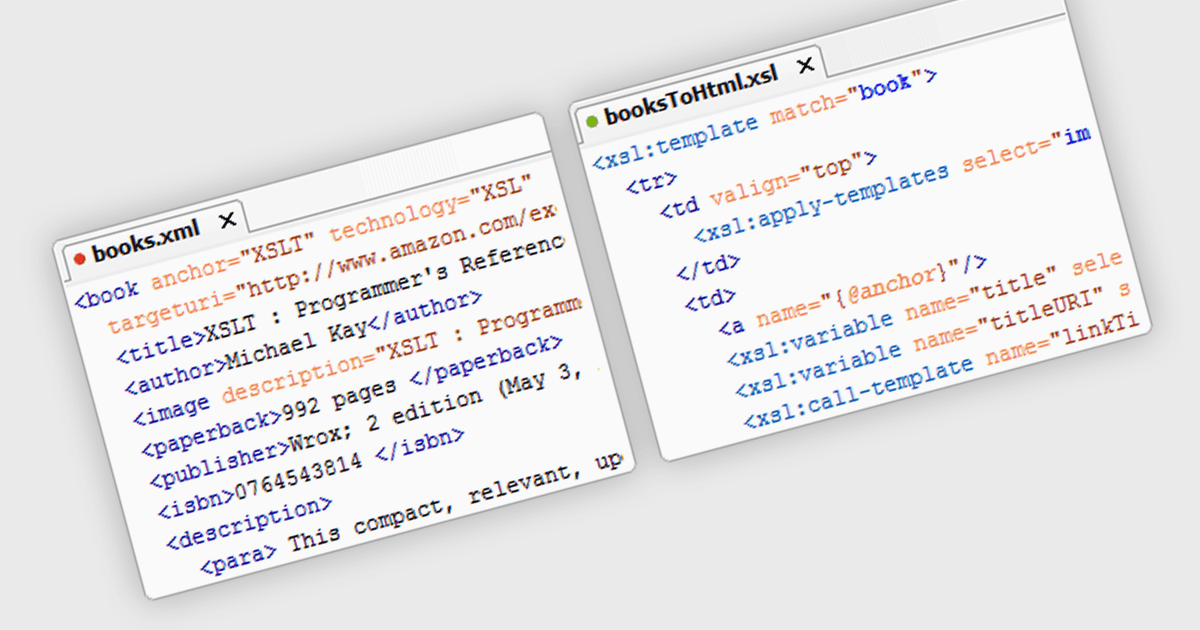
支援 XSLT 的結構化文件工具,讓開發人員能使用 XSLT(可延伸樣式表語言轉換,Extensible Stylesheet Language Transformations)標準,定義將 XML 資料轉換為其他格式(例如 HTML、純文字,或不同的 XML 結構)的轉換。這項能力可讓文件格式化、資料擷取與內容調整自動化,無需人工介入,特別適用於需要對結構化資料進行一致且可重複處理的環境。透過支援 XSLT,該工具能更容易與既有的以 XML 為核心的工作流程整合,並提升以程式方式操作複雜文件結構的能力,進而改善資料轉換的可維護性與可重複使用性。
XSLT 透過三個主要版本逐步演進,每一版都擴充了轉換 XML 資料的能力。XSLT 1.0 是原始的 W3C 標準,提供核心轉換功能,且被廣泛支援。XSLT 2.0 引入了顯著增強功能,包括強型別資料、正則表示式、分組,以及更完善的 XPath 支援,使轉換更強大且更易維護。XSLT 3.0 在此基礎上進一步支援串流大型文件、階高階函式,並整合 JSON 與 maps,為複雜或高流量的處理工作提供更佳效能與更高彈性。
多款結構化文件工具支援 XSLT 1.0、2.0 與 3.0,包括:
- Oxygen XML Editor Enterprise(由 Syncro Soft 提供)可在具備架構感知驗證與串流支援的條件下執行 XSLT 1.0、2.0 與 3.0 轉換。
- Altova XMLSpy Enterprise XML Editor 可進行可靠的 XSLT 1.0、2.0 與 3.0 處理,具備圖形化除錯與高效能的轉換執行。
- Stylus Studio XML Enterprise Suite 讓使用者以視覺化對應、分析(profiling)與整合除錯工具設計並執行 XSLT 1.0、2.0 與 3.0 的管線。
- Liquid Studio XML Editor Edition(由 Liquid Technologies 提供)可透過即時預覽與效能調校來執行 XSLT 1.0、2.0 與 3.0 樣式表。
如需深入了解功能與價格,請參閱我們的結構化文件工具比較。