Mejora tus decisiones con informes visuales
Al incrustar elementos visuales dinámicos directamente en los informes, las herramientas de visualización de datos hacen que la información compleja sea más accesible y que las decisiones se basen más en los datos.
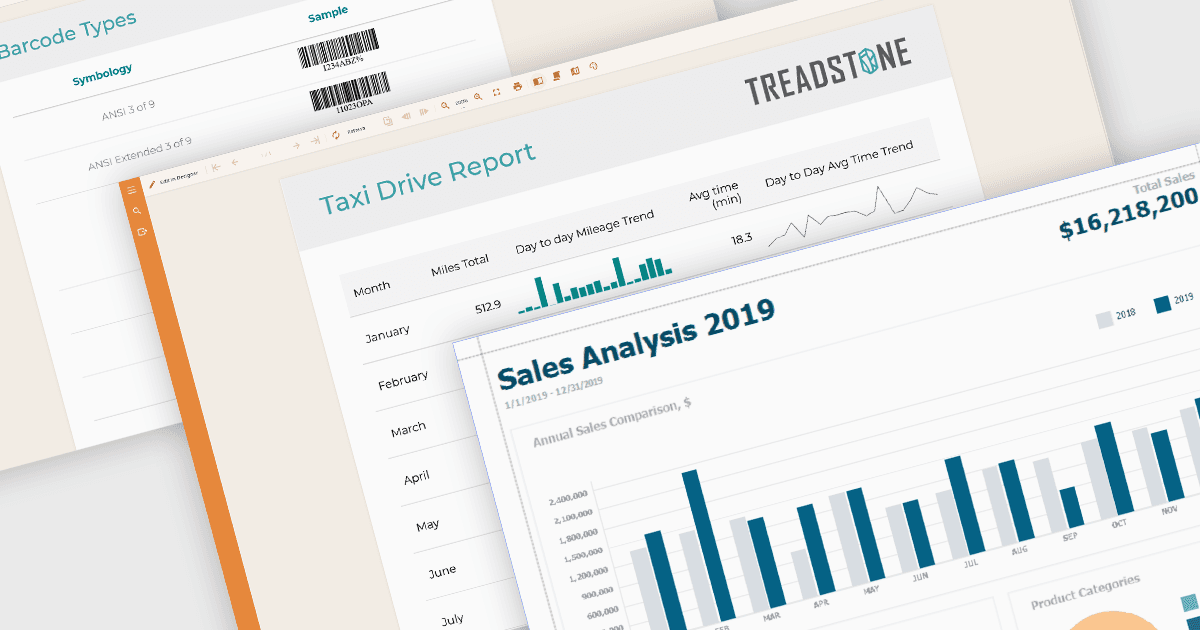
La visualización de datos desempeña un papel central en los componentes de informes al traducir conjuntos de datos complejos a formatos visuales que son más fáciles de entender y analizar. Estas herramientas ayudan a los usuarios a identificar patrones, supervisar el rendimiento y comunicar información clave de un vistazo. Al integrar elementos visuales directamente en los informes, las organizaciones pueden mejorar la legibilidad, respaldar la narración basada en datos y aumentar la participación general de los usuarios.
Las funciones habituales incluyen:
- Códigos de barras se utilizan para codificar datos con fines de escaneo e inventario, y suelen integrarse en los informes para mejorar la eficiencia operativa.
- Gráficos ofrecen una variedad de tipos de gráficos, como gráficos de barras, de líneas y de pastel, para ilustrar tendencias, comparaciones y distribuciones de forma efectiva.
- Indicadores muestran métricas de rendimiento mediante diales o indicadores, lo que facilita supervisar los valores frente a umbrales definidos en tiempo real.
- Mapas permiten la visualización de datos geográficos, ayudando a los usuarios a analizar tendencias regionales y relaciones espaciales.
- Gráficos en minatura proporcionan resúmenes visuales compactos e integrados de series de datos, ideales para resaltar cambios dentro de tablas o paneles.
Para un análisis en profundidad de las funciones y el precio, visita nuestra comparación de componentes de informes de Angular.
Explorar las funciones de visualización de datos de informes de Angular