Visualiza datos financieros complejos con precisión
Los tipos de gráficos financieros revelan claramente los movimientos del mercado y los patrones de trading, respaldando un análisis preciso de acciones, materias primas y divisas.
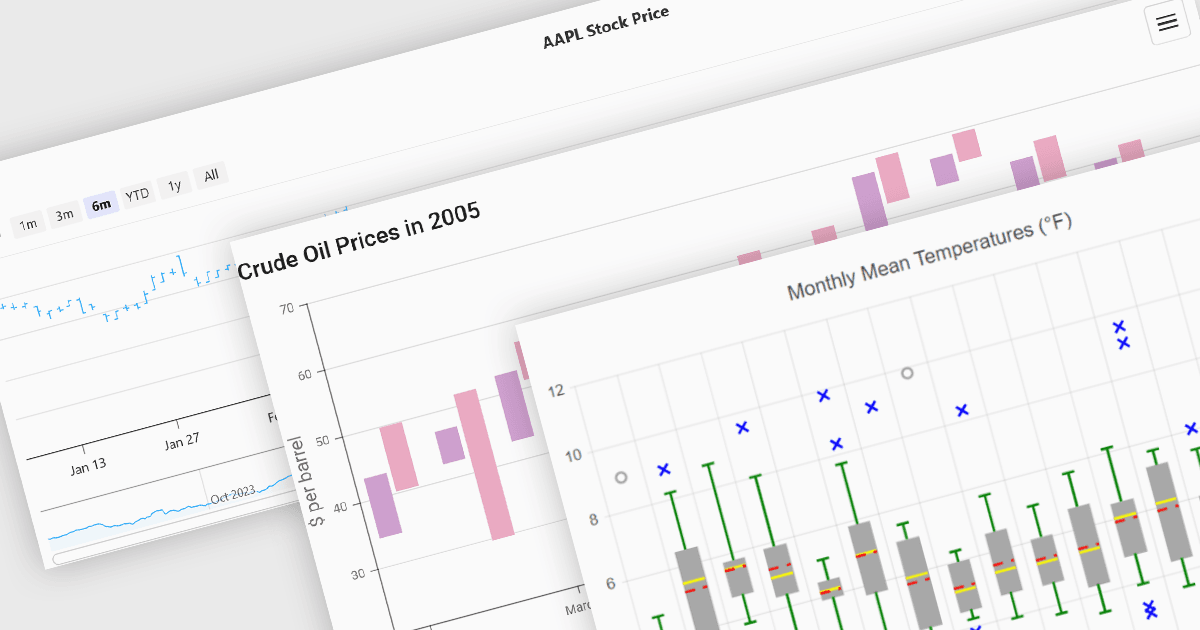
Los componentes de gráficos financieros se usan dentro de aplicaciones de software para representar visualmente datos financieros complejos a lo largo del tiempo. Permiten a los usuarios, especialmente aquellos dedicados al trading, la inversión y el análisis financiero, interpretar tendencias, comparar el rendimiento y tomar decisiones basadas en datos de manera más efectiva. Estos componentes suelen admitir una variedad de tipos de gráficos adaptados a las necesidades específicas de los conjuntos de datos financieros, lo que permite un análisis minucioso de los movimientos de precio, las tendencias del mercado y la volatilidad.
Las características habituales incluyen:
- Gráficos de cajas resaltar distribuciones estadísticas y valores atípicos dentro de un conjunto de datos para ayudar en la evaluación del riesgo.
- Gráficos de velas mostrar precios de apertura, cierre, máximos y mínimos a lo largo de un periodo de tiempo, ofreciendo una vista compacta pero detallada del comportamiento del mercado.
- Indicadores, como medias móviles o Bandas de Bollinger, proporcionan capas adicionales de análisis para respaldar estrategias de trading técnico.
- Gráficos Kagi enfatizar la dirección de la tendencia ignorando los intervalos de tiempo, actualizándose solo cuando los movimientos de precio superan un umbral.
- Gráficos OHLC / HLOC mostrar valores de apertura-máximo-mínimo-cierre en formato de barras, ayudando a los usuarios a detectar reversiones de tendencia y patrones de continuación.
- Gráficos de rango visualizar rangos de precios en lugar de puntos de datos individuales, útil para detectar la volatilidad.
- Gráficos Renko filtrar los movimientos menores del precio para revelar direcciones claras de tendencia.
- Gráficos de spline suavizar las fluctuaciones entre puntos, ofreciendo una vista pulida de los cambios graduales.
- Gráficos de línea escalonada presentar los datos como intervalos discretos, ideales para mostrar cambios en puntos específicos en el tiempo.
Para un análisis en profundidad de las características y el precio, visite nuestra comparación de componentes de gráficos de Vue.js.