








Proveedor oficial
Como distribuidores oficiales y autorizados, le suministramos licencias legítimas directamente de más de 200 editores de software.
Ver todas nuestras marcas.
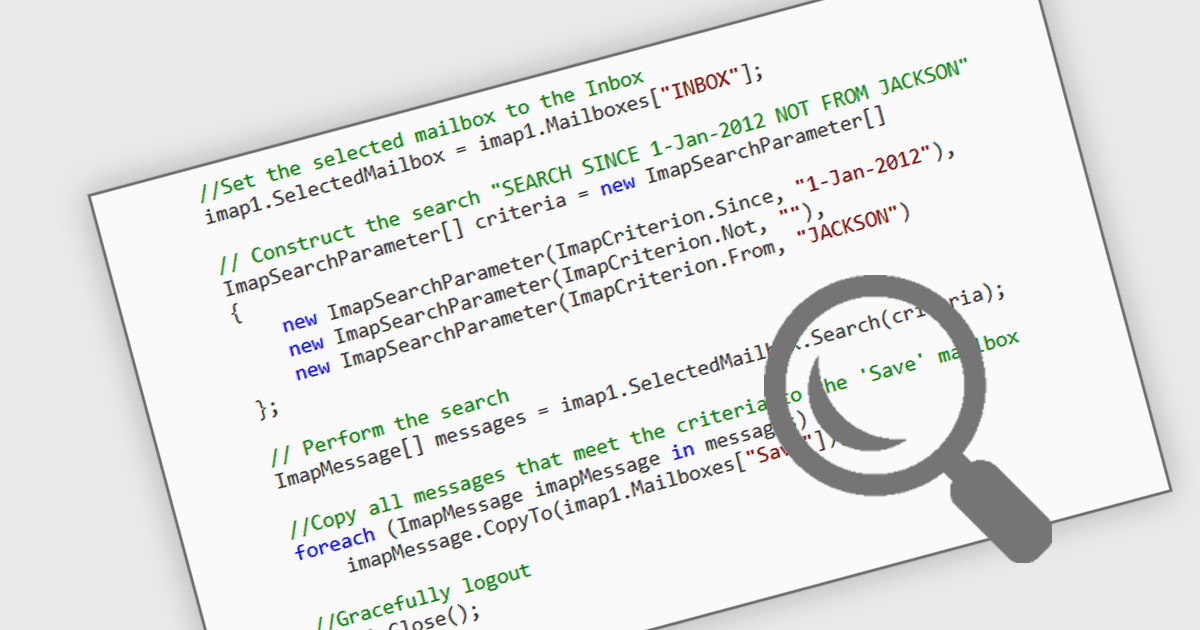
Searching and filtering mail in a Comms & Messaging .NET Core component refers to the ability to locate and narrow down email messages based on specific criteria such as sender, subject, date, or content. This feature is implemented through programmatic access to email metadata and message bodies, enabling developers to build custom filters or queries directly into their applications. It improves efficiency by allowing faster access to relevant messages and simplifies tasks such as audit logging, automated processing, or user-driven searches within large volumes of communication data.
Several Comms & Messaging components for .NET Core offer support for searching and filtering mail including:
For an in-depth analysis of features and price, visit our comparison of .NET Core Comms & Messaging.
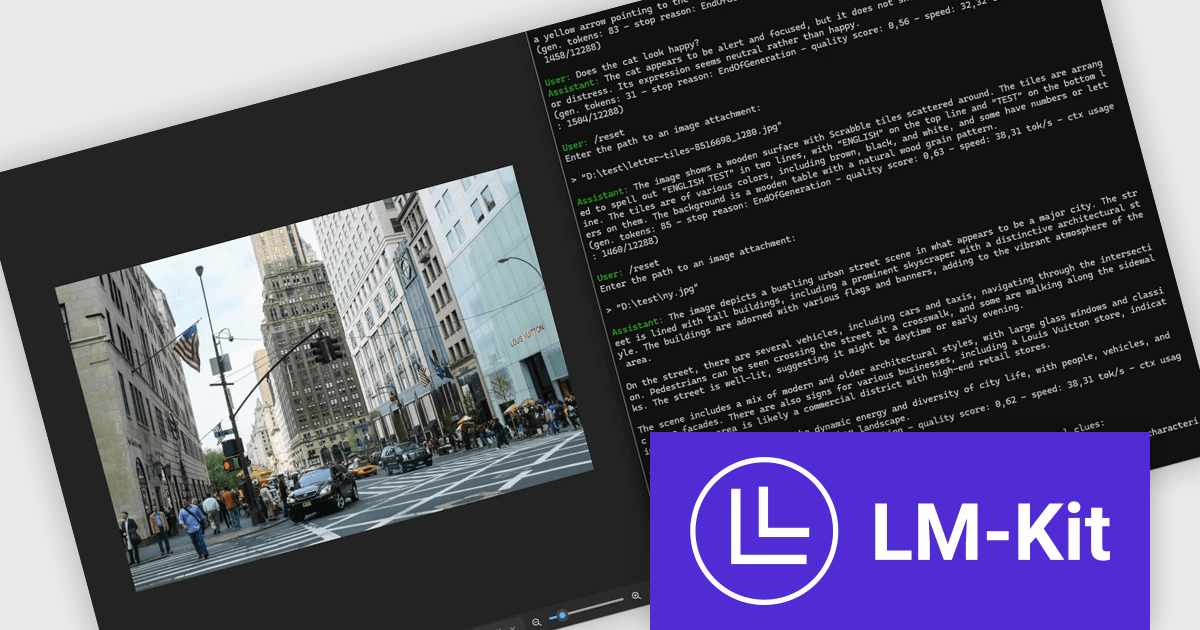
LM-Kit.NET is a cross-platform software development kit (SDK) designed for .NET applications, enabling on-device execution of large and small language models without relying on external cloud services. It supports a broad range of natural language processing tasks, including text generation, translation, summarization, and entity recognition, executed locally on CPU or GPU, with compatibility across Windows, Linux, and macOS. The SDK provides native integration through a NuGet package, allowing developers to embed AI capabilities directly into desktop, server, or edge applications while maintaining full control over data, performance, and compliance requirements. It supports multiple model architectures and inference backends, giving developers flexibility to tailor performance and resource usage to their specific environments.
The LM-Kit.NET 2025.11.2 update adds a native assembly targeting .NET 10, giving developers improved runtime performance, stronger compatibility with modern .NET environments, and direct access to the latest framework optimizations. This enhancement supports smoother project upgrades, reduces reliance on compatibility layers, and enables more efficient, maintainable applications that align with current and future .NET development practices.
To see a full list of what's new in version 2025.11.2, see our release notes.
LM-Kit.NET is licensed per deployed commercial application per year. The license is subscription-based and must be renewed every year to continue using the Software. See our LM-Kit.NET licensing page for full details.
Learn more on our LM-Kit.NET product page.
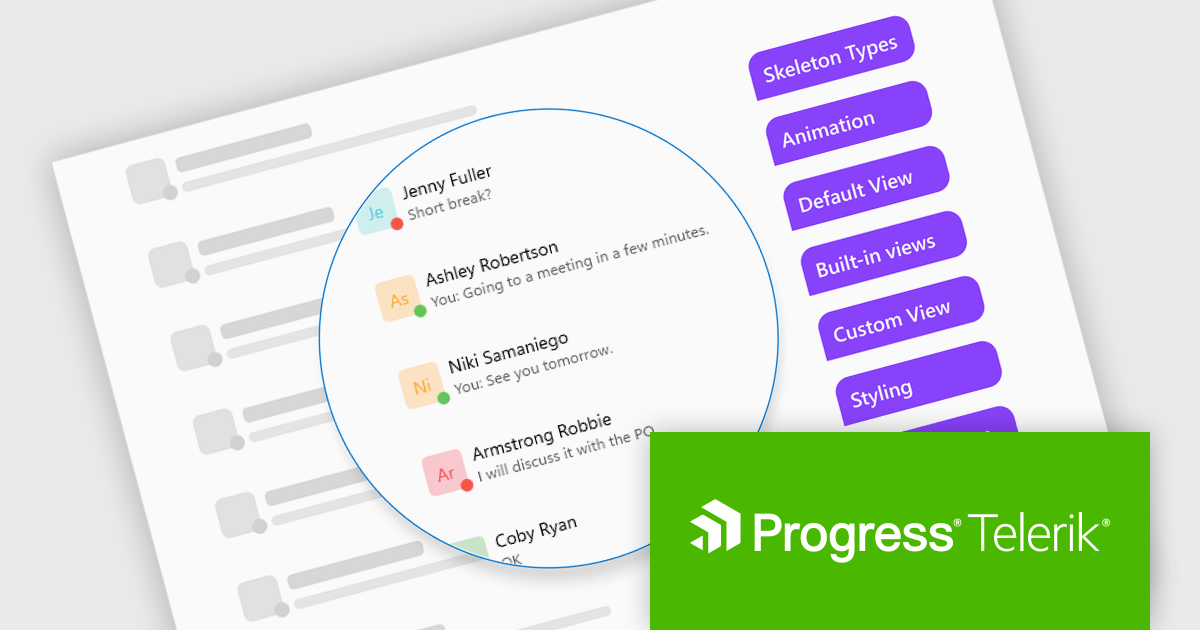
Telerik UI for .NET MAUI is a robust suite of user interface components designed to simplify the creation of cross-platform applications using .NET Multi-platform App UI (MAUI). It offers a wide range of pre-built controls, including charts, grids, and navigation elements, enabling developers to build visually appealing, high-performance apps for Android, iOS, Windows, and macOS from a shared codebase. By ensuring a consistent user experience across platforms, it accelerates development and allows a focus on functionality, making it ideal for business applications, dashboards, and data-driven projects.
The Telerik UI for .NET MAUI 2025 Q4 update introduces the new Skeleton Component, which enables developers to present structured loading placeholders that match the layout of their final content. This improves perceived responsiveness by keeping the interface stable while data is retrieved, reducing layout shifts and allowing users to understand the expected structure of the page before it fully renders. With built-in templates for common UI patterns, the component improves implementation and helps teams deliver more consistent, polished loading experiences across their applications.
To see a full list of what's new in 2025 Q4 (v12.0.0), see our release notes.
Telerik UI for .NET MAUI is licensed per developer and has two licensing models: an annual Subscription License and a Perpetual License. The Subscription license provides access to the latest product updates, technical support, and exclusive benefits for a flat annual fee, and must be renewed to continue using the software. The Perpetual license is a one-time purchase granting access to the current released version and includes a one-year subscription for product updates and technical support. After this initial period, users can choose to renew the subscription element to continue receiving updates and support; otherwise, they may continue using the installed version available during their active subscription term but will forgo future updates and support. See our Telerik UI for .NET MAUI licensing page for full details.
Telerik UI for .NET MAUI is available individually or as part of the following products:
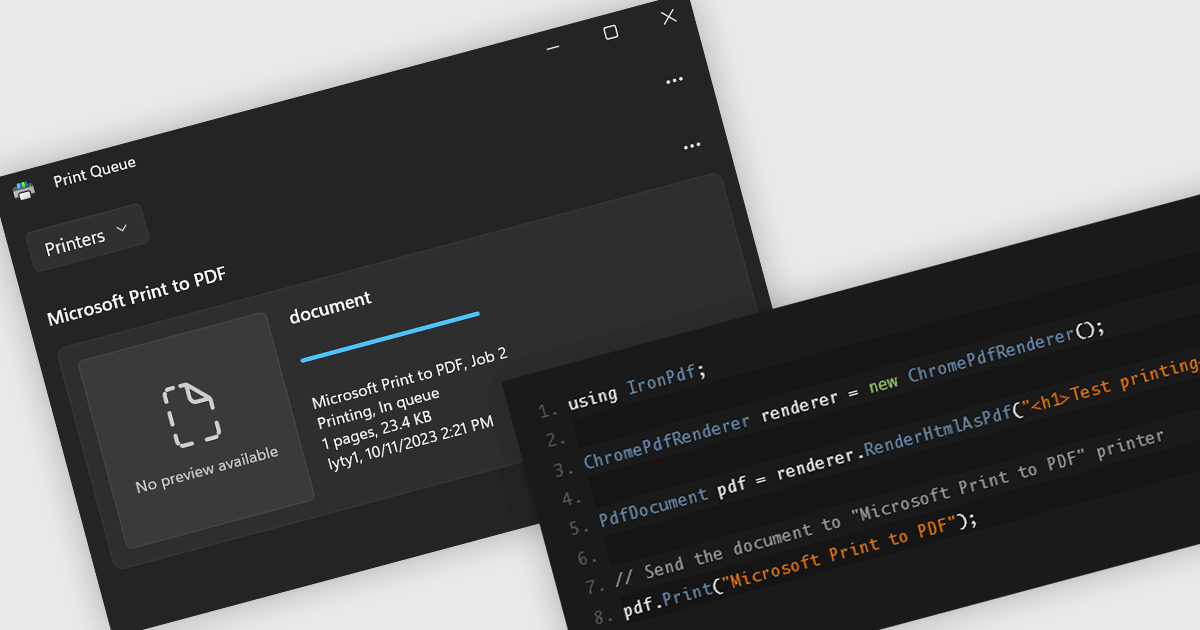
Printing support in a PDF component enables applications to send PDF documents directly to a printer or print preview interface without requiring user intervention or external tools. This functionality is especially useful in enterprise or reporting systems where automated or on-demand printing of invoices, forms, or reports is needed. By handling layout, pagination, and resolution scaling internally, it ensures consistent output across different devices and operating systems. For developers, it simplifies integration into processes that require reliable hard copies, reducing the need for custom print handling code or third-party dependencies.
Several .NET PDF components include support for printing, including:
For an in-depth analysis of features and price, visit our comparison of .NET PDF components.
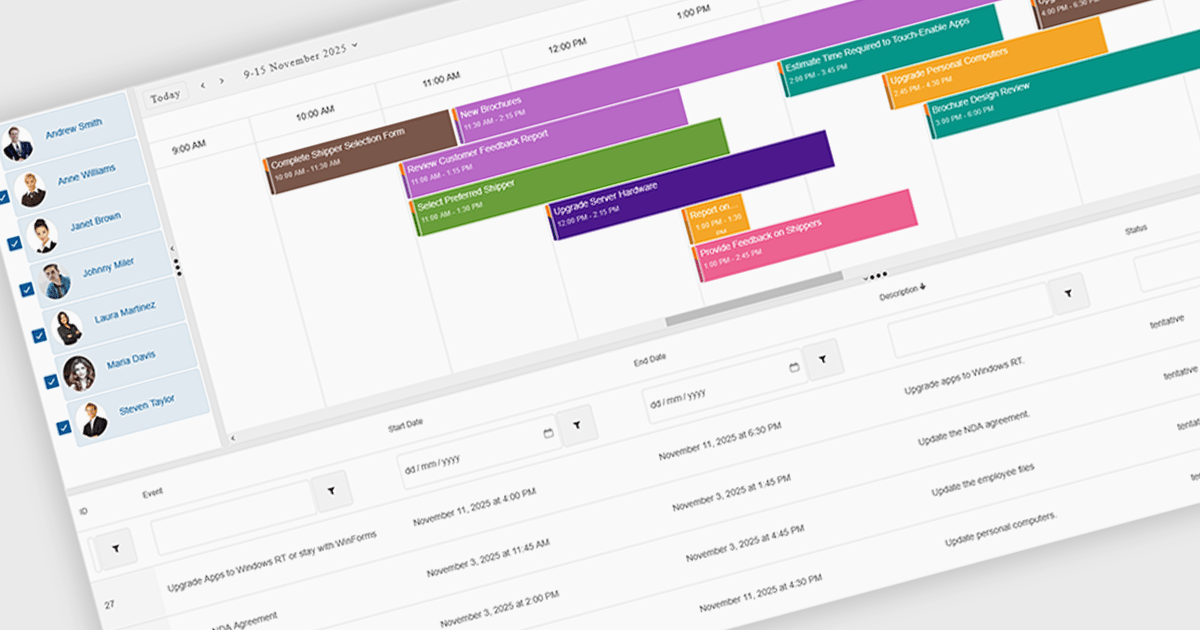
Scheduling components in UI suites provide a visual, interactive way to manage time-based data, with features such as multi-view calendars, drag-and-drop editing, recurrence rules, and group scheduling to simplify planning. They let organizations display daily, weekly, monthly, or timeline views, compare team availability, and tailor the interface to match branding or workflows. Integrated with backend data sources, scheduling components improve clarity, reduce conflicts, and save time across use cases like meeting booking, project management, staff coordination, and customer appointments.
Several .NET Blazor User Interface suites offer scheduling controls including:
For an in-depth analysis of features and price, visit our .NET Blazor UI suites comparison.
Tel: (888) 850 9911
Fax: +1 770 250 6199


