










Proveedor oficial
Como distribuidores oficiales y autorizados, le suministramos licencias legítimas directamente de más de 200 editores de software.
Ver todas nuestras marcas.
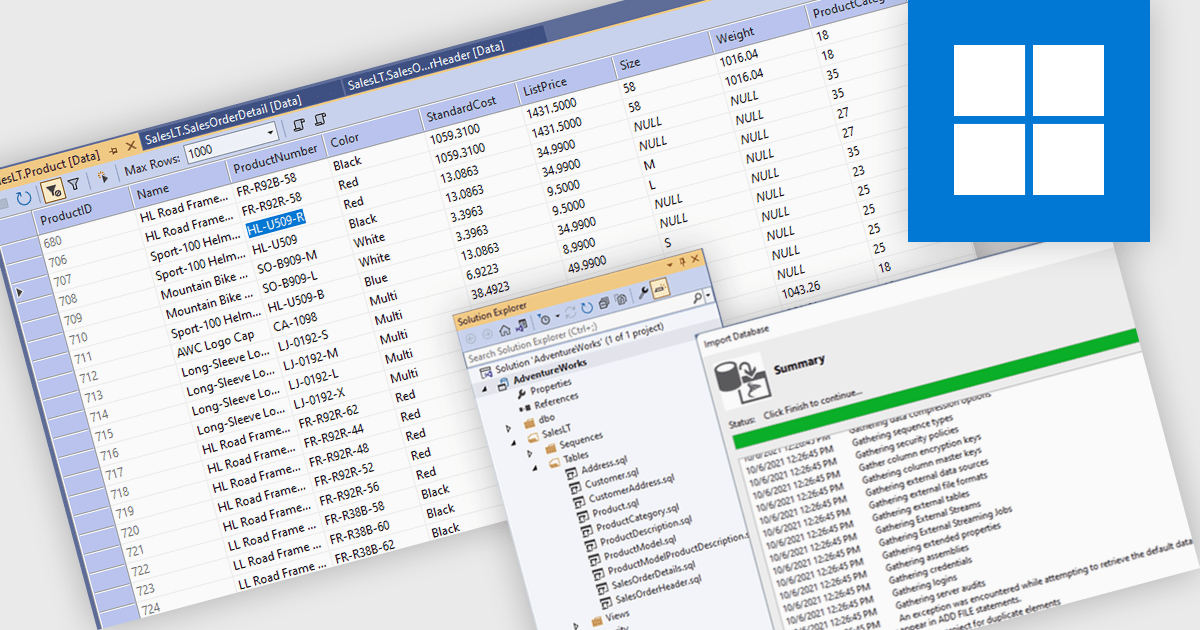
Database management in an Integrated Development Environment (IDE) refers to a set of tools and features that enable developers to interact with databases directly within the coding environment. This integration typically supports connecting to various database types, running SQL queries, browsing and editing data, managing schemas, and handling version control for database scripts. It simplifies processes by centralizing database interactions alongside application development, reducing context switching and improving efficiency. For developers, this leads to faster development cycles, greater visibility into data structures, and more consistent alignment between applications and databases.
Several IDEs offer database management features including:
For an in-depth analysis of features and price, visit our comparison of Integrated Development Environments (IDEs).
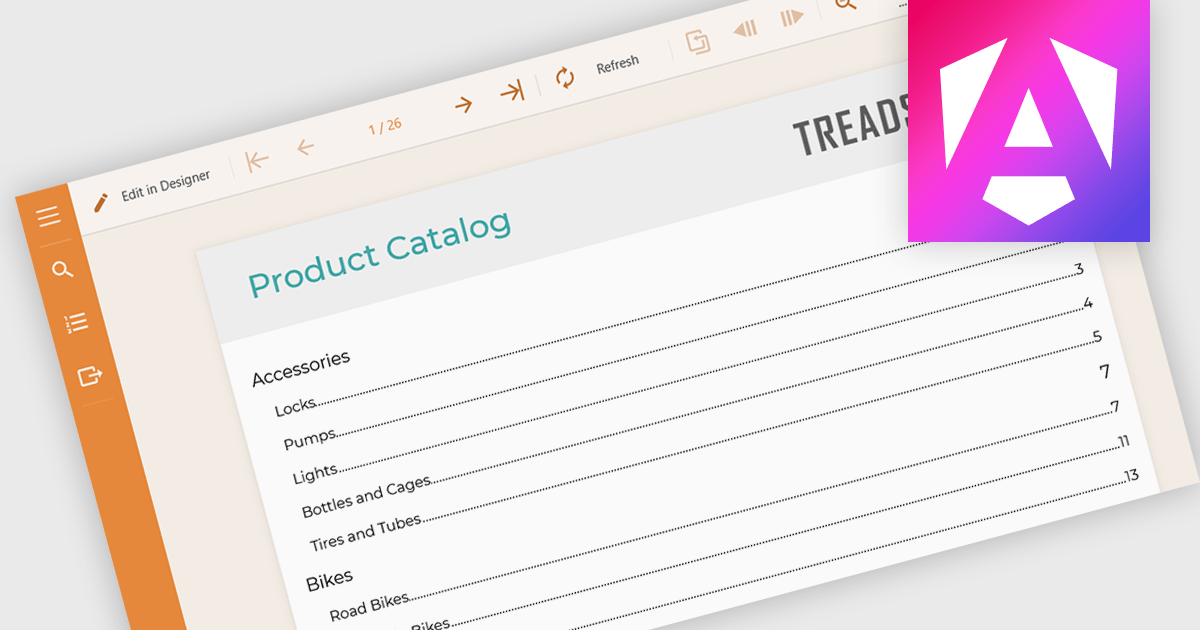
Table of Contents (TOC) support in a reporting component allows developers to automatically generate a structured overview of a report’s sections, typically displayed at the beginning of the document. This feature helps users navigate long or complex reports by providing direct links or page references to key sections, mirroring the layout and hierarchy of the report's content. For developers, it reduces the need to manually maintain navigation aids, improves the report’s usability, and enhances the professional appearance of exported formats like PDF or Word. TOC support is especially beneficial in compliance-heavy or audit-focused applications where clear documentation structure is essential.
Several Angular reporting controls offer Table of Contents (TOC) support including:
For an in-depth analysis of features and price, visit our comparison of Angular reporting controls.
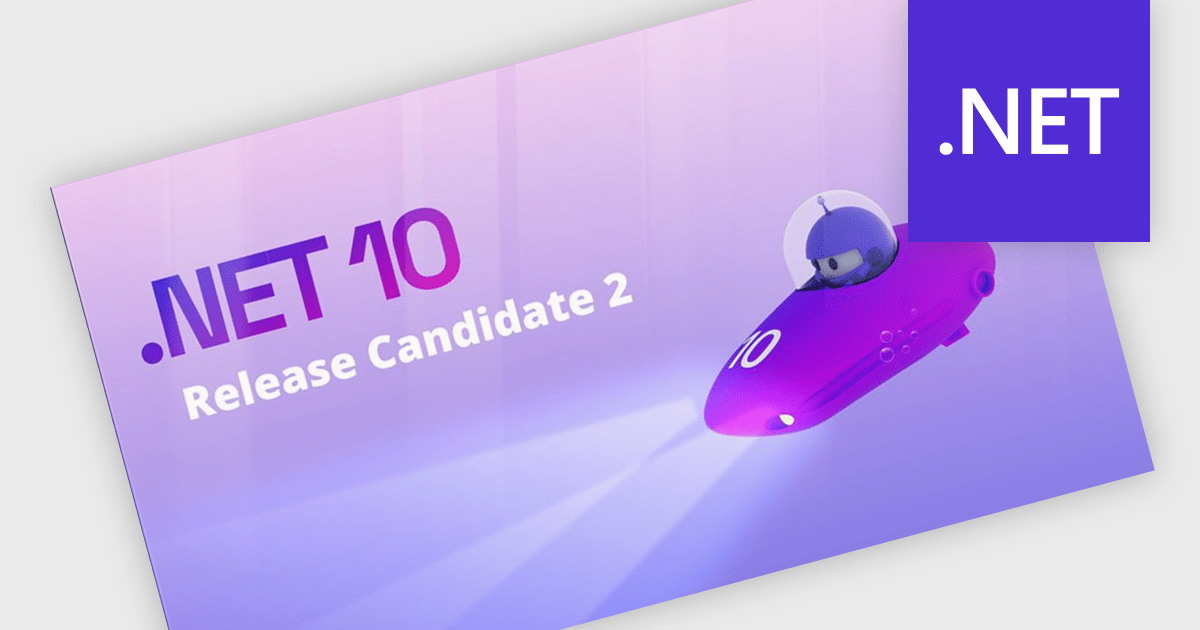
The .NET Framework is a comprehensive development platform that provides a rich set of class libraries, tools, and programming languages (like C#, VB.NET, and F#), enabling developers to create a variety of applications, from desktop software to web services and mobile apps. With the approaching release of .NET 10, Microsoft continues its commitment to delivering a modern, high-performance, and cross-platform development environment.
The new .NET 10 Framework brings with it a wealth of new and updated functionality, including:
With .NET 10 Release Candidate 2, Microsoft has focused on final quality and stabilization in preparation for the general availability release. This includes updates to .NET MAUI, the Entity Framework Core, and various quality improvements to the SDK libraries and runtime.
For more information, or to download the .NET 10 Release Candidate 2, read the official Microsoft blog post about this release.
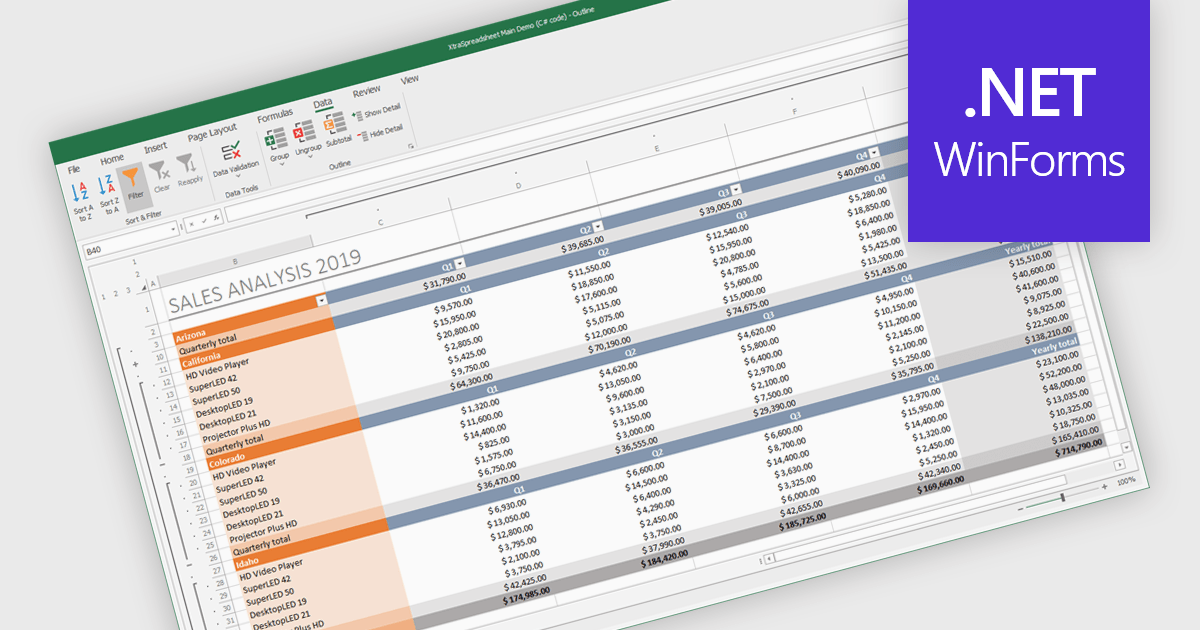
Grouping and filtering are key spreadsheet tools that make data easier to manage and analyze. Grouping combines related rows or columns into collapsible sections for clearer summaries. Filtering displays only the information that meets specific conditions, helping focus on what matters most. Together, these features improve data management, reduce visual clutter, and enhance analytical clarity.
Several .NET WinForms spreadsheet controls contain data filtering and grouping controls including:
For an in-depth analysis of features and price, visit our comparison of .NET WinForms spreadsheet controls.

Altova XMLSpy is a leading XML editor and integrated development environment (IDE) designed for creating and manipulating XML-based applications. It offers a comprehensive suite of tools for working with XML, JSON, XBRL, schemas, transformations, web services, and more. XMLSpy empowers developers to visually design schemas, edit and debug code, generate code from schemas, and leverage AI-assisted editing and debugging for enhanced productivity.
The XMLSpy 2026 update introduces a BSON editor that provides developers with the same level of intelligent editing and control they’re accustomed to when working with traditional JSON documents. BSON (Binary JSON) is a binary-encoded serialization format that extends JSON to support additional data types and faster encoding/decoding. This enhancement allows creation, validation, and transformation of BSON data within a familiar interface, supporting native BSON datatypes and enabling direct schema validation, conversion between formats, and data generation from JSON Schemas. By extending XMLSpy’s JSON editing capabilities to BSON, developers can efficiently manage MongoDB data structures with greater precision and productivity.
To see a full list of what's new in 2026, see our release notes.
Altova XMLSpy is licensed per Installed, Concurrent or Named user. Licenses are perpetual, and come with or without 1 year Support and Maintenance Package (SMP). See our Altova XMLSpy licensing page for full details.
Altova XMLSpy XML Editor is available to buy in the following products:
Tel: (888) 850 9911
Fax: +1 770 250 6199


