

Fournisseur officiel
Comme nous somme les distributeurs officiels et autorisés, nous vous fournissons des licences légitimes directement à partir de 200+ éditeurs de logiciels.
Voyez toutes nos marques.
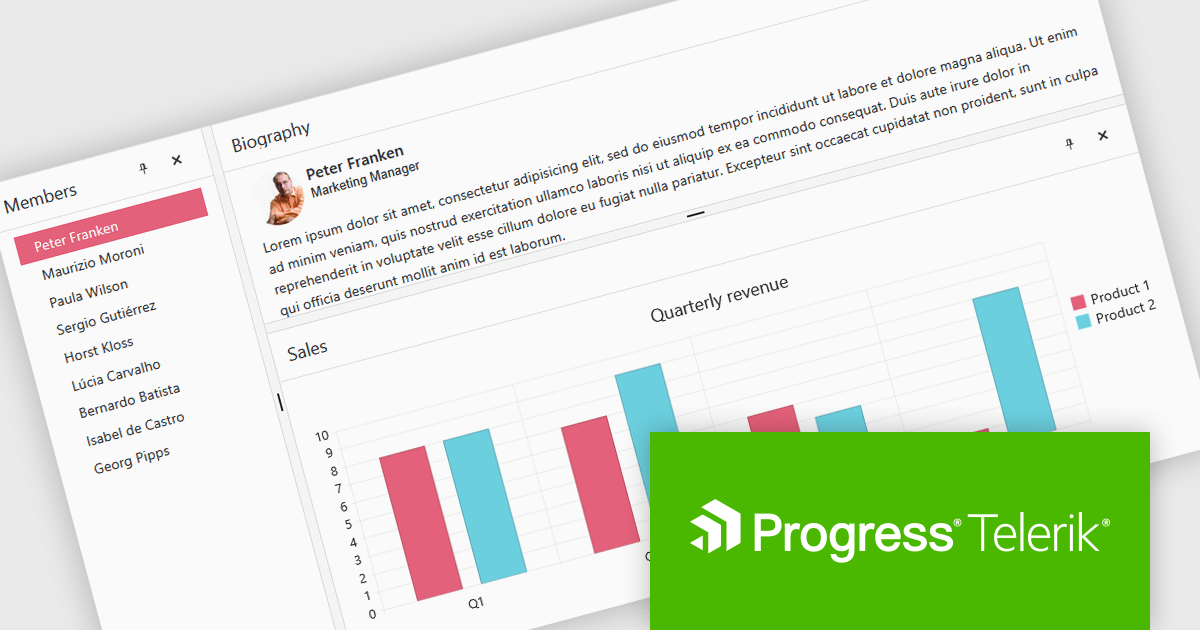
Telerik UI for Blazor is a comprehensive UI library that provides over 110 native and customizable Blazor components for building modern and feature-rich web applications. This professional-grade solution offers a complete set of components to satisfy all user interface requirements, saving time and effort in UI design.
The Telerik UI for Blazor 2025 Q1 update introduces the DockManager UI component, enabling developers to create desktop-like experiences within web applications. This new component allows users to efficiently manage multiple panes within a single container by supporting docking, undocking, resizing, and repositioning. It provides a flexible and customizable layout system, optimizing workspace organization for complex applications designed for larger screens.
To see a full list of what's new in 2025 Q1 (v8.0.0), see our release notes.
Telerik UI for Blazor is licensed per developer and has two licensing models: an annual Subscription License and a Perpetual License. The Subscription license provides access to the latest product updates, technical support, and exclusive benefits for a flat annual fee, and must be renewed to continue using the software. The Perpetual license is a one-time purchase granting access to the current released version and includes a one-year subscription for product updates and technical support. After this initial period, users can choose to renew the subscription element to continue receiving updates and support; otherwise, they may continue using the installed version available during their active subscription term but will forgo future updates and support. See our Telerik UI for Blazor licensing page for full details.
Telerik UI for Blazor is available individually or as part of the following products:
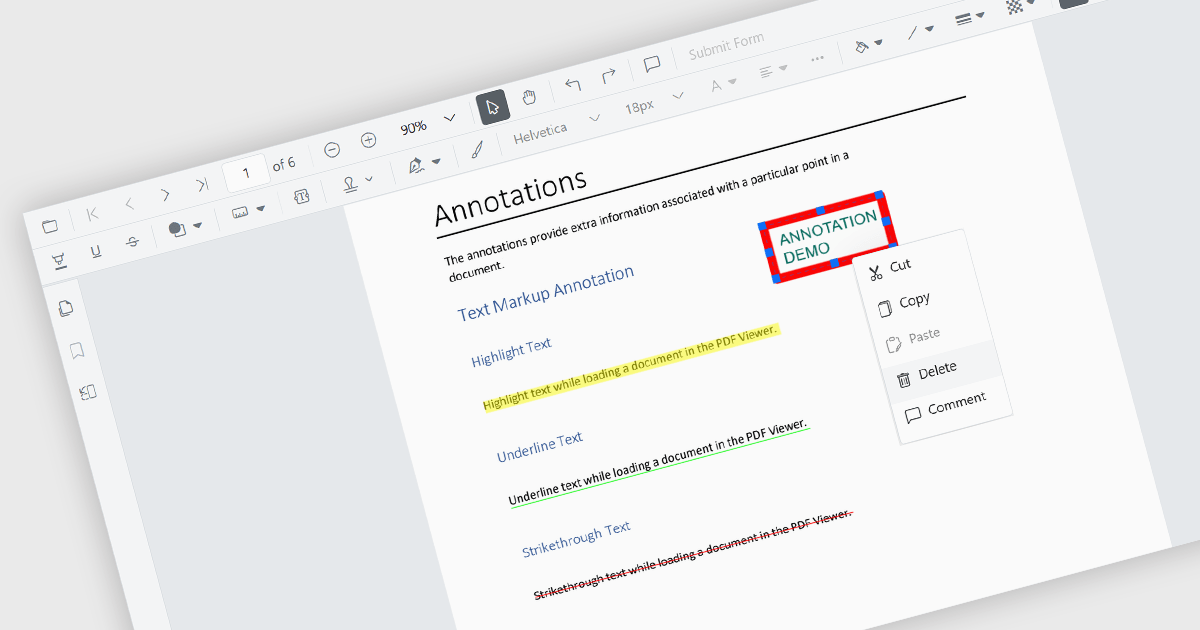
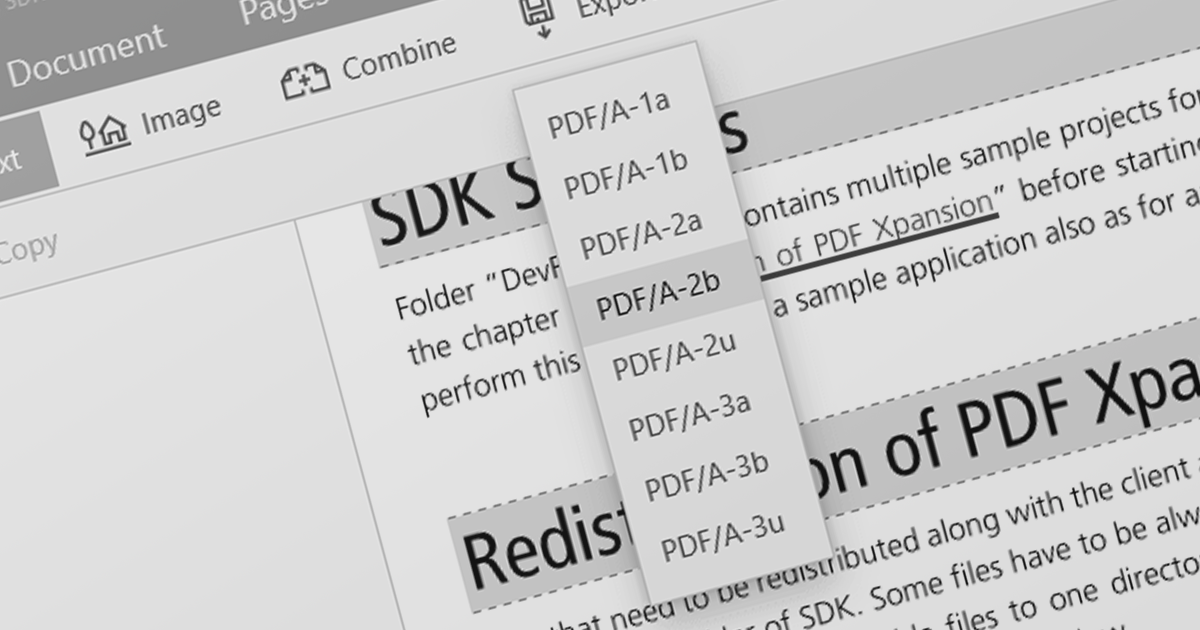
Annotation removal is a useful feature to have in a PDF viewer component, giving users the ability to delete comments, highlights, notes, or other markup that has been added to a PDF document. This functionality allows users to clean up documents by eliminating unnecessary or outdated annotations, ensuring that only relevant and current information remains visible. It is particularly useful in collaborative environments where multiple reviewers contribute feedback, and improves the presentation of the final document, ensuring it is clear and professional. This process yields a clean version of the file in preparation for final distribution or archiving.
Several JavaScript PDF viewer components allow you to remove annotations, including:
For an in-depth analysis of features and price, visit our comparison of JavaScript PDF viewer components.
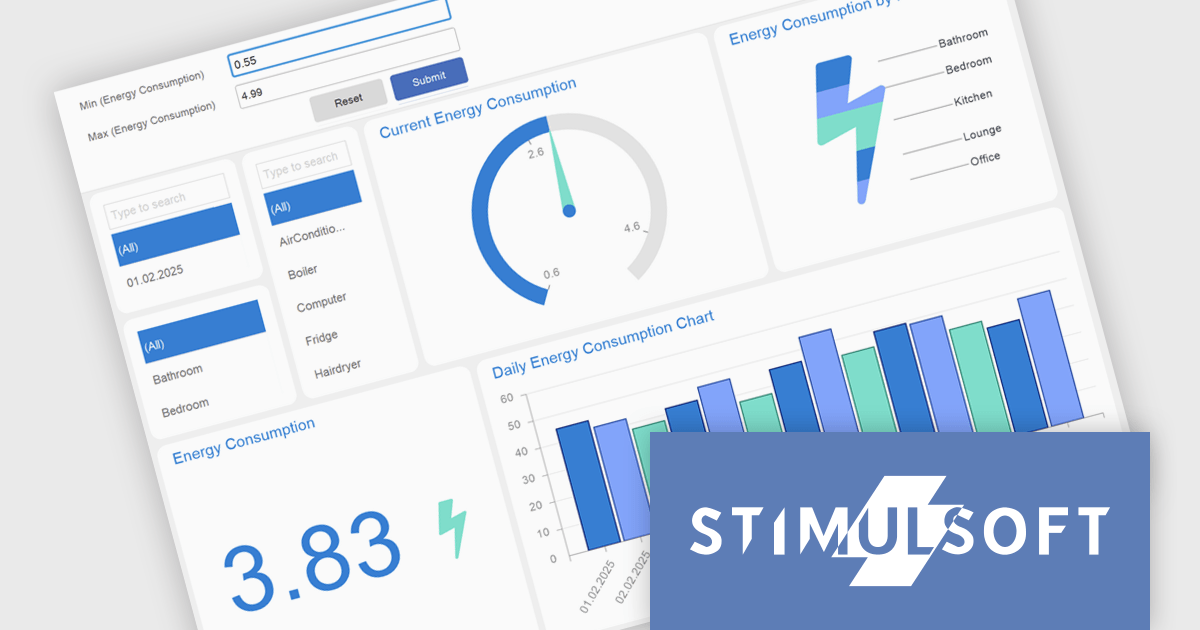
Stimulsoft Dashboards.WEB is a versatile suite of tools for crafting interactive data visualizations for web and desktop applications. It empowers developers to embed intuitive dashboards across various platforms, using the platform-specific components or a centralized cloud designer. With rich data analysis elements, extensive customization options, and pre-built templates, Stimulsoft Dashboards helps you transform complex data into clear, actionable insights for any audience.
The Stimulsoft Dashboards.WEB 2025.2.1 update introduces support for expressions in Gauge range fields, enabling developers to calculate minimum and maximum range bounds dynamically based on underlying data. This enhancement allows for greater flexibility in building responsive dashboards, as Gauge elements can now reflect real-time values without requiring manual adjustments. By integrating expressions directly into the range logic, developers can implement more sophisticated data visualizations that adapt to changing inputs and business logic. This feature streamlines development and supports more efficient maintenance of dynamic reporting scenarios.
To see a full list of what's new in 2025.2.1, see our release notes.
Stimulsoft Dashboards.WEB is licensed per developer and is available as a perpetual license with 1 year support and maintenance. See our Stimulsoft Dashboards.WEB licensing page for full details.
Stimulsoft Dashboards.WEB is available individually or as part of Stimulsoft Ultimate.

ComponentSource and Webyog have built a strong partnership, committed to delivering high-quality database solutions to developers worldwide. This collaboration reflects a shared dedication to providing innovative tools that enhance productivity, streamline workflows, and support the creation of high-performance applications.
Webyog is the creator of SQLyog Ultimate, a powerful MySQL GUI designed to simplify database administration, query management, and performance tuning. With features like visual query building, schema synchronization, and real-time monitoring, SQLyog Ultimate helps developers and database administrators optimize MySQL databases efficiently.
Through this partnership, ComponentSource has played a key role in making SQLyog Ultimate more accessible to a global audience. As a leading distributor of software components and development tools, ComponentSource has helped extend Webyog’s reach, ensuring developers have easy access to a top-tier database management solution.
As we celebrate this milestone, we look forward to strengthening our partnership and continuing to provide developers with the tools they need to succeed.
Learn more about Webyog.
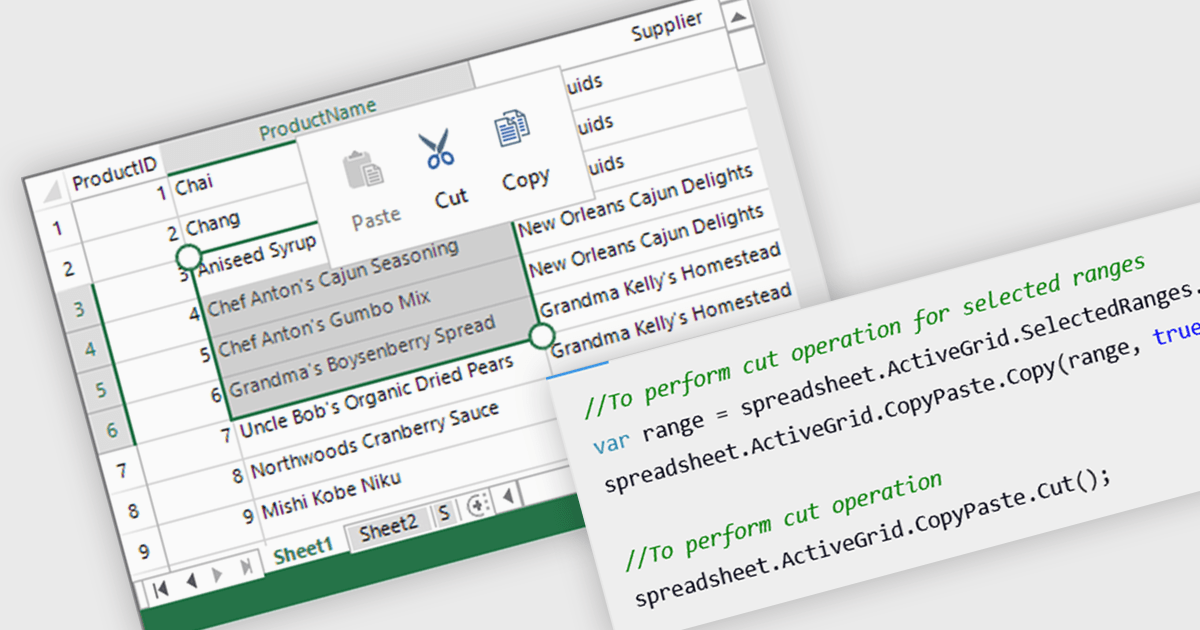
Clipboard operation support lets users copy, cut, and paste data between spreadsheet instances or other applications while maintaining structure and formatting. This functionality ensures seamless data transfer, improving efficiency in data manipulation tasks. Modern implementations often include support for multi-cell operations, rich text handling, and programmatic access through APIs, allowing developers to integrate clipboard interactions into their applications. Clipboard support enhances usability and improves overall productivity in spreadsheet-based applications.
Several .NET WPF spreadsheet controls offer clipboard operations, including:
For an in-depth analysis of features and price, visit our .NET WPF spreadsheet controls comparison.





Tél : (888) 850 9911
Fax : +1 770 250 6199


