




Fournisseur officiel
Comme nous somme les distributeurs officiels et autorisés, nous vous fournissons des licences légitimes directement à partir de 200+ éditeurs de logiciels.
Voyez toutes nos marques.
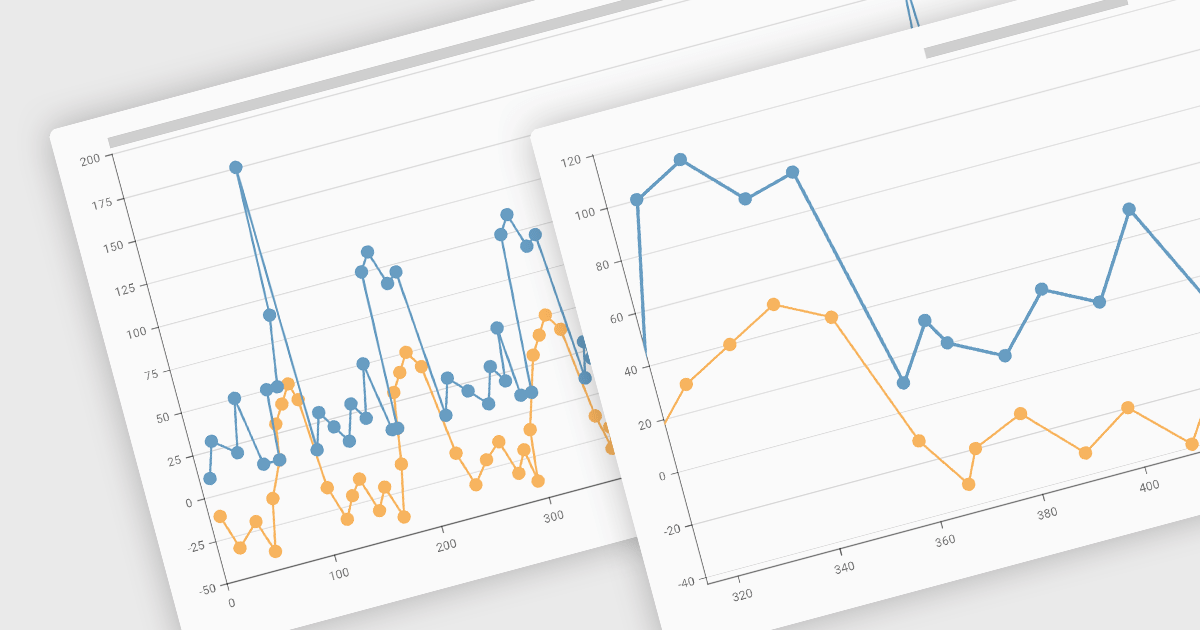
Zooming functionality in a chart component empowers users to delve deeper into complex datasets. By allowing for magnified views of specific areas, users can identify trends, outliers, and patterns that might be obscured in a broader, more generalized view. This interactivity fosters a richer understanding of the data and facilitates more informed decision-making for end users.
Several Vue.js chart controls support zooming including:
For an in-depth analysis of features and price, visit our comparison of Vue.js Charts.
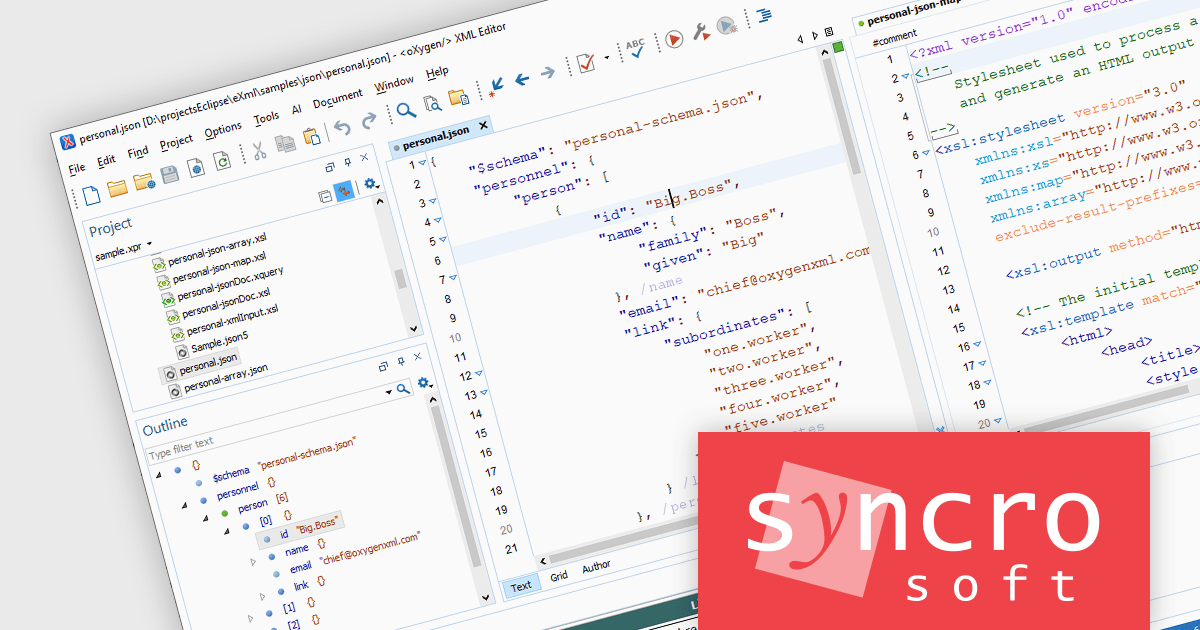
Oxygen XML Developer empowers developers to write, validate, and debug XML efficiently. This comprehensive suite goes beyond basic editing, offering intelligent functionalities for XML source code, schema design, and XSLT/XQuery development. Streamline your workflows with real-time validation, content assist, and intuitive XML-specific views. As well as XML, Oxygen XML Developer allows you to manage and edit JSON, YAML, WSDL, and more with dedicated editors, seamless conversions, and a robust toolkit.
The Oxygen XML Developer 26.1 release allows you to leverage the familiar power of XSLT stylesheets to seamlessly transform JSON documents into XML. This eliminates the need for complex workarounds and opens up new possibilities for integrating JSON data into your existing XML workflows. By creating and linking custom transformation scenarios to your JSON files, Oxygen XML Developer streamlines the entire process, saving you time and effort.
To see a full list of what's new in version 26.1, see our release notes.
Oxygen XML Developer is licensed per Named or Floating user and is available as a Timed or Perpetual License with support and maintenance subscription. See our Oxygen XML Developer licensing page for full details.
Oxygen XML Developer is available in the following products:
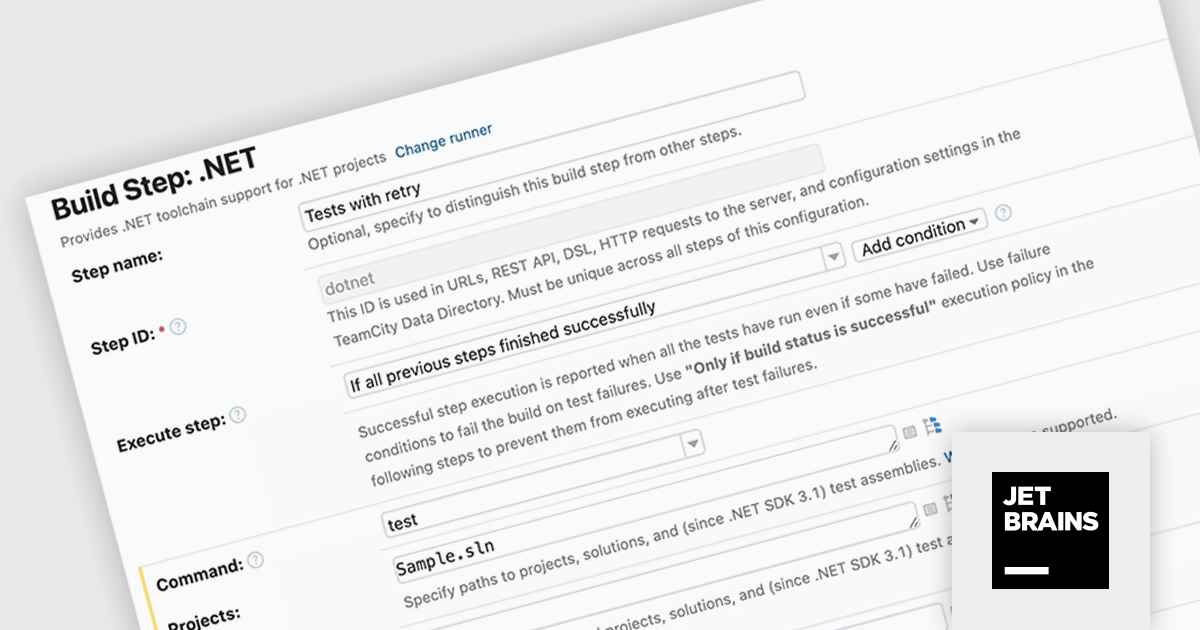
TeamCity On-Premises by JetBrains is a self-hosted solution for Continuous Integration and Continuous Delivery (CI/CD). It automates the software build, testing, and deployment process, allowing development teams to identify and fix bugs early, and deliver high-quality software faster. TeamCity On-Premises provides features like on-the-fly build progress reporting, pre-tested commits, and configuration as code for increased development efficiency and control.
The TeamCity On-Premises 2024.03 release adds new .NET test retry policies to help mitigate transient test failures. These are tests that intermittently pass or fail, often due to external factors outside the control of your test code. By retrying failed tests, you can improve the overall stability of your builds and ensure they only fail due to genuine issues.
To see a full list of what's new in version 2024.03, see our release notes.
TeamCity On-Premises is licensed per server and per build agent, and is available as a commercial perpetual license. See our TeamCity On-Premises licensing page for full details.
For more information, visit our TeamCity On-Premises product page.
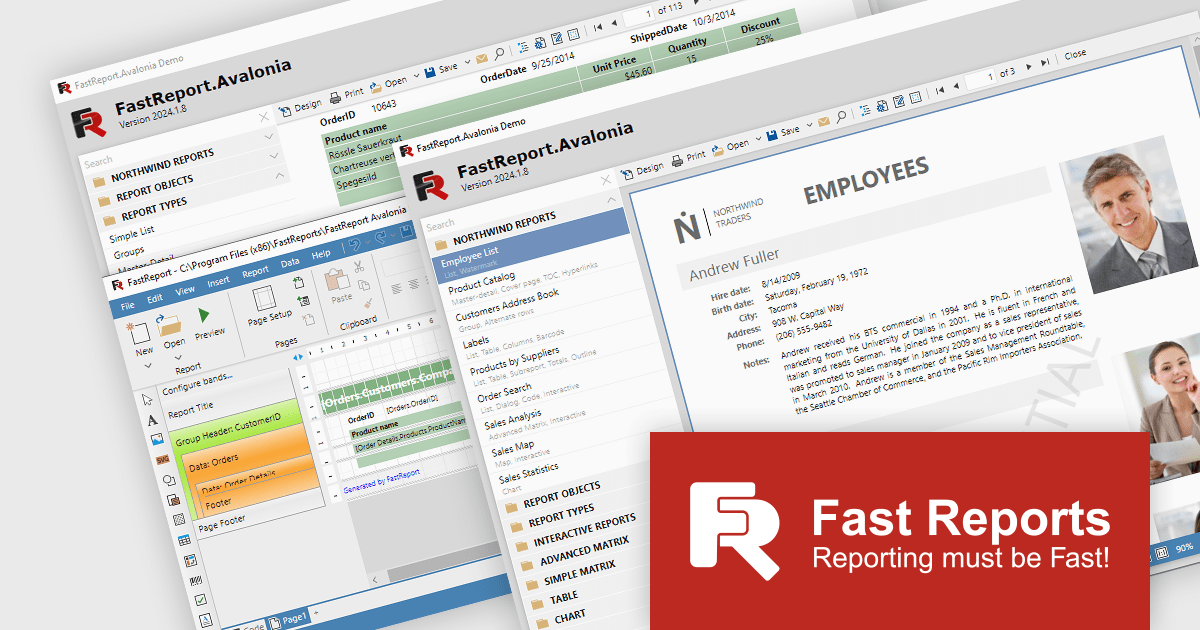
FastReport Avalonia empowers developers to design and generate informative reports within their Avalonia UI applications. This powerful tool offers a familiar visual editor for crafting reports like invoices and financial statements. It seamlessly integrates data processing and exports reports to various formats, including PDF and Excel. Notably, FastReport Avalonia maintains consistent functionality across multiple operating systems, ensuring a unified user experience for your application.
As the latest innovation from Fast Reports, FastReport Avalonia simplifies cross-platform report generation. This versatile component integrates effortlessly within your Avalonia UI application. Developers can create and export reports in various formats across Windows, macOS, and Linux, all from a single codebase. FastReport Avalonia boasts broad compatibility, supporting x64, x86, and even arm64 processor architectures, alongside .NET 6 and later versions. This flexibility empowers developers to leverage a single reporting solution across diverse development environments.
FastReport Avalonia is licensed per named user and is available as a Single Named, Team and Site License. See our FastReport Avalonia licensing page for full details.
Learn more on our FastReport Avalonia product page.
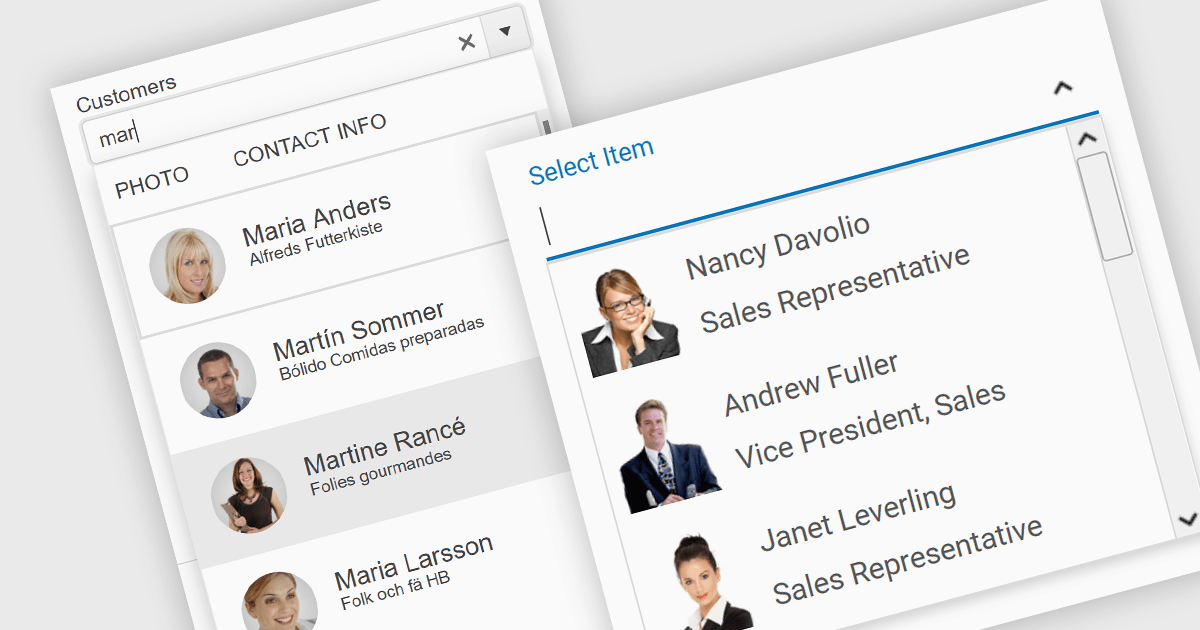
An image combobox is a custom UI component that combines a traditional dropdown menu with the ability to display an image alongside each item. Image comboboxes can enhance user experience by providing a more intuitive way to identify and select options, especially for items that benefit from visual representation. This approach can be particularly useful for non-text-based data or for catering to users who prefer visual cues.
Several JavaScript Data Editor controls support image combobox functionality including:
For an in-depth analysis of features and price, visit our comparison of JavaScript Data Editors.





Tél : (888) 850 9911
Fax : +1 770 250 6199


