Standard Charts로 데이터를 명확하게 표현
익숙한 차트 유형을 사용하여 애플리케이션 데이터 전반의 추세, 비율, 관계, 프로세스 단계를 표시합니다.
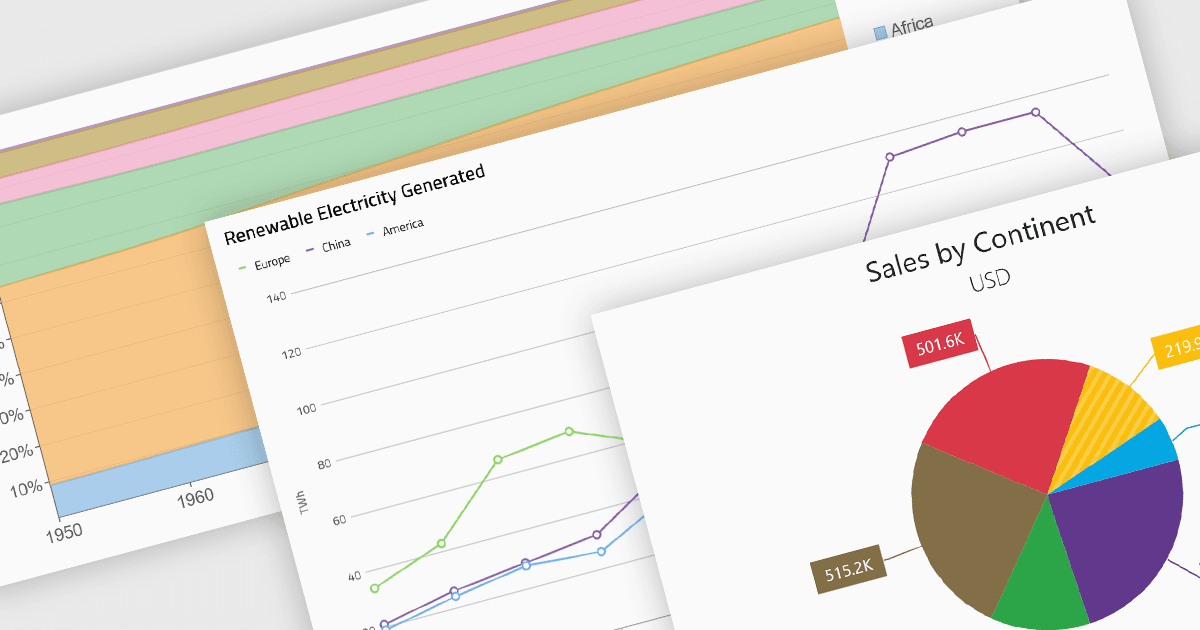
표준 차트 유형은 대부분의 차트 구성 요소의 기반을 이루며, 수치 및 범주형 데이터를 표현하기 위해 널리 인식되는 시각적 형식을 제공합니다. 이러한 차트는 개발자가 추세, 비교, 분포, 관계를 최종 사용자가 즉시 이해할 수 있는 방식으로 제시하는 데 도움을 줍니다. 이러한 시각화는 여러 산업 전반에서 익숙하기 때문에, 차트 라이브러리와 대시보드에서 기본 제공 옵션으로 흔히 포함되며, 애플리케이션이 툴팁, 범례, 동적 데이터 업데이트와 같은 대화형 기능을 지원하면서 인사이트를 명확하게 전달할 수 있도록 합니다.
일반적인 차트 유형에는 다음이 포함됩니다:
- Area charts는 선 아래의 채워진 영역을 통해 누적 값을 강조하면서 시간 경과에 따른 정량적 추세를 표시합니다.
- Column & Bar charts는 세로 또는 가로 막대를 사용하여 범주 간 값을 비교하므로 순위 매기기 및 나란한 비교에 적합합니다.
- Funnel charts는 프로세스의 연속된 단계를 나타내며, 일반적으로 전환율이나 단계 간 이탈을 시각화하는 데 사용됩니다.
- Line charts는 연결된 데이터 포인트를 사용하여 시간 또는 정렬된 범주 전반의 연속적인 데이터 추세를 보여줍니다.
- Pie charts는 원을 비율을 나타내는 여러 구간으로 나누어 전체 내의 비례 관계를 보여줍니다.
- Radar & Polar charts는 원형 축에 여러 변수를 표시하여 여러 차원에서 다변량 데이터를 비교할 수 있게 합니다.
- Scatter & Bubble charts는 두 축에 걸쳐 점을 배치하여 변수 간 관계를 시각화하며, bubble 변형은 마커 크기를 통해 세 번째 값을 추가합니다.
기능과 가격에 대한 심층 분석은 Blazor charts components comparison를 방문하세요.