



Offizieller Lieferant
Als offizieller und autorisierter Distributor beliefern wir Sie mit legitimen Lizenzen direkt von mehr als 200 Softwareherstellern.
Sehen Sie alle unsere Marken.
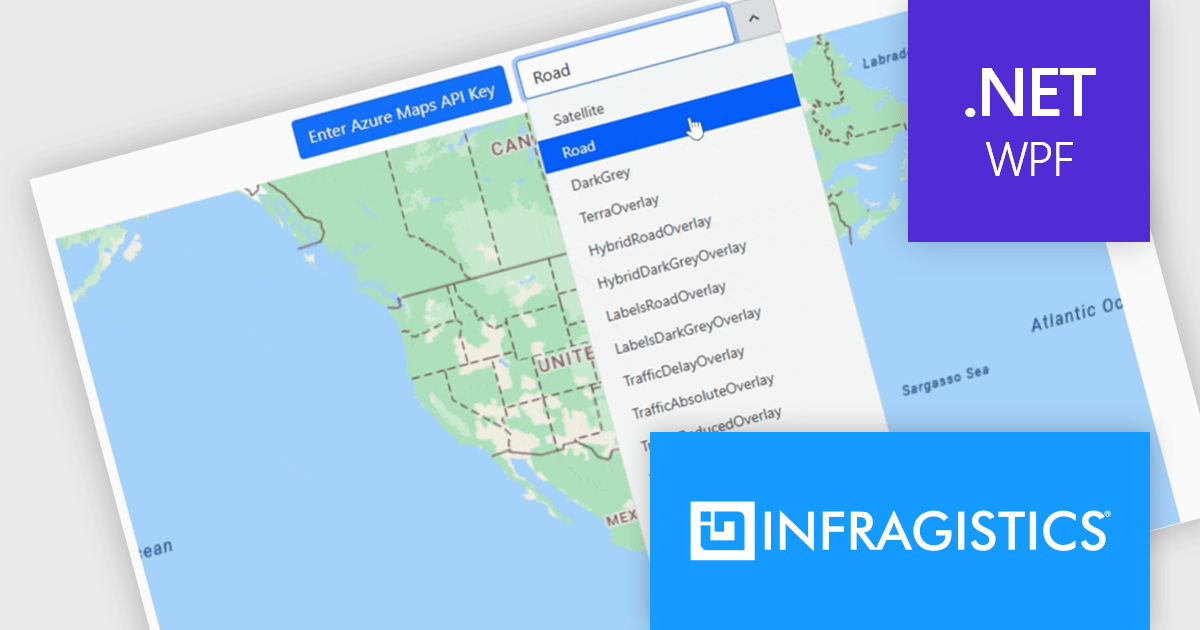
Infragistics Ultimate UI for WPF is a comprehensive suite of UI controls designed to streamline development and enhance the user experience of desktop applications. Boasting over 100 components, it offers a rich set of functionalities, including data visualization tools, high-performance grids, and modern UI elements that mimic the look and feel of Microsoft Office. These feature-packed libraries empower developers to craft powerful, visually appealing applications with a consistent user experience.
The Infragistics Ultimate UI for WPF 25.1.117 release introduces beta support for Azure Map imagery, giving developers access to rich, cloud-hosted geographic content. This enhancement allows multiple map layers to be combined, enabling more precise and interactive visualizations across various application types. Whether you're building dashboards, data exploration tools, or location-based analytics, the integration offers a flexible way to visualize spatial data while leveraging Microsoft's robust mapping services.
To see a full list of what's new in 25.1.117, see our release notes for Infragistics Ultimate UI for WPF.
Infragistics Ultimate UI for WPF is licensed per developer and is available as a Perpetual License with 1, 2 or 3 year support and maintenance subscription. See our Infragistics Ultimate UI for WPF licensing page for full details.
Infragistics Ultimate UI for WPF is available to buy in the following products:
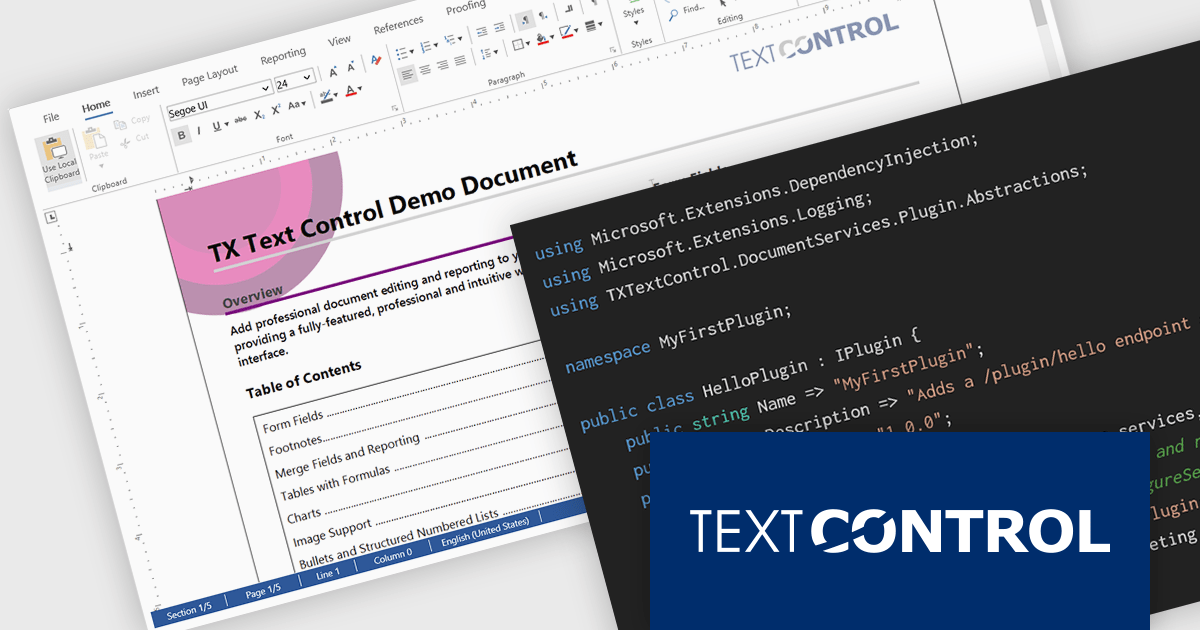
DS Server by Text Control is a powerful document processing backend designed to integrate seamlessly into web applications, providing developers with a robust set of APIs for creating, editing, viewing, and converting documents. Built for scalability and security, DS Server allows organizations to automate document workflows within their own infrastructure or cloud environments, eliminating the need for external dependencies. With support for popular formats like DOCX, PDF, and HTML, it enables rich document capabilities while maintaining full control over data and compliance. Whether you're generating dynamic reports, creating user-editable templates, or embedding secure document viewers, DS Server delivers high-performance document services tailored to modern application needs.
The DS Server 4.1.0 updated introduces a robust plug-in architecture that enables developers to extend the server’s core capabilities by injecting custom middleware, registering services, and integrating with APIs and the UI. Designed for easy deployment, plug-ins can be dropped into a dedicated folder and auto-loaded without altering the base system. Whether you're handling document conversion, templating, or workflow automation, the new plug-in architecture allows you to tailor DS Server’s behavior to match your application’s exact requirements.
To see a full list of what's new in version 4.1.0, see our release notes.
Text Control DS Server is licensed per server and is available as an Annual License that includes software updates. See our Text Control DS Server licensing page for full details.
For more information, visit our Text Control DS Server product page.
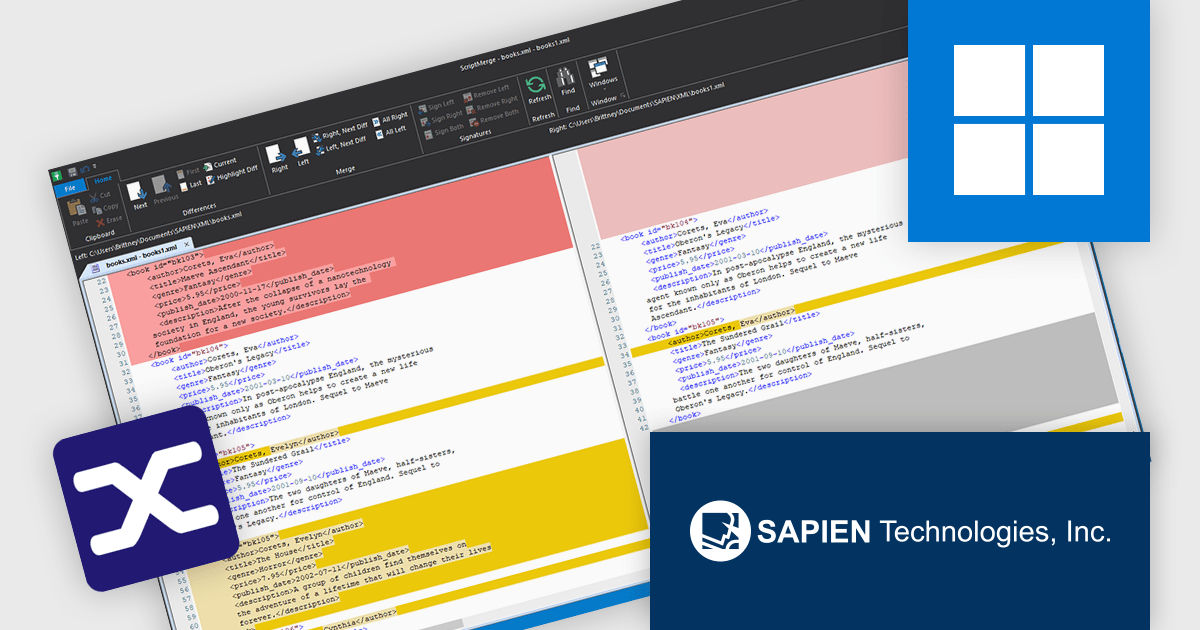
PrimalXML by SAPIEN Technologies is a powerful XML editor designed to help developers and IT professionals efficiently create, edit, and manage XML files. Users can view files as text or in an element tree, with syntax coloring that enhances readability. Built-in tools such as schema validation, stylesheet previews, bookmarking, find and replace, and attribute cloning improves everyday tasks. With advanced features like compare and merge, PrimalXML simplifies XML management, ensures accuracy, and maintains consistency across versions, making it ideal for developers, database administrators, and system integrators.
PrimalXML includes a compare and merge feature that enables developers to efficiently identify differences between XML files and consolidate changes with accuracy. This functionality improves version management by allowing side-by-side comparison, making it easier to review edits, resolve conflicts, and ensure consistency across multiple versions. By reducing the need for manual inspection and minimizing the risk of overlooked modifications, the feature improves efficiency and data integrity, helping developers maintain clean, synchronized XML structures throughout the development process.
PrimalXML is licensed per user and includes one year of product maintenance which may be renewed each year thereafter to continue to receive the latest updates. See our PrimalXML licensing page for full details.
Learn more on our PrimalXML product page.
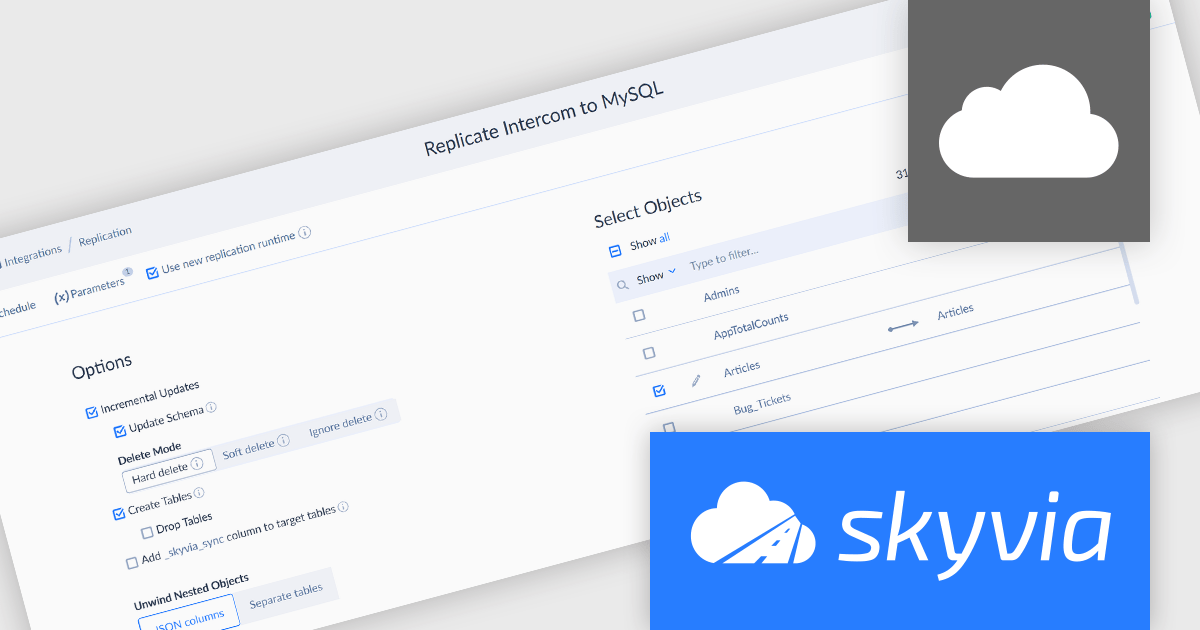
Skyvia Data Integration is a cloud-based platform that provides a unified environment for managing data pipelines, ETL processes, and data synchronization between various data sources and destinations. It offers a low-code interface for creating and configuring data integration workflows, automating routine tasks, and ensuring data consistency across different systems. The platform supports a wide range of data formats and protocols, including relational databases, MySQL databases, cloud storage, and APIs, making it a versatile tool for data professionals and developers.
The latest Skyvia Data Integration release gives users more ways to manage and monitor how data is copied and kept in sync. Teams can now track when records were last updated with a new timestamp column, choose how to handle deleted data from the source, and decide how to reset target tables during a full sync. These changes offer better visibility, safer resets, and more flexible handling of updates and deletions.
To see a full list of what's new, see our release notes.
Skyvia Data Integration is licensed based on the number of records processed per month and is available as an Annual License. See our Skyvia Data Integration licensing page for full details.
Learn more on our Skyvia Data Integration product page.
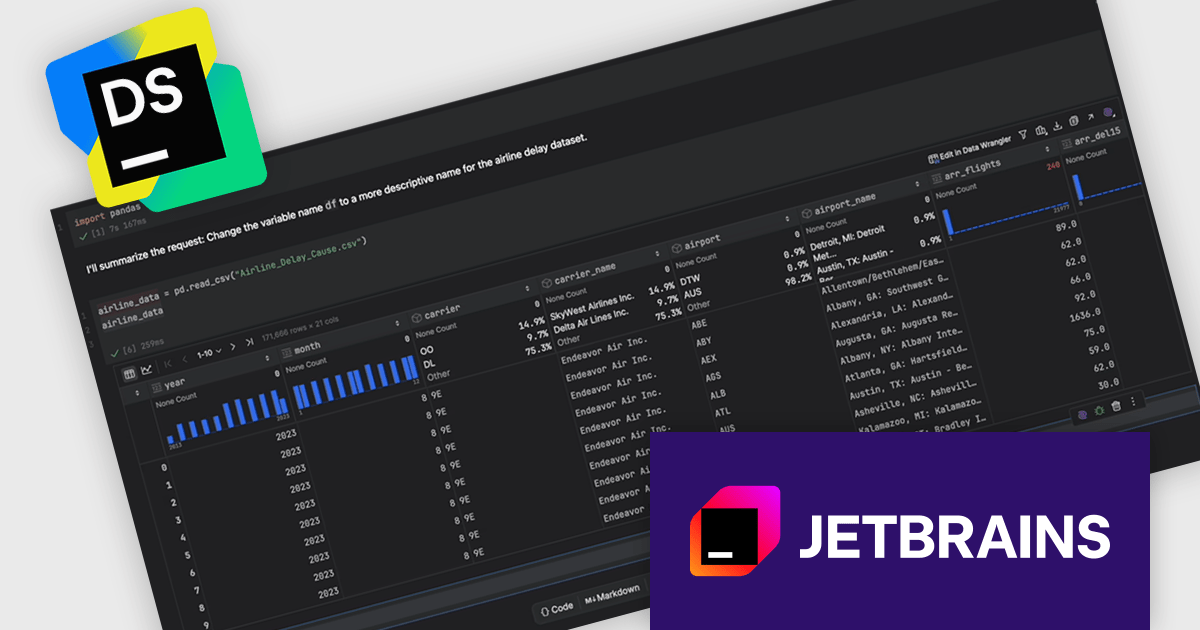
DataSpell by JetBrains is an integrated development environment (IDE) specifically designed for data scientists and analysts working with Python. It combines the functionality of traditional code editors with features tailored for data exploration, such as support for Jupyter notebooks, scientific libraries, and interactive outputs. DataSpell offers a clean interface for switching between code, markdown, and visual outputs, while also providing intelligent code completion, version control integration, and environment management. It is particularly useful for professionals who need both a powerful coding environment and robust tools for visual data analysis.
The latest DataSpell update introduces dedicated AI agents that handle routine yet essential tasks across your data analysis workflow. These agents can install and manage interpreters and packages, organize folders and files for a cleaner project structure, set up and configure database connections, and interact with Jupyter notebooks - creating cells, executing code, and managing outputs. They integrate with Data Wrangler, allowing you to reshape, clean, and prepare your data more efficiently and have enhanced export operations making it easier to analyze data in external tools such as spreadsheets.
DataSpell is licensed per user as a commercial annual subscription. See our DataSpell licensing page for full details.
DataSpell is available individually or as part of JetBrains All Products Pack.





Tel.: (888) 850 9911
Fax: +1 770 250 6199


