






Fornecedor oficial
Como distribuidores oficiais e autorizados, nós fornecemos licenças legítimas diretamente de mais de 200 editores de software.
Ver todas as nossas marcas.
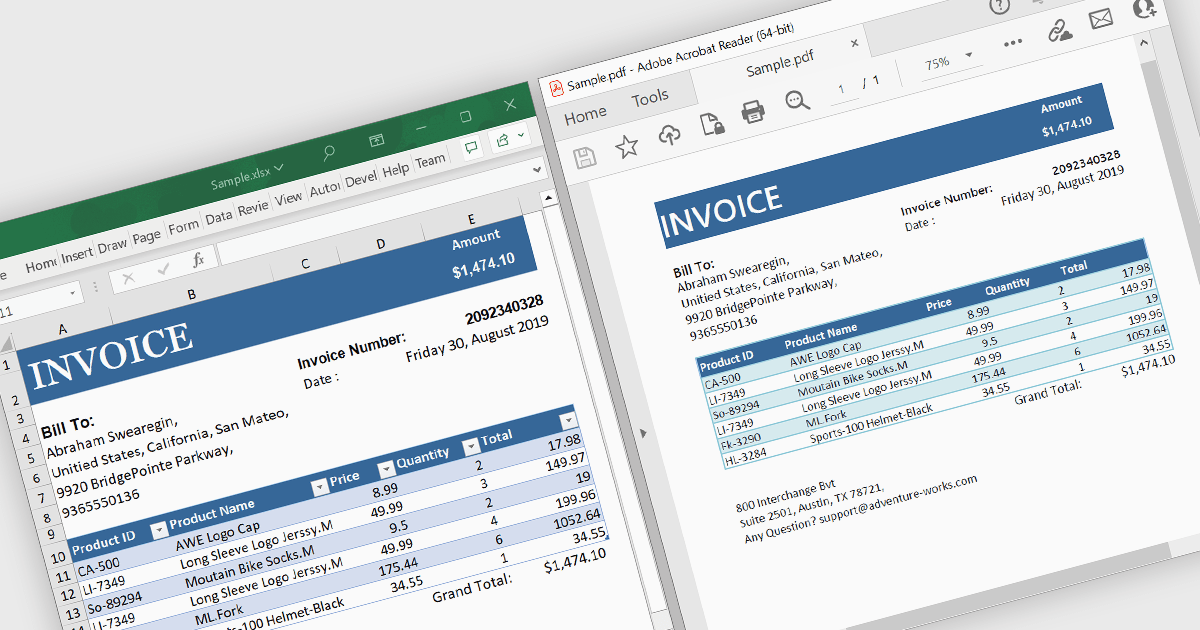
A .NET PDF viewer with Excel to PDF conversion capabilities enables developers to augment their .NET-based applications so that users can transform Microsoft Excel spreadsheets (in XLSX or XLS format) into PDF documents for viewing, sharing, or archiving. All handled within the viewer, this functionality preserves the structure, formatting, and content of the original Excel files while converting them into the widely-used PDF format. The ability to convert Excel to PDF in this manner allows for easy viewing, sharing, printing, and archiving of data without requiring end users to have Microsoft Excel installed. It also allows Excel content to be distributed with greater security and portability, while ensuring consistent rendering across different platforms, systems and devices.
Several .NET PDF viewer components allow you to convert Excel to PDF, including:
For an in-depth analysis of features and price, visit our comparison of .NET PDF viewer components.
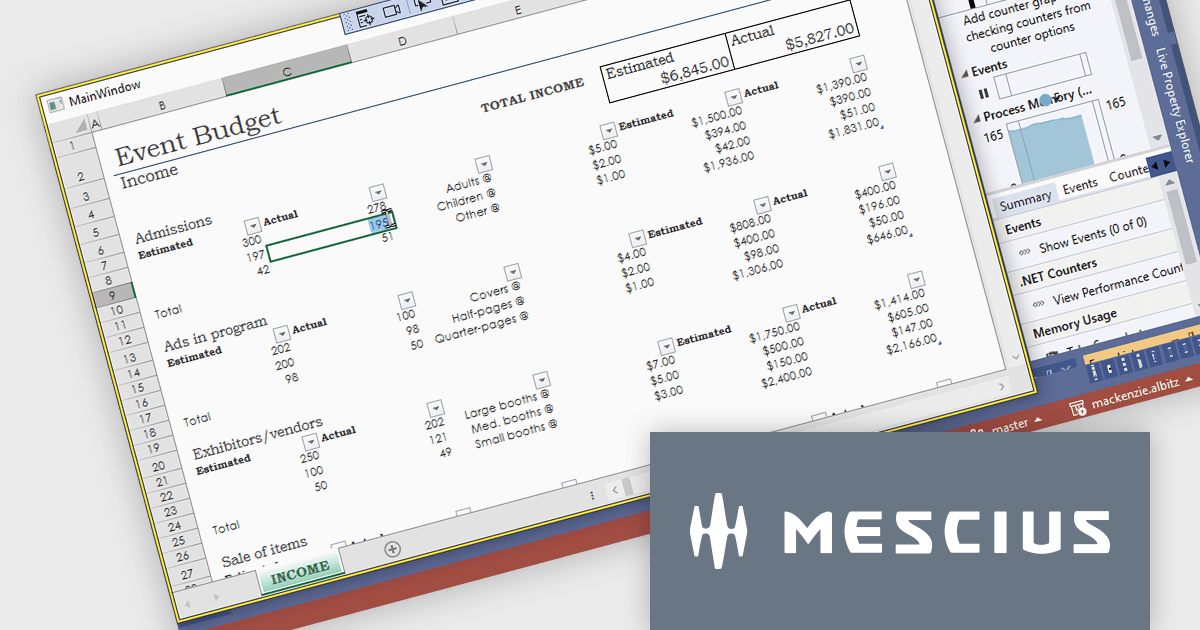
Spread.NET helps you create spreadsheets, grids, dashboards, and forms. It includes a powerful calculation engine with 450+ functions and the ability to import and export Excel spreadsheets. Leverage the extensive .NET spreadsheet API and powerful calculation engine to create analysis, budgeting, dashboard, data collection and management, scientific, and financial applications.
In this blog post, MESCIUS Product Marketing Specialist Mackenzie Albitz demonstrates how to use Spread.NET to enable your WPF application to display or interact with Excel files using a dedicated viewer. She'll walk through how to add an Excel XLSX viewer to a WPF app using the WPF spreadsheet control, Spread.NET for WPF. You'll learn how to load a .xlsx file, lock down the worksheet, and allow users to edit only specific cells — perfect for budget forms, reports, or review-only sheets. Once you have created a WPF project, the steps are as follows:
Detailed sample code is included and you can even download a sample project to follow along.
Read the full blog post to learn how to add this versatile capability to your WPF applications.
Spread.NET is licensed per developer and is available as a Perpetual License with a 12 month support and maintenance subscription. We can supply any Spread.NET license including new licenses, maintenance renewals, and upgrade licenses. See our Spread.NET licensing page for full details.
For more information, visit our Spread.NET product page.
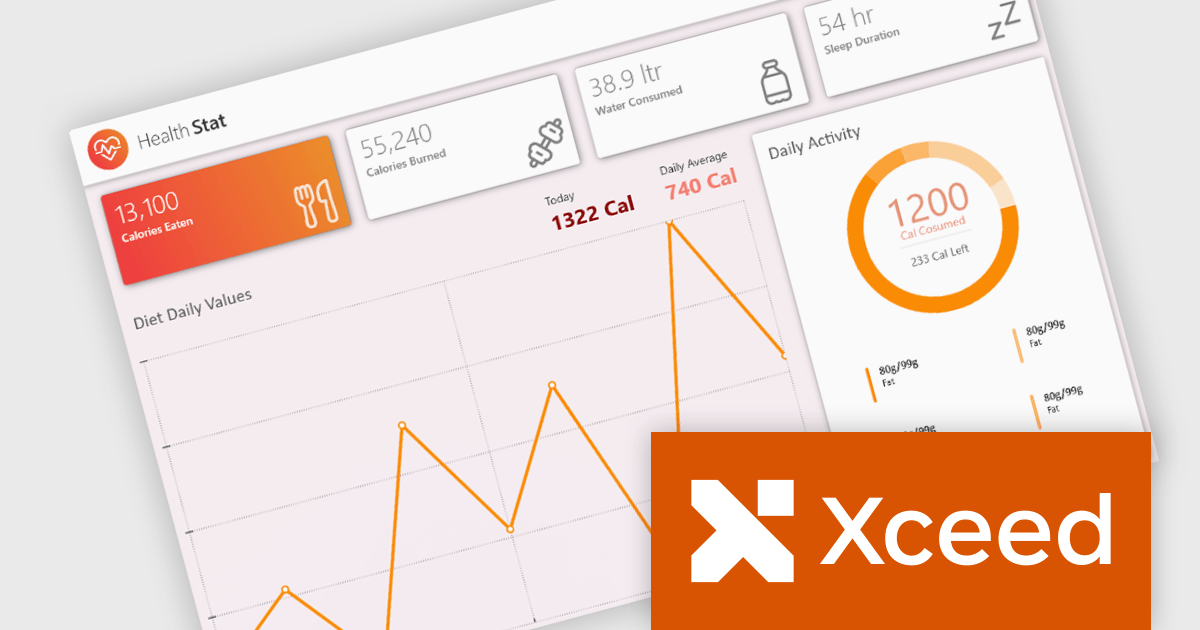
Xceed Toolkit Plus is a comprehensive suite of user interface controls and components designed for Windows Presentation Foundation (WPF) development, providing developers with advanced data visualization, editing, and layout capabilities beyond the standard WPF framework. It offers a wide range of pre-built, customizable controls that simplify complex UI implementations, enhance application functionality, and accelerate development cycles by reducing the need for custom control creation, ultimately enabling developers to build more robust and feature-rich WPF applications.
The Xceed Toolkit Plus for WPF 4.7 release adds support for .NET 9. This ensures developers can leverage the latest performance enhancements and security features offered by the .NET framework, while simultaneously benefiting from Xceed's extensive suite of advanced UI controls. This compatibility update makes the development process more efficient, with fewer integration issues and easier adoption of modern technologies for building high-performance WPF applications
To see a full list of what's new in version 4.7, see our release notes.
Xceed Toolkit Plus for WPF is licensed per developer and is available as a perpetual license with 1 year of updates and support. See our Xceed Toolkit Plus for WPF licensing page for full details.
Xceed Toolkit Plus for WPF is available individually or as part of Xceed Ultimate Suite.

ComponentSource and Devart have worked together since 2005 to provide developers with high-quality database connectivity solutions. This long-standing collaboration reflects a shared commitment to delivering innovative tools that enhance productivity, streamline workflows, and support the development of high-performance applications.
Devart is a leading provider of database tools and data connectivity solutions. With a strong focus on productivity and performance, its tools support a wide range of databases, including Microsoft SQL Server, MySQL, PostgreSQL, Oracle, and many more. From high-performance connectors such as ODBC and ADO.NET drivers to intuitive database IDEs and code review solutions, Devart’s offerings simplify complex development tasks and improve workflows across industries.
Through this 20-year partnership, ComponentSource has played a vital role in making Devart’s products—such as dbForge SQL Complete, dotConnect for Oracle and Universal Data Access Components (UniDAC)—more accessible to developers worldwide. As a premier distributor of software components and development tools, ComponentSource has helped expand Devart’s global reach, ensuring that developers can easily access reliable and efficient database connectivity solutions.
As we celebrate this milestone, we look forward to continuing our strong collaboration and to providing developers with the tools they need to build robust and scalable database applications.
Learn more about Devart.
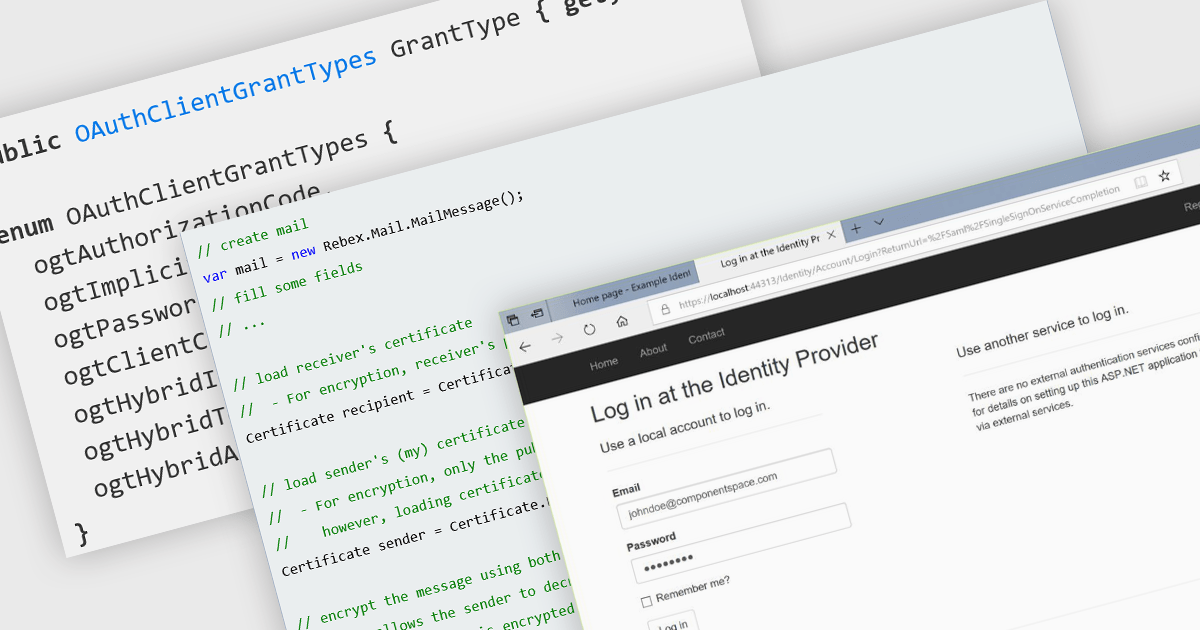
Authentication and security protocols play a critical role in safeguarding communication and messaging systems by verifying identities, protecting data integrity, and ensuring confidentiality. These protocols define the mechanisms by which users and services authenticate, establish trust, and secure data during transmission. As digital communication expands across networks, devices, and platforms, the need for robust, standards-based security frameworks becomes essential to protect against unauthorized access, tampering, and data breaches.
Common features include:
For an in-depth analysis of features and price, visit our .NET Comms & Messaging components comparison..
Tel: (888) 850 9911
Fax: +1 770 250 6199


