







官方供应商
我们作为官方授权经销商,直接提供超过200家开发厂家所发行超过1000个的产品授权给您。
查看我们的所有品牌。
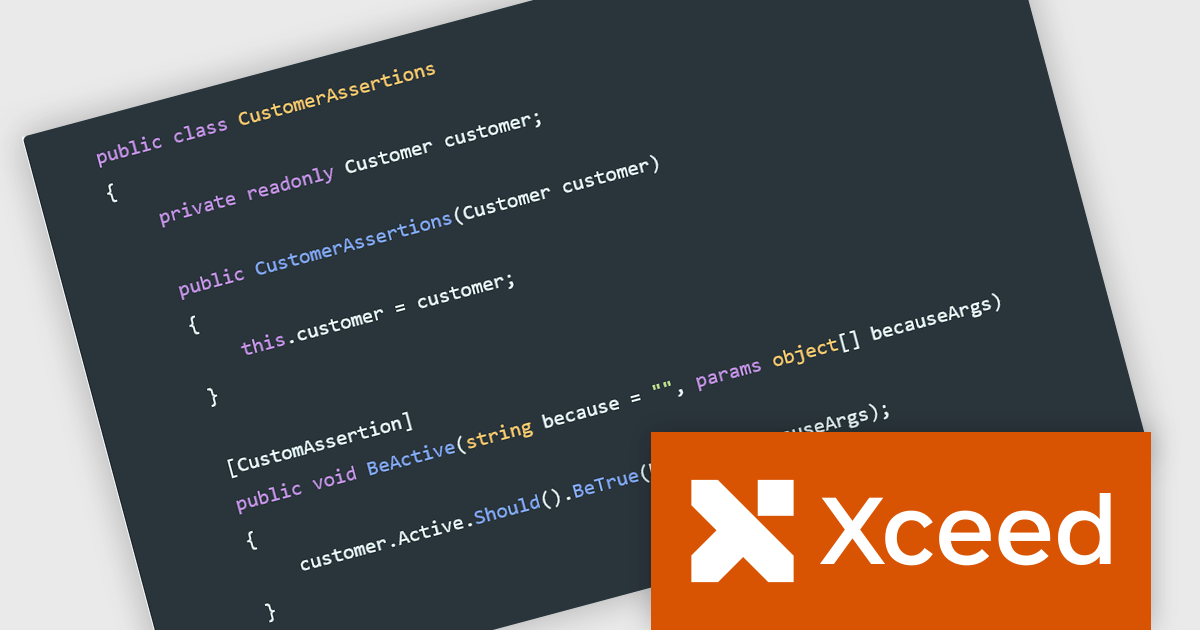
Xceed Fluent Assertions, developed by Xceed Software, is a new .NET library designed to enhance the readability and maintainability of unit tests. It provides a fluent interface for expressing assertions, allowing developers to write more natural and expressive test code. Instead of relying on traditional, often convoluted assertion syntax, Xceed Fluent Assertions enables developers to chain together methods that clearly articulate the expected outcomes of their tests. This promotes a more declarative style of testing, making it easier to understand the intent and logic behind each test case.
By leveraging its fluent API, developers can write concise and self-documenting tests, reducing the time and effort required for debugging and maintenance. Use cases range from simple value comparisons to complex object graph validations, including collections, exceptions, and event assertions. This library is particularly valuable in projects where test clarity and robustness are paramount, such as enterprise applications, libraries, and frameworks. Its ability to generate informative error messages further aids in quickly identifying and resolving issues, ultimately leading to more reliable and maintainable software.
Xceed Fluent Assertions is licensed per developer and is available as a perpetual license with 1 year of updates and support. See our Xceed Fluent Assertions licensing page for full details.
Xceed Fluent Assertions is available individually or as part of Xceed Ultimate Suite.
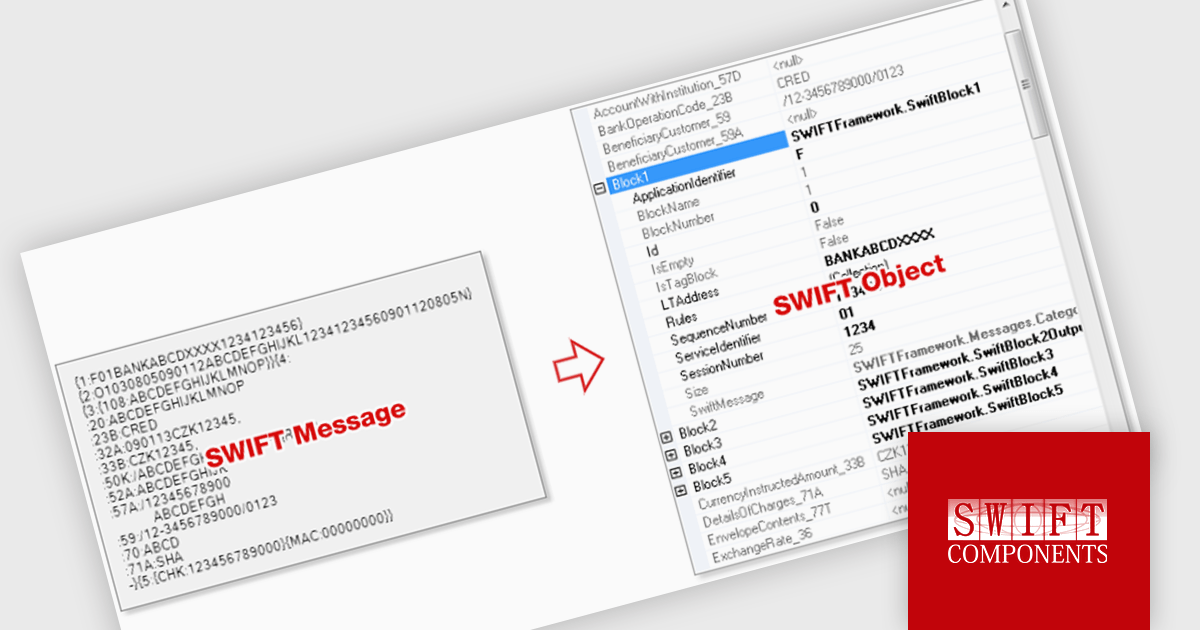
SWIFT Framework .NET by SWIFT Components is a comprehensive .NET library designed to facilitate seamless integration with the SWIFT financial messaging network. It provides developers with robust tools for creating, parsing, and validating SWIFT messages, streamlining the process of handling financial transactions and communications within .NET applications.
SWIFT Framework .NET enhances financial message processing by converting raw SWIFT messages into structured objects, enabling developers to efficiently parse, validate, and integrate financial data within their applications. This feature ensures compliance with SWIFT standards while streamlining workflows by eliminating manual data handling and reducing processing errors. With structured objects, developers can implement automated validations, transformations, and integrations with minimal effort, improving system reliability and performance in financial operations.
SWIFT Framework .NET is licensed per site, licensing an unlimited number of developers at a single physical address, and includes a one year subscription. See our SWIFT Framework .NET licensing page for full details.
Learn more on our SWIFT Framework .NET product page.
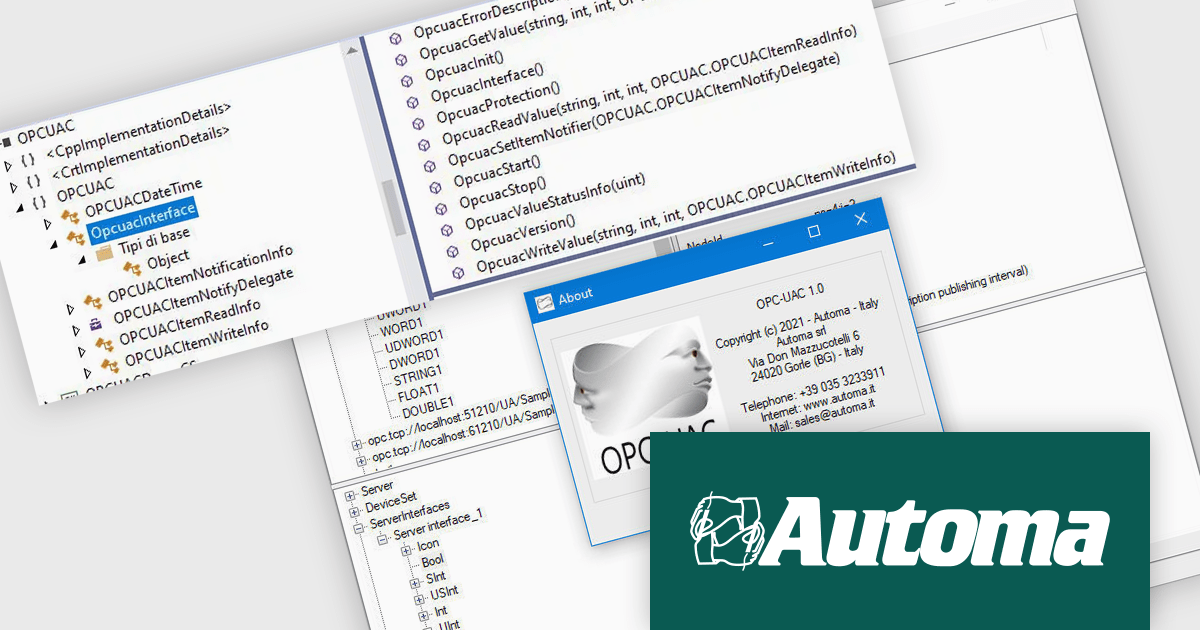
OPC-UAC simplifies OPC UA (Open Platform Communications Unified Architecture) connectivity for Microsoft Windows applications, requiring fewer than ten function calls to establish communication. It links SCADA (Supervisory Control and Data Acquisition) and HMI (Human-Machine Interface) systems with MES (Manufacturing Execution Systems), facilitating real-time data exchange, precise timestamp tracking, and data quality management. With built-in DataChange Subscribers, developers can monitor industrial processes in real time. Multi-language support (C++, C#, VB) ensures flexibility for diverse development environments, making it an efficient tool for automation and machine-to-machine communication.
By reducing integration complexity, OPC-UAC enhances industrial automation, predictive maintenance, and manufacturing efficiency. Its reliable communication framework minimizes downtime and supports real-time decision-making. The intuitive configuration streamlines deployment, while robust connectivity ensures smooth machine-to-system interaction. With real-time monitoring and flexible language support, it enables developers and system integrators to build more responsive and data-driven automation solutions.
OPC-UAC is licensed per machine. Each machine running an application that includes the OPC-UAC library needs a license. see our OPC-UAC licensing page for full details.
For more information, visit our Automa OPC-UAC product page.
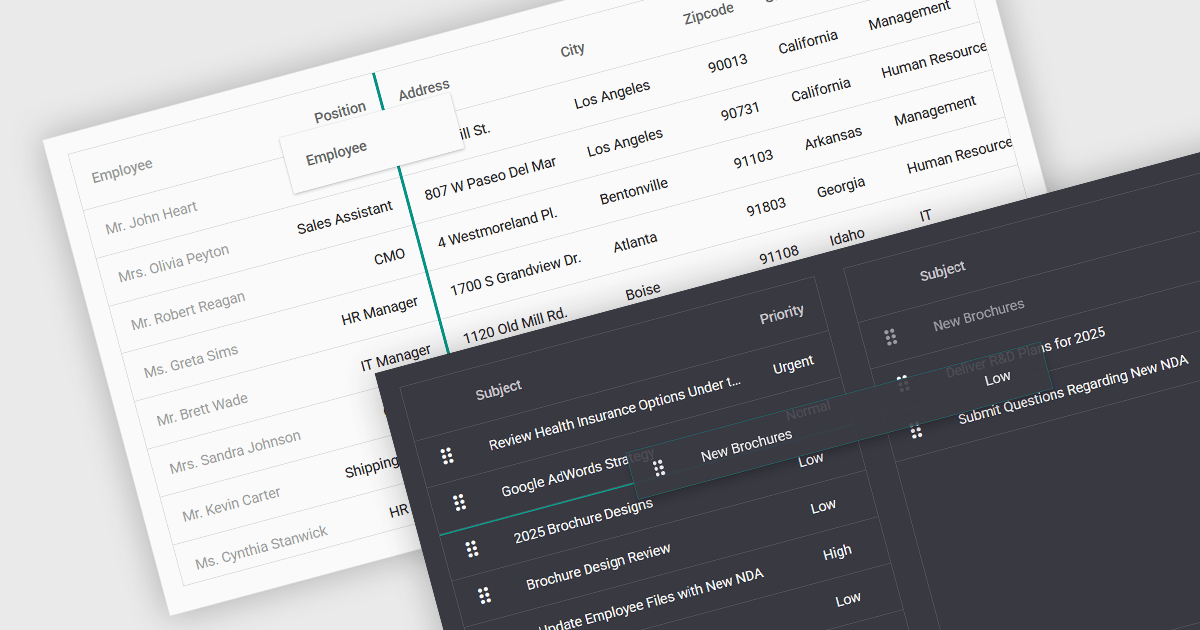
Drag-and-drop functionality in a data grid allows users to interactively move, reorder, or transfer data elements within the grid or between different grids using a simple click-and-drag motion. This feature provides an intuitive way to manipulate data without requiring complex commands or manual input, improving both efficiency and usability. It is particularly beneficial in applications that require frequent adjustments to data structures, such as dashboards, reporting tools, and data management systems. By enabling users to customize the grid layout dynamically, drag and drop functionality enhances productivity, and ensures greater flexibility when handling data.
Several ASP.NET Core grid controls support drag-and-drop functionality, including:
For an in-depth analysis of features and price, visit our ASP.NET Core grid controls comparison.
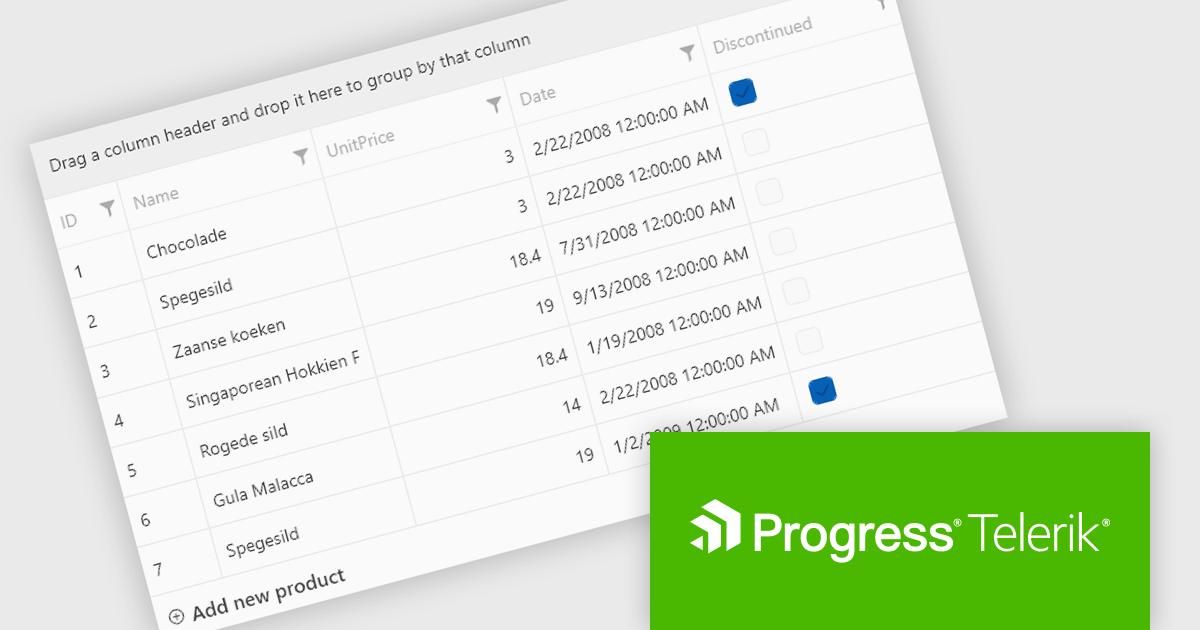
Telerik UI for WPF is a robust suite of over 150 user interface components designed for Windows Presentation Foundation, enabling developers to build modern, high-performance desktop applications. It includes controls like data grids, charts, schedulers, and editors, optimized for seamless integration and support for MVVM (Model-View-ViewModel) patterns. With features like built-in theming, responsive layouts, and customizable styling, it simplifies the creation of visually appealing, intuitive interfaces. Ideal for enterprise-grade or consumer-facing apps, Telerik UI for WPF accelerates development while ensuring professional-quality results.
The Telerik UI for WPF 2025 Q1 (2025.1.211) update enhances RadGridView with a new filtering mode that supports complex expressions, providing developers with greater control and precision when working with data. This feature introduces an intuitive Filter Editor that combines a clear Data Filter View for visualizing applied criteria with the powerful RadDataFilter control for adding, editing, and managing filters. Key usability enhancements, such as optional wrapping for readability, quick enable/disable options for filters, and streamlined access to editing tools, make it easier to implement dynamic, customizable filtering experiences in applications, empowering developers to deliver highly responsive and user-centric interfaces.
To see a full list of what's new in 2025 Q1, see our release notes.
Telerik UI for WPF is licensed per developer and has two licensing models: an annual Subscription License and a Perpetual License. The Subscription license provides access to the latest product updates, technical support, and exclusive benefits for a flat annual fee, and must be renewed to continue using the software. The Perpetual license is a one-time purchase granting access to the current released version and includes a one-year subscription for product updates and technical support. After this initial period, users can choose to renew the subscription element to continue receiving updates and support; otherwise, they may continue using the installed version available during their active subscription term but will forgo future updates and support. See our Telerik UI for WPF licensing page for full details.
Telerik UI for WPF is available individually or as part of the following products:
联系电话: (888) 850 9911
传真: +1 770 250 6199


