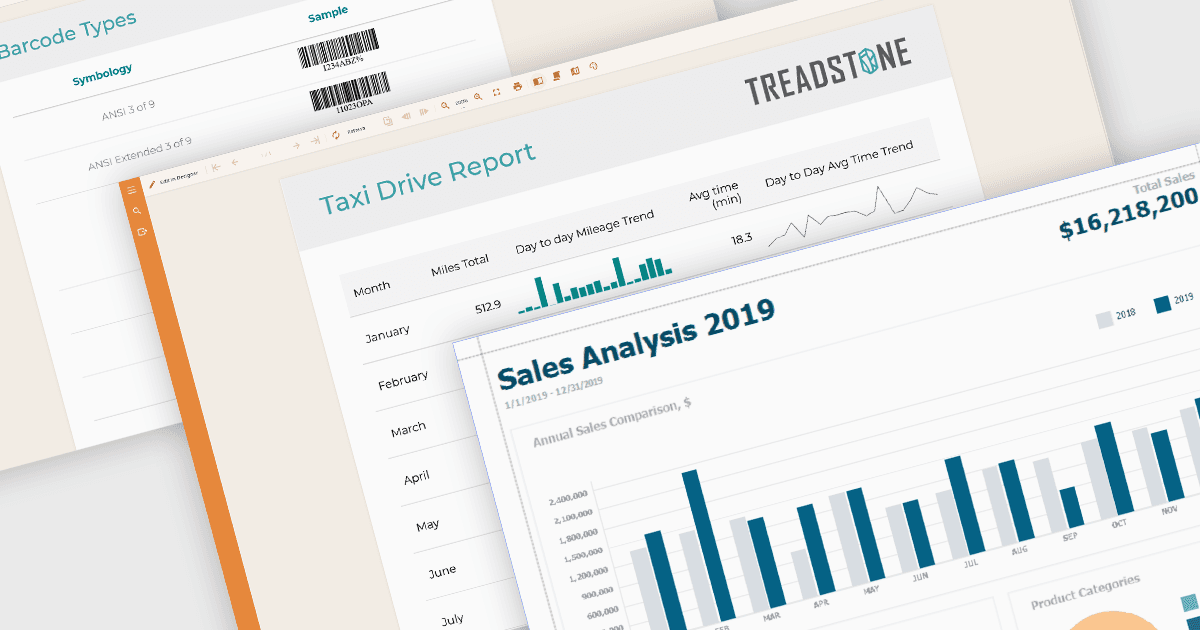
用視覺化報表推動更好的決策

4月 15, 2025
透過將動態視覺物件直接嵌入到報表中,資料視覺化工具使複雜資訊易於訪問,決策更以資料為基礎。

繼續用英語閱讀:

Data visualization plays a central role in reporting components by translating complex datasets into visual formats that are easier to understand and analyze. These tools help users identify patterns, monitor performance, and communicate key information at a glance. By integrating visuals directly into reports, organizations can enhance readability, support data-driven storytelling, and improve overall user engagement.

Common features include:

  • Barcodes are used to encode data for scanning and inventory purposes, commonly integrated into reports for operational efficiency.
  • Charts offer a variety of graph types, such as bar, line, and pie charts, to illustrate trends, comparisons, and distributions effectively.
  • Gauges display performance metrics using dials or indicators, making it easy to monitor values against defined thresholds in real time.
  • Maps enable geographic data visualization, helping users analyze regional trends and spatial relationships.
  • Sparklines provide compact, inline visual summaries of data series, ideal for highlighting changes within tables or dashboards.

For an in-depth analysis of features and price, visit our Angular reporting components comparison.

Explore Angular Reporting Data Visualization Features