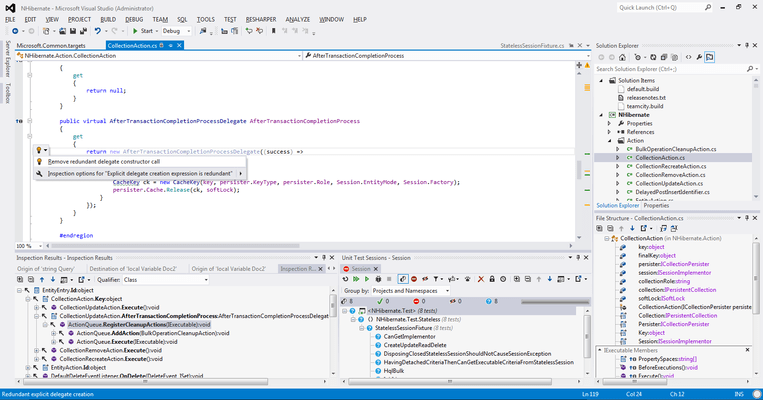
Click for more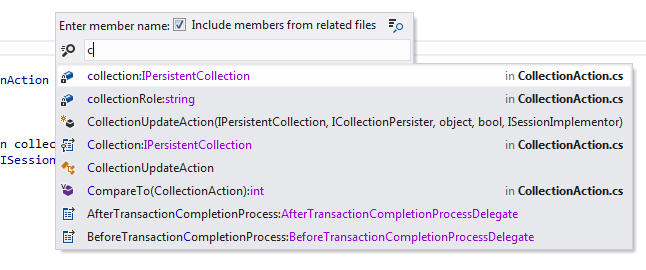
Go to File Member
Jump to a specific member in the current file or its related files (for example, in another type part.)
Click for more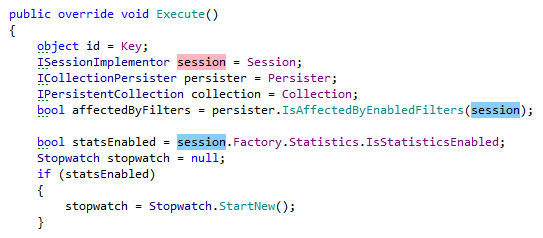
Highlight Usages
Highlight usages of symbol in the current file. Read and write usages are highlighted in different colors, and you can quickly navigate between usages.
Click for more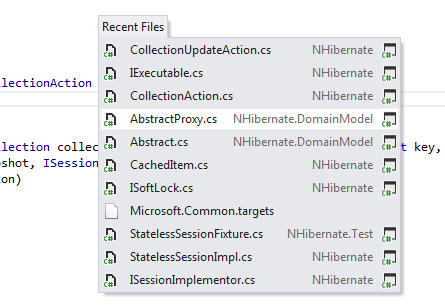
Go to Recent Files
If you're about to get back to a file that you've recently closed, Recent Files is the shortcut that's going to get you back quickly.
Click for more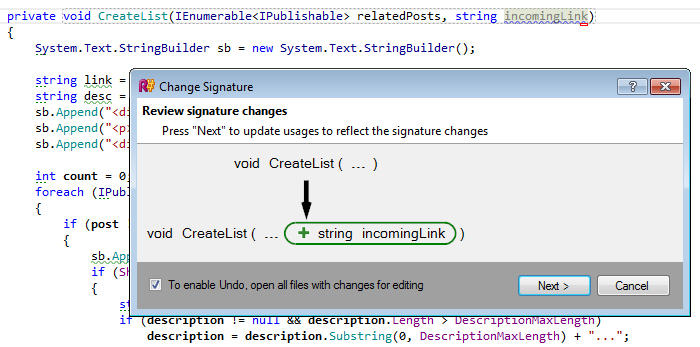
Change Signature
This refactoring modifies the set of parameters or return type of a method, making sure that all calls, implementations and overrides are updated accordingly.
Click for more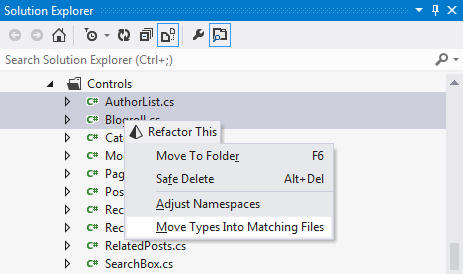
Move Types into Matching Files
This refactoring analyzes all types found in a given scope and makes sure that all of them are placed in dedicated files matching their names. It can be applied to a file, folder, project, solution, or a custom selection of files.
Click for more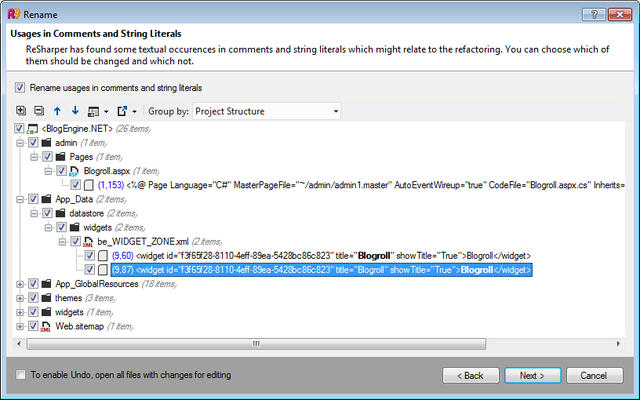
Rename on Steroids
ReSharper's implementation of Rename refactoring works across all supported languages, takes into account usages in comments and string literals.
Click for more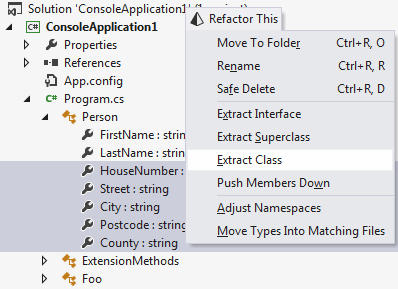
Invoking Extract Class
This new refactoring helps break up a complex class into several simple classes, thus respecting the principle of single responsibility and reducing code complexity.
Click for more
Setting up Extract Class
Extract Class wizard helps pick members to extract to a separate class, warns of any found dependencies and conflicts.
Click for more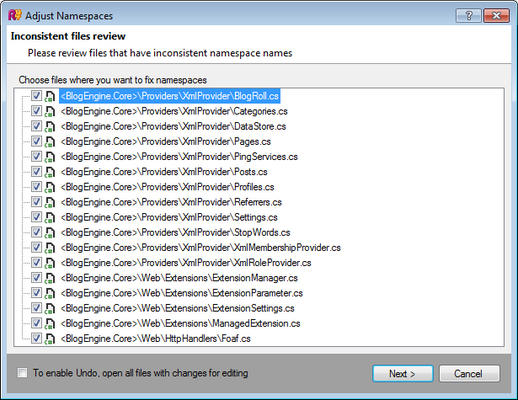
Adjust Namespaces
This refactoring helps you synchronize namespaces to folder structure in any scope, which can be as large as the entire solution. If in a certain code file a namespace doesn't correspond to the location of the file in project structure, the namespace is renamed to comply with file location.
Click for more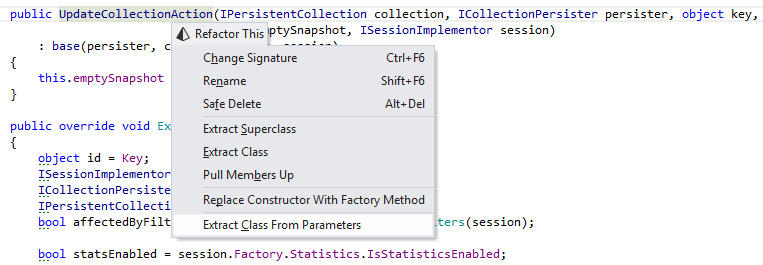
Extract Class from Parameters
This refactoring helps streamline your APIs: it creates a new class or struct and converts selected parameters of a method into encapsulated fields of the newly created type. Usages of parameters are converted to usages of properties of the created type.


 (13)
(13)